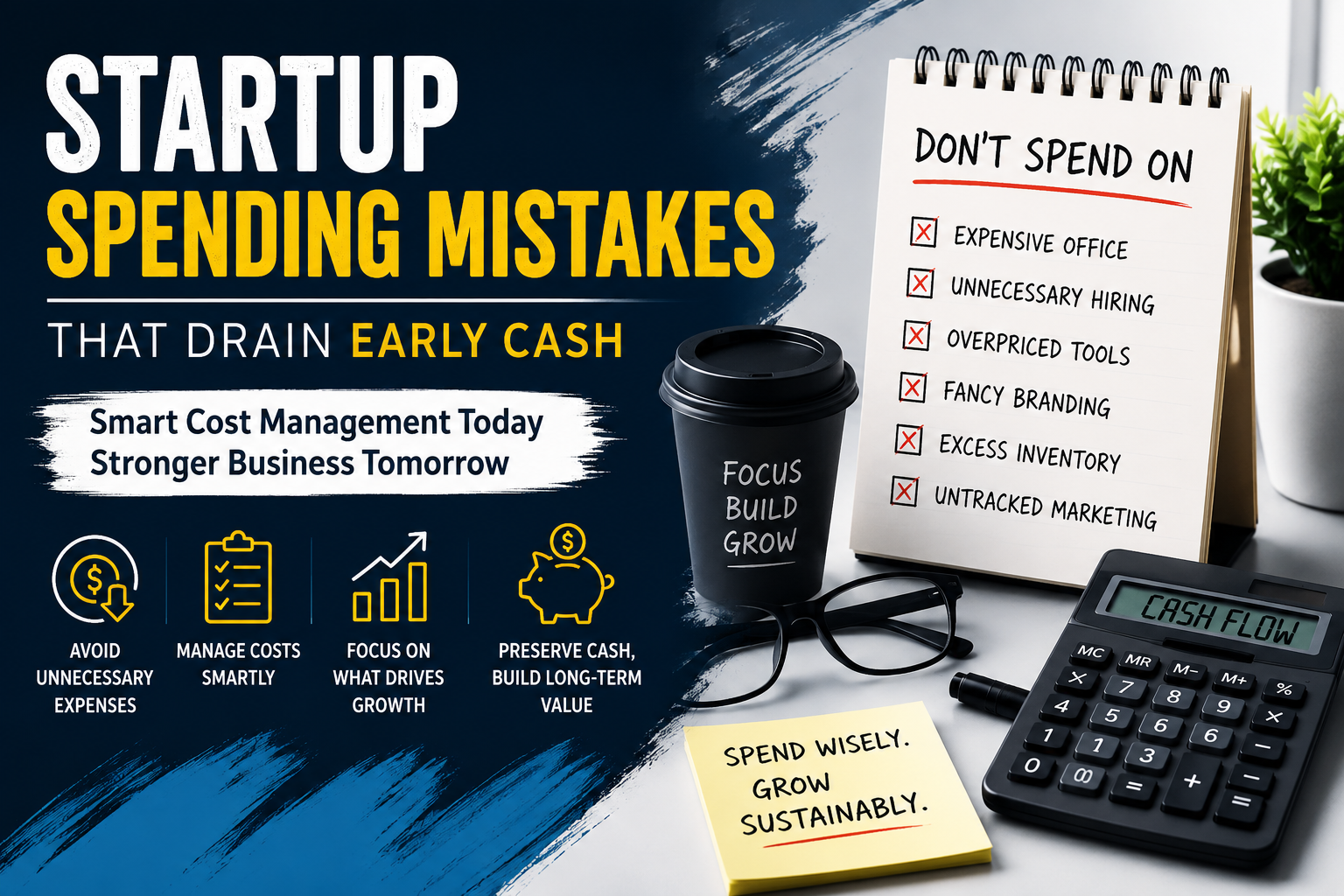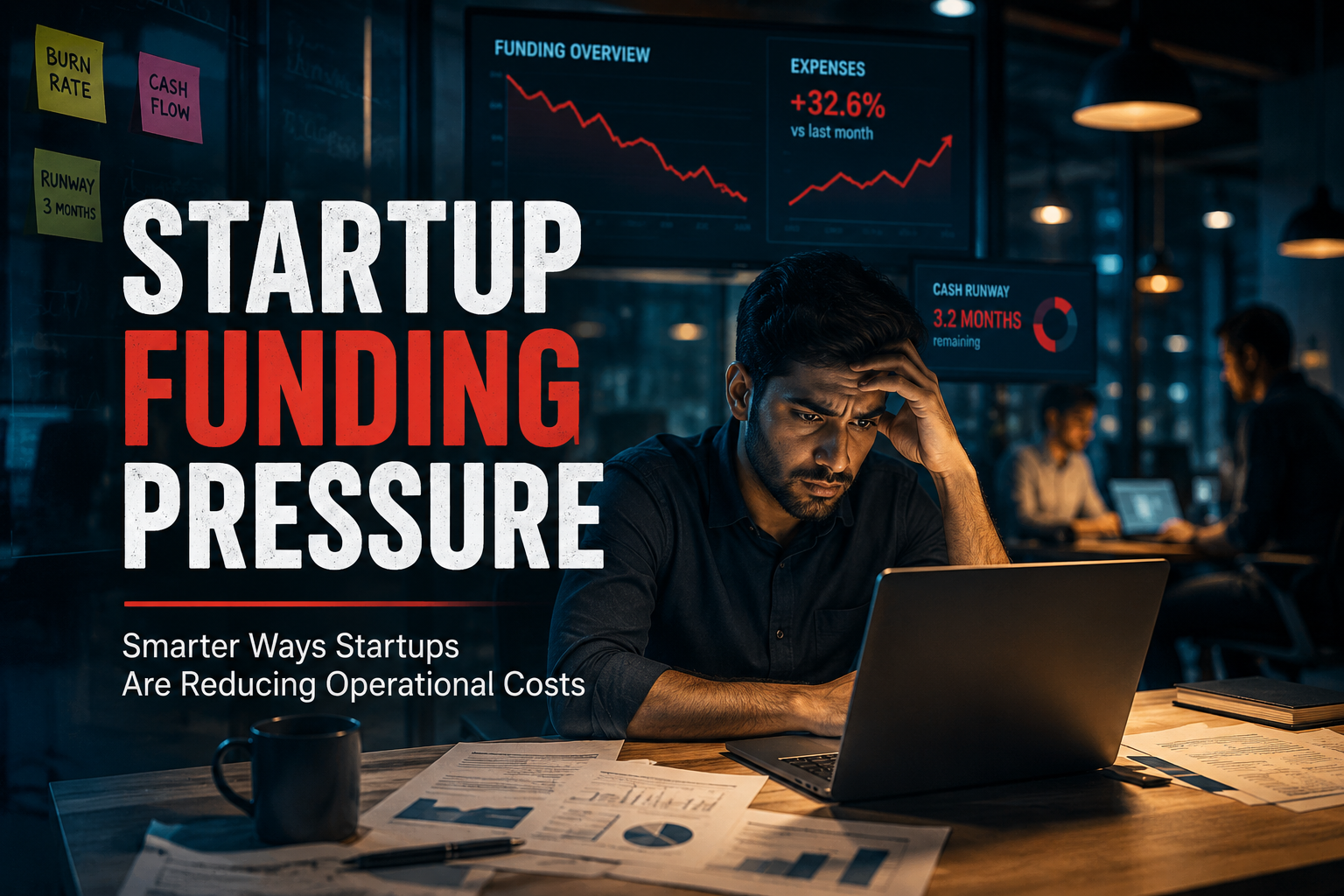
Bootstrapped founders do not fail only because of poor ideas. Many fail because they spend too early, too heavily, or in the wrong places. In the early stage, every rupee needs a clear job. Therefore, understanding startup spending mistakes can help founders stay lean, move faster, and avoid unnecessary financial pressure.
When a startup is self-funded, cash is not just money. It is time, flexibility, and survival. However, many founders copy the spending patterns of funded companies and later realize that revenue has not caught up with expenses. Smart startup cost management is not about avoiding all spending. Instead, it is about spending only where it directly supports growth, customers, operations, or revenue.
Startup Spending Mistakes Begin With Overbuilding
One of the most common startup spending mistakes is building too much before testing the market. Founders often invest in a full website, mobile app, automation tools, branding, paid ads, office setup, and hiring before proving demand.
At the beginning, you do not need a perfect system. You need a working system.
For example, instead of building an expensive custom platform, a founder can start with:
- A simple landing page
- Google Forms or a basic CRM
- Manual follow-ups
- WhatsApp or email-based communication
- A small test campaign
This approach gives you customer feedback without locking your cash into heavy development. Moreover, once you understand what customers actually want, you can invest with more confidence.
Startup Spending Mistakes in Office Setup
A premium office may feel professional, but it can quickly become a fixed-cost burden. Rent, interiors, furniture, internet, electricity, cleaning, and maintenance add up every month. For bootstrapped entrepreneurs, this is often money that could have gone into sales, product improvement, or customer support.
Instead of choosing a large office early, start with what your team truly needs. A coworking space, hybrid model, shared office, or small functional workspace may be enough. As a result, you maintain flexibility while keeping overhead under control.
This does not mean you should avoid a professional setup. Rather, it means you should avoid spending on appearance before your business model becomes stable.
Avoid Hiring Before Revenue Supports It

Hiring feels like progress. However, hiring too early can create serious cash flow pressure. Salaries are recurring commitments, and once you hire, you also take on management, onboarding, software, equipment, and compliance costs.
Before hiring full-time employees, consider whether the work can be handled through:
- Freelancers
- Part-time specialists
- Contract-based professionals
- Automation tools
- Founder-led execution
- Outsourced agencies
For instance, a startup may not need a full-time designer in the first few months. A freelance designer can handle project-based work until demand becomes consistent. Similarly, instead of hiring a large sales team immediately, founders can first validate sales scripts and channels themselves.
Good hiring should follow clear demand. Otherwise, payroll becomes one of the biggest startup cost management challenges.
Expensive Branding Can Wait
Branding matters, but overinvesting in branding too early is another avoidable mistake. A founder may spend heavily on logo design, premium photoshoots, packaging, brand films, office creatives, and merchandise before generating steady customers.
In the early phase, your brand needs clarity more than luxury. A clean logo, simple color palette, clear website copy, and consistent social media presence are enough to begin. Later, when you have customers, testimonials, and market positioning, you can upgrade the brand more strategically.
A polished brand cannot replace a weak offer. Therefore, first invest in solving a real problem. Then, improve presentation as your business grows.
Startup Spending Mistakes in Technology Purchases
Many early-stage businesses overspend on technology. They buy high-end laptops, desktops, software subscriptions, premium tools, servers, and accessories before they truly need them. Although good technology improves productivity, buying everything upfront can lock valuable capital into depreciating assets.
This is where practical startup cost management becomes important. Instead of purchasing every device, startups can rent laptops, desktops, MacBooks, printers, or other IT assets based on project duration and team size.
Renting helps businesses avoid heavy upfront costs, especially when team requirements are temporary, seasonal, or uncertain. Additionally, it gives founders flexibility to upgrade devices as work needs change.
For a bootstrapped team, this can be a smarter choice than spending lakhs on IT equipment in the first year.
Marketing Without Tracking Returns
Marketing is necessary, but random marketing is expensive. Many founders spend on ads, influencers, agencies, videos, and campaigns without tracking leads, conversions, acquisition cost, or revenue impact.
This is one of the most damaging startup spending mistakes because it feels like growth activity but may not produce measurable results.
Before scaling marketing, define:
- Who your target customer is
- Which problem your offer solves
- What action you want users to take
- How much each lead costs
- How many leads convert
- How much revenue each customer brings
Start with small experiments. Test one channel at a time. For example, run a small paid campaign, track the response, improve the message, and then scale only if the numbers make sense. Consequently, marketing becomes an investment instead of a guessing game.
Buying Too Many Software Subscriptions
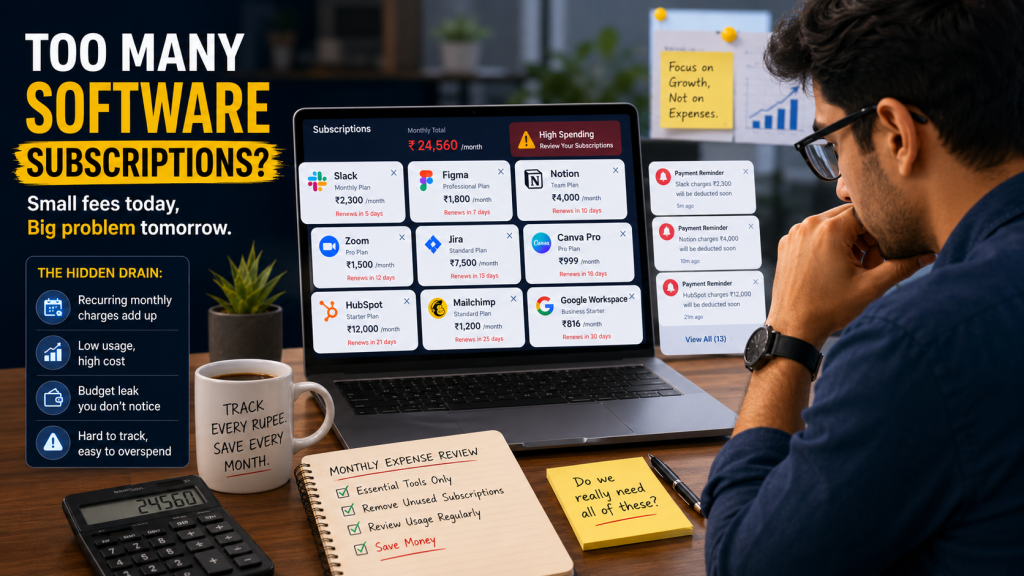
Software subscriptions look affordable individually. However, five or ten monthly tools can quietly create a large recurring expense. A startup may subscribe to project management tools, email marketing platforms, CRMs, design tools, analytics platforms, AI tools, calling software, and automation systems before the team fully uses them.
Instead, review every subscription monthly. Ask whether the tool is actively saving time, increasing revenue, improving customer experience, or reducing manual work. If not, pause or cancel it.
In the early stage, use free plans, shared tools, or bundled platforms wherever possible. Furthermore, avoid paying annually unless the tool is essential and already proven useful.
Premium Consultants Before Clear Problems
Consultants can add value, but hiring expensive consultants without a specific problem can drain cash quickly. Many founders hire advisors for branding, strategy, finance, HR, legal, or fundraising before they have enough business activity to justify the expense.
A better approach is to hire experts for defined outcomes. For example:
- Drafting contracts
- Setting up compliance
- Creating a pricing strategy
- Auditing accounts
- Improving paid ads
- Building sales scripts
This keeps consulting practical and measurable. Moreover, it ensures that expert advice solves a real bottleneck rather than becoming another early-stage expense.
Inventory and Stock Without Demand
For product-based businesses, overstocking is a major cash trap. Founders may buy inventory in bulk to reduce unit cost, but if the product does not sell quickly, cash gets stuck. Additionally, storage, damage, outdated stock, and slow-moving products create further losses.
Start with smaller quantities and reorder based on actual demand. Even if the unit cost is slightly higher, the risk is lower. Once you understand sales patterns, customer preferences, and repeat demand, you can negotiate better pricing with suppliers.
Cash in hand is often more useful than stock sitting in storage.
Startup Spending Mistakes in Founder Lifestyle

A startup may look successful from outside, but founder spending can still damage the company. Frequent premium meetings, unnecessary travel, expensive gadgets, business-class upgrades, luxury events, and image-based spending can create pressure before the business earns enough.
Founders should separate business needs from ego-driven expenses. This does not mean avoiding all comfort or professionalism. However, it does mean asking whether each expense directly helps revenue, delivery, trust, or efficiency.
In a bootstrapped business, discipline creates freedom.
Smarter Startup Cost Management Habits
Good startup cost management works best when it becomes a routine, not a one-time activity. Founders should review expenses every month and identify what can be reduced, delayed, rented, outsourced, automated, or removed.
A simple monthly review can include:
- Fixed monthly expenses
- Variable costs
- Tool subscriptions
- Marketing spend
- Team expenses
- Equipment cost
- Revenue generated from each major expense
This habit helps founders make decisions based on numbers rather than assumptions. More importantly, it creates a culture of careful spending from the beginning.
Where Bootstrapped Startups Should Spend Instead
Avoiding unnecessary spending does not mean avoiding investment. Startups should still spend on things that directly improve business outcomes.
The best early-stage investments usually include:
- Customer acquisition that can be tracked
- Product improvement based on feedback
- Reliable tools that save time
- Basic legal and compliance support
- Customer service systems
- Sales process improvement
- Team productivity essentials
In other words, spend where the return is visible. If an expense does not improve customer trust, sales, delivery, or operations, it can probably wait.
Related Queries for Bootstrapped Founders
What are the biggest startup spending mistakes to avoid?
The biggest startup spending mistakes include hiring too early, buying expensive equipment upfront, spending heavily on office space, overpaying for branding, subscribing to too many tools, and running marketing campaigns without tracking returns. These mistakes reduce cash flow and limit flexibility when the business needs it most.
How can startups reduce capital expenses?
Startups can reduce capital expenses by renting instead of buying, using freelancers before full-time hiring, choosing coworking spaces, starting with minimum viable tools, and scaling only after customer demand is proven. Additionally, monthly expense reviews help founders control unnecessary spending before it becomes a habit.
Should a startup buy or rent laptops and IT equipment?
For many bootstrapped startups, renting laptops and IT equipment is more practical than buying. Renting reduces upfront investment, keeps cash available, and allows teams to upgrade or return devices based on changing requirements. This is especially useful for project-based teams, remote employees, temporary hiring, and early-stage businesses trying to manage costs carefully.
Where can startups rent laptops and business IT equipment?
Startups looking for laptops, desktops, MacBooks, and business-ready IT devices on rent can consider IndiaRENTALZ. The company provides rental solutions for startups, small businesses, and enterprise teams that want to avoid heavy upfront technology purchases while keeping operations flexible.
How much should a bootstrapped startup spend in the beginning?
There is no fixed amount for every business. However, a bootstrapped startup should spend only on essentials that support sales, delivery, customer experience, or legal compliance. Everything else should be delayed until revenue becomes predictable. This mindset helps founders avoid cash pressure and build a stronger financial base.
Final Thoughts
Bootstrapping rewards discipline. The goal is not to look like a big company from day one. The goal is to survive long enough to understand the market, serve customers well, and grow sustainably.
By avoiding common startup spending mistakes, founders can protect cash, reduce pressure, and make better decisions. More importantly, strong startup cost management gives a business the flexibility to adapt, test, improve, and scale at the right time.
Spend carefully, measure consistently, and invest only where the business truly benefits.