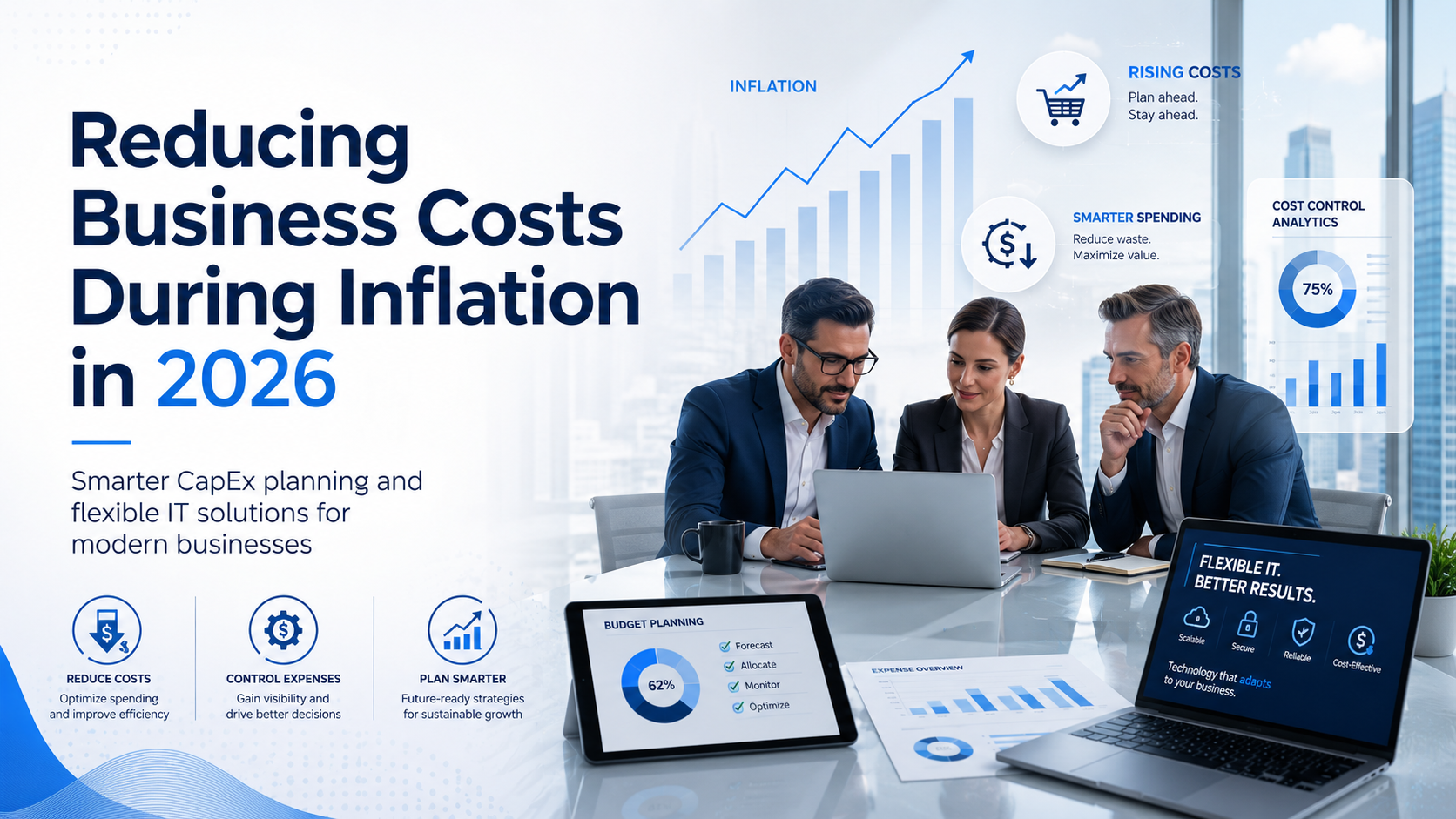
Reducing business costs has become a serious priority for companies in 2026. As inflation continues to affect technology prices, office expenses, logistics, hiring, and vendor contracts, businesses are reviewing every major investment more carefully.
For many companies, the challenge is not only about cutting expenses. It is about spending in a smarter way without slowing down operations, employee productivity, or business growth.
Earlier, companies often purchased laptops, desktops, servers, and other IT assets in bulk. However, this approach created heavy upfront spending, long-term depreciation, and recurring maintenance costs. Now, business owners, CFOs, procurement heads, HR teams, and IT decision-makers are moving toward flexible models that help them control cash flow while keeping teams fully equipped.
As a result, IT rental solutions for businesses are becoming a practical choice for companies that want access to reliable devices without locking large amounts of capital into depreciating assets.
Reducing Business Costs Through Flexible Spending
One of the biggest shifts in 2026 is the move from fixed ownership to flexible access. Instead of buying every device, tool, or system permanently, companies are asking whether they can rent, lease, outsource, or subscribe to it.
This change allows businesses to avoid heavy upfront investments. More importantly, it gives them the ability to adjust spending based on team size, project duration, and business demand.
For example, a startup hiring 20 employees for a short-term project may not want to buy 20 new laptops. Similarly, a growing company may not want to purchase expensive MacBooks or high-performance workstations before confirming long-term requirements. In such cases, renting IT equipment gives companies more control over their budgets.
Therefore, reducing business costs in 2026 is not just about spending less. It is about choosing spending models that give more flexibility.
Inflation Has Changed Business Purchase Decisions
Inflation increases the cost of almost every business input. Office equipment, logistics, spare parts, software, employee benefits, and financing costs can all become more expensive. Because of this, companies now review large purchases with more caution.
In the past, buying assets was often seen as a sign of stability. However, in today’s business environment, ownership can also create financial pressure. A company may spend a large amount on IT equipment, but those devices start depreciating immediately. In addition, the business still has to manage repairs, replacements, upgrades, and eventual disposal.
Consequently, many finance teams are asking a simple question before approving purchases: does this investment need to be owned, or can it be accessed only when required?
This mindset is helping companies make better decisions, especially when budgets are tight and market conditions remain uncertain.
Reducing Business Costs Without Reducing Productivity
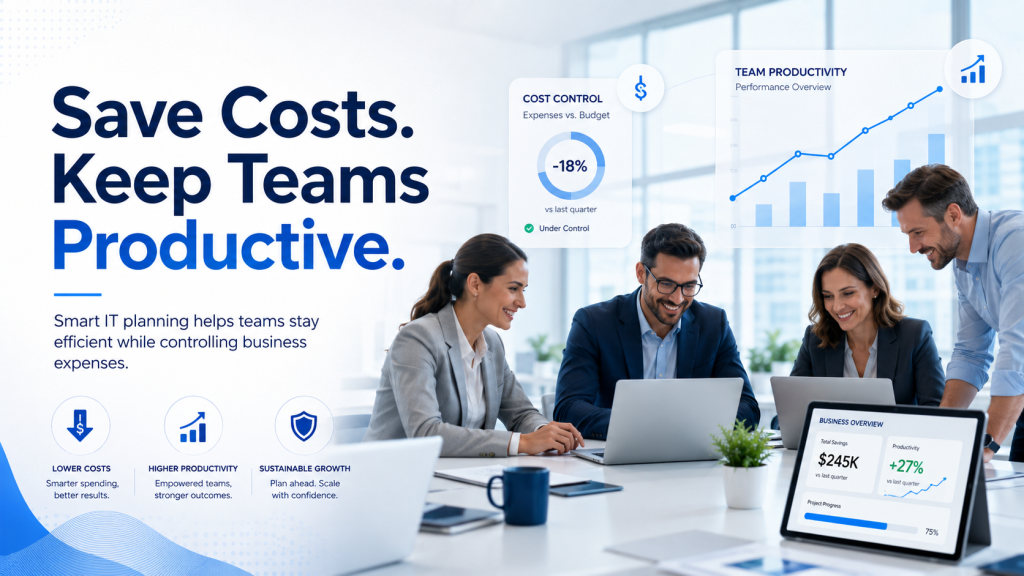
Cost control becomes risky when it affects employee output. If a business delays laptop purchases, uses outdated systems, or gives teams poor-quality devices, productivity can suffer. Employees may face slow performance, downtime, software compatibility issues, or frequent technical problems.
Therefore, companies need a balanced approach. They must reduce unnecessary spending while still giving teams the tools they need to work efficiently.
This is where flexible IT planning becomes useful. Businesses can avoid large capital purchases and still provide employees with tested laptops, MacBooks, desktops, monitors, or workstations based on actual requirements.
For example, HR teams can onboard new employees faster when ready-to-use rental devices are available. Similarly, IT teams can support remote workers more smoothly when devices come with proper configuration and support. As a result, the company controls spending without slowing down work.
The Shift from Ownership to Usage-Based Models
Many businesses are now shifting from “buy and maintain” to “use and scale.” This model is especially useful for companies with changing workforce needs.
A business may need 50 laptops during a hiring phase, 20 extra devices during a training program, or high-performance machines for a temporary design project. Buying devices for every temporary requirement can increase unnecessary capital spending.
On the other hand, usage-based models allow companies to pay for what they need, when they need it. This supports better planning because the business can match expenses with actual operations.
Moreover, this approach reduces the risk of unused assets sitting idle in the office. It also helps companies upgrade faster when technology changes.
Reducing Business Costs with Better IT Asset Planning
IT assets are one of the most important areas where companies can control spending. Laptops, desktops, MacBooks, servers, monitors, and networking equipment are essential for daily operations, but they also require significant investment.
A smarter IT asset plan includes:
- Understanding how many devices are actually required
- Separating permanent needs from temporary needs
- Choosing rental devices for short-term or project-based teams
- Avoiding over-purchasing during uncertain hiring phases
- Planning upgrades based on performance needs
- Reducing idle inventory
- Including maintenance and support in the overall cost calculation
This approach helps companies avoid unnecessary purchases. At the same time, it ensures employees receive suitable devices for their work.
For businesses trying to improve cash flow, IT rental solutions for businesses can reduce upfront pressure and simplify device management.
Why IT Rentals Support Modern Cost Control
IT rentals are becoming popular because they solve several business challenges at the same time. Companies get access to devices without making a large upfront investment. They can also scale the number of devices based on hiring, projects, remote teams, or seasonal demand.
Another benefit is reduced maintenance responsibility. When businesses own devices, they must handle repairs, upgrades, replacements, and technical issues internally. However, with a rental model, support and replacement processes can become more structured.
This is especially useful for startups, remote teams, consulting firms, training companies, and businesses running temporary projects. Instead of blocking money in depreciating assets, they can keep funds available for sales, hiring, marketing, product development, or operations.
Therefore, IT rentals do not only help in reducing business costs. They also support better business continuity.
Smarter CapEx Planning for CFOs and Finance Teams
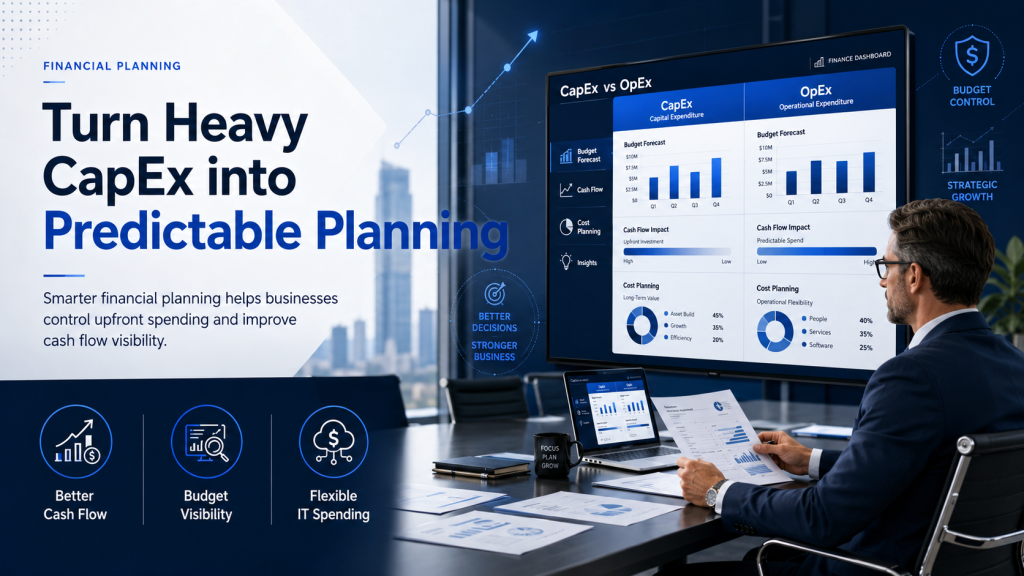
CFOs and finance managers are not simply looking for the cheapest option. They want predictable, measurable, and manageable spending. This is why CapEx planning has become more strategic in 2026.
When companies purchase IT assets, they must consider the full cost of ownership. This includes purchase price, GST impact, depreciation, maintenance, insurance, repairs, downtime, upgrades, and resale value.
However, when companies rent devices, they can convert a large upfront cost into a more predictable monthly or quarterly expense. This helps finance teams plan cash flow more effectively.
Additionally, rental models make it easier to match expenses with revenue-generating activities. For example, if a company hires a team for a client project, the device cost can be aligned with the project duration.
As a result, finance teams gain better control over budgets while employees still receive the equipment they need.
Procurement Teams Are Choosing Practical Alternatives
Procurement teams play an important role in reducing business costs because they directly evaluate vendors, pricing, quality, delivery timelines, and service terms.
In 2026, procurement decisions are becoming more practical. Instead of only comparing purchase prices, teams are comparing total value. They look at device quality, support availability, replacement timelines, flexibility, documentation, and long-term cost.
For IT equipment, this means procurement teams are considering rental options alongside outright purchases. This gives them more room to negotiate and choose a model that fits the business need.
For example, a company may still buy devices for permanent leadership roles but rent laptops for temporary teams, interns, consultants, events, or remote employees. This hybrid approach gives companies the benefit of ownership where needed and flexibility where required.
Reducing Business Costs for Startups and Growing Teams
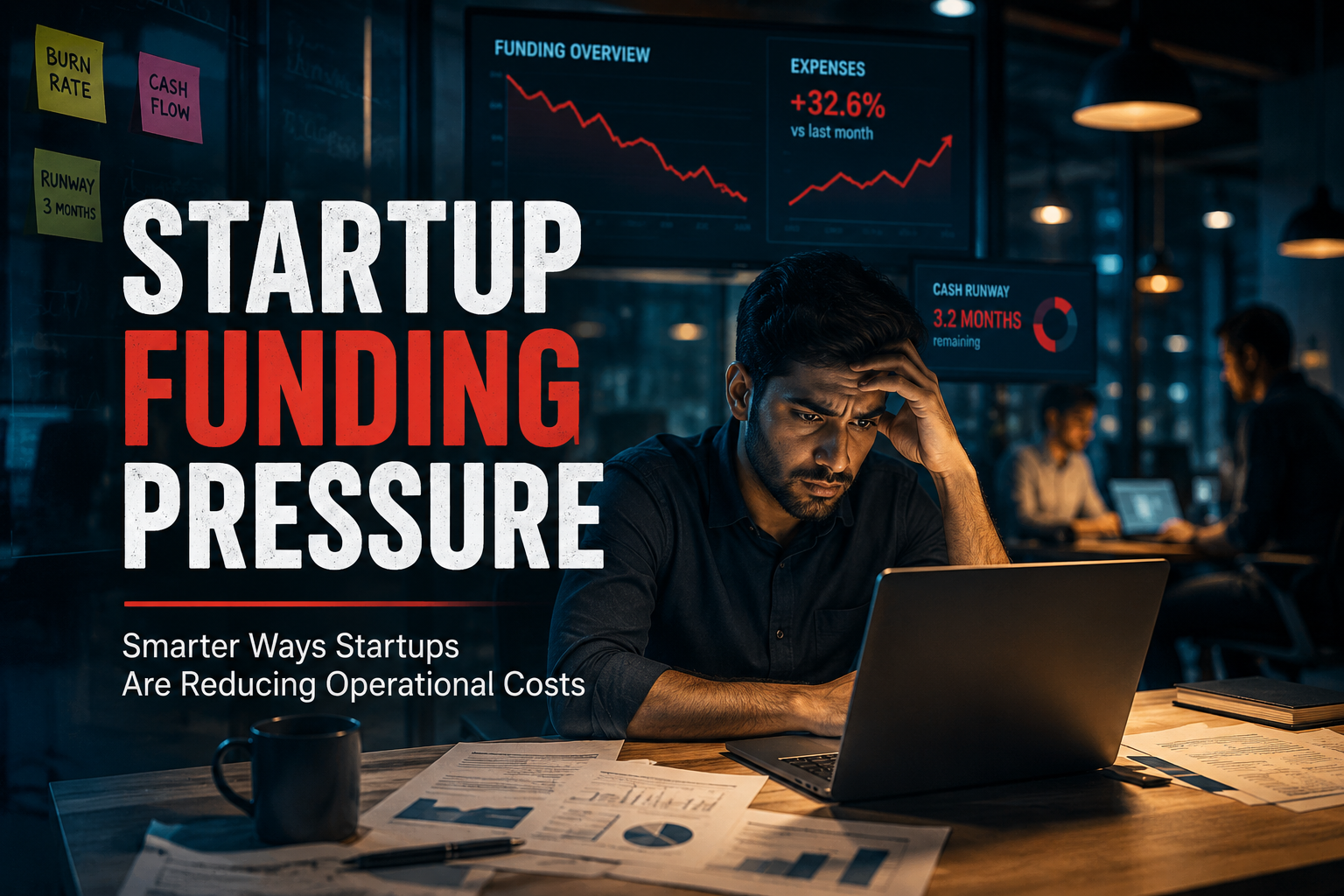
Startups and growing companies often face unpredictable hiring patterns. They may expand quickly after receiving funding, pause hiring during market uncertainty, or build project-based teams for specific clients.
In such cases, buying IT assets too early can create financial pressure. If the team size changes, the company may end up with unused laptops or outdated devices.
Renting makes the process easier. A startup can begin with a small number of devices and increase the quantity as the team grows. Similarly, if a project ends, the business can return the devices instead of holding unused inventory.
This makes IT rental solutions for businesses especially useful for startups, remote teams, and companies with flexible workforce models.
Practical Ways Companies Are Controlling Expenses
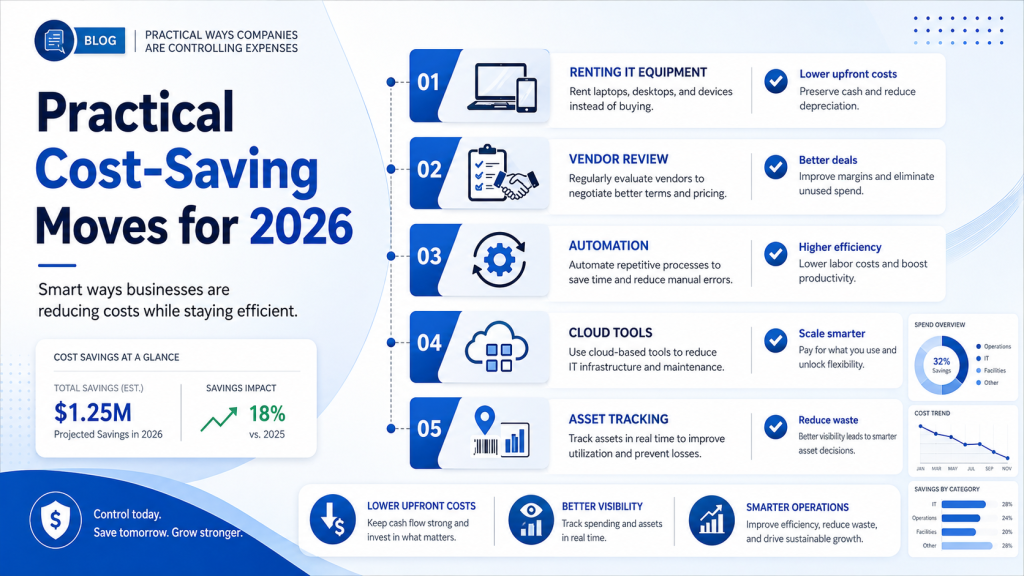
Companies are using multiple strategies to manage inflation and protect cash flow. While every business has different priorities, some common methods include:
- Renting IT equipment instead of buying everything upfront
- Reviewing vendor contracts more frequently
- Delaying non-essential purchases
- Using refurbished or open-box devices where suitable
- Moving selected tools to subscription models
- Outsourcing technical support where internal hiring is not practical
- Reducing unused office space and idle assets
- Automating repetitive finance and operations tasks
- Planning device requirements according to actual headcount
These steps help companies stay efficient without creating unnecessary financial pressure.
However, the best results come when businesses avoid random cost-cutting. Instead, they should identify which expenses support growth and which expenses only create avoidable burden.
Related Queries
How are companies reducing business costs in 2026?
Companies are reducing business costs by reviewing large purchases, avoiding unnecessary asset ownership, renegotiating vendor contracts, renting IT equipment, automating manual work, and shifting selected expenses from fixed capital spending to flexible operating models.
This approach helps businesses protect cash flow while still maintaining productivity.
Why are businesses reducing capital expenses during inflation?
Businesses are reducing capital expenses because inflation increases the cost of buying, maintaining, and upgrading assets. When companies spend heavily upfront, they reduce available cash for operations, hiring, marketing, and growth.
Therefore, many companies now prefer flexible models that allow them to access assets without owning them permanently.
Are IT rental solutions for businesses useful during inflation?
Yes, IT rental solutions for businesses are useful during inflation because they reduce upfront investment and provide access to laptops, MacBooks, desktops, monitors, and other devices based on actual business needs.
They also help companies manage employee onboarding, temporary projects, remote teams, and device upgrades without increasing capital pressure.
Where can companies rent laptops and IT equipment?
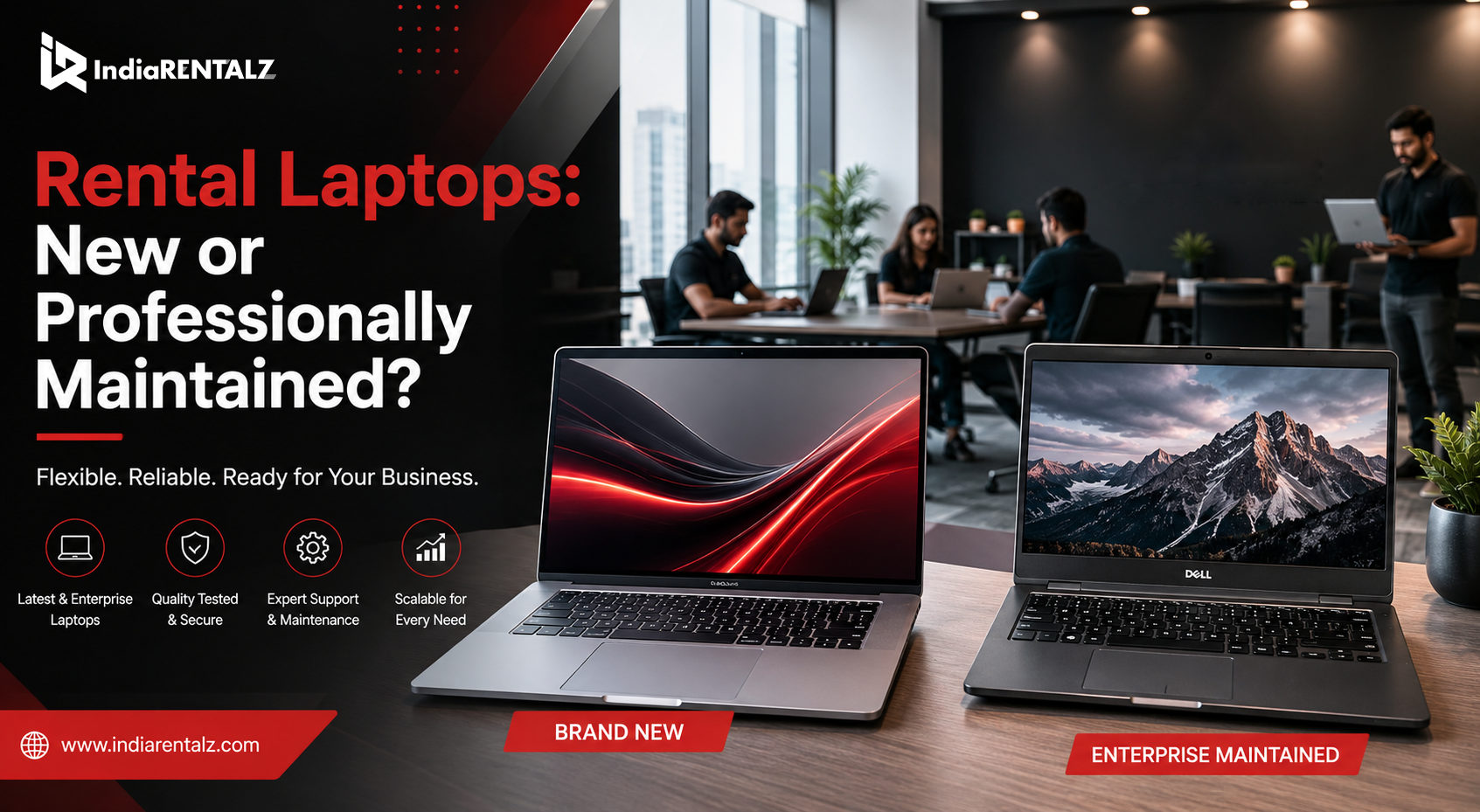
Companies can rent laptops and IT equipment from professional IT rental providers such as IndiaRENTALZ. The company offers rental laptops, MacBooks, desktops, workstations, servers, monitors, and managed device solutions for businesses.
For companies trying to control spending during inflation, IndiaRENTALZ can support flexible device deployment without heavy upfront investment.
Is renting better than buying for business IT needs?
Renting is better when the company needs flexibility, short-term devices, project-based equipment, remote team support, or quick scaling. Buying may still work for fixed, long-term requirements where the device will be used for several years.
However, many companies now use a hybrid approach. They buy devices for stable long-term roles and rent devices for changing or temporary requirements.
How can CFOs reduce IT infrastructure costs?
CFOs can reduce IT infrastructure costs by reviewing total ownership cost, avoiding over-purchasing, choosing rental devices for temporary needs, tracking device utilization, and aligning IT spending with business growth.
This helps finance teams maintain better control over cash flow while still supporting employees with reliable technology.
Conclusion
Inflation in 2026 has changed how companies think about spending. Businesses are no longer focusing only on ownership. Instead, they are choosing flexible, practical, and scalable models that protect cash flow.
Reducing business costs does not mean reducing quality or slowing down teams. It means making better decisions about where money should be invested and where flexibility can create savings.
For IT equipment, this shift is especially important. Laptops, MacBooks, desktops, and workstations are essential, but buying everything upfront can create unnecessary financial pressure. By using IT rental solutions for businesses, companies can equip their teams, manage growth, and reduce capital burden at the same time.
In the current business environment, smart companies are not just cutting expenses. They are building a more flexible and financially stable way to operate.