As the new financial year begins, businesses across industries naturally shift into planning mode. Budgets are reviewed more closely, expenses are evaluated with greater scrutiny, and leadership teams are increasingly expected to achieve more with limited resources. At the same time, technology continues to play a central role in operations — yet it remains one of the most significant and often underestimated cost drivers. This is exactly where IT cost optimization for businesses becomes essential, helping organizations align their technology investments with real needs while maintaining efficiency.
Therefore, the conversation is no longer just about spending on IT. Instead, it is shifting toward making smarter technology decisions and how they can directly impact financial efficiency. As organizations look to reduce IT costs in 2026, the focus is clearly moving toward flexibility, scalability, and smarter allocation of resources.
The Financial Year Reset and the Need for IT Cost Optimization for Businesses
Every financial year brings a reset. However, 2026 comes with a unique challenge — rising operational costs combined with faster digital expectations.
While businesses are expanding teams, adopting remote work, and increasing reliance on technology, they are also facing:
- Higher hardware procurement costs
- Increased maintenance and support expenses
- Underutilized IT assets sitting idle
- Rapid obsolescence of devices
As a result, IT cost optimization for businesses is no longer optional. It has become a core part of financial planning.
Moreover, companies that fail to align IT spending with actual usage often end up locking capital into assets that depreciate quickly. Therefore, smarter planning at the beginning of the financial year becomes critical.
Understanding Where IT Budgets Are Getting Drained
Before businesses can truly reduce IT costs in 2026, they need to understand where their money is going.
In many cases, hidden inefficiencies exist within IT spending:
- Bulk purchase of devices without utilization planning
- High upfront CapEx investments
- Ongoing repair and maintenance costs
- Lack of backup devices leading to productivity loss
- Over-spec or under-spec device allocation
Consequently, these inefficiencies create long-term financial leakage.
This is exactly where IT cost optimization for businesses starts — by identifying unnecessary expenses and aligning resources with actual requirements.
Why IT Cost Optimization for Businesses Requires a Mindset Shift
Traditionally, businesses viewed IT as a one-time investment. However, that mindset is rapidly changing.
Instead of asking:
- “What should we buy?”
Businesses are now asking:
- “What should we access, scale, or optimize?”
This shift is crucial because:
- Technology evolves faster than asset lifecycles
- Workforce needs are dynamic
- Business growth is often unpredictable
Therefore, IT cost optimization for businesses in 2026 is not just about cutting costs — it is about making smarter, future-ready decisions.
Moving from Ownership to Efficiency in IT Cost Optimization for Businesses
One of the biggest changes driving cost savings is the transition from ownership to efficiency.
Earlier, owning devices was considered a sign of stability. However, today it often results in:
- Locked capital
- Maintenance responsibility
- Upgrade challenges
On the other hand, optimized models focus on:
- Paying for usage
- Accessing updated technology
- Reducing long-term liabilities
As a result, businesses that prioritize IT cost optimization for businesses are increasingly choosing models that offer flexibility instead of fixed ownership.
Strategic Approaches to IT Cost Optimization for Businesses

To effectively reduce IT costs in 2026, businesses need a structured approach rather than random cost-cutting.
Some of the most effective strategies include:
- Device Standardization
Ensures uniform performance and easier maintenance - Right-Sizing Configurations
Avoids overpaying for unused performance - Lifecycle Planning
Prevents sudden upgrade expenses - Backup Device Planning
Reduces downtime costs - Flexible Procurement Models
Aligns expenses with actual usage
Together, these strategies form the foundation of IT cost optimization for businesses.
How IT Cost Optimization for Businesses Impacts Growth
Cost optimization is often misunderstood as a defensive strategy. However, in reality, it directly supports growth.
When businesses optimize IT spending:
- Cash flow improves
- Capital can be redirected to expansion
- Teams scale faster
- Decision-making becomes more agile
Therefore, instead of limiting operations, IT cost optimization for businesses actually enables faster and more sustainable growth.
Real Business Scenarios Where IT Cost Optimization for Businesses Works

Different business scenarios highlight how optimization creates impact:
Startups Scaling Teams
Startups often need to onboard quickly without large upfront investments. Optimized IT models allow them to scale without financial pressure.
Remote and Hybrid Workforces
With distributed teams, flexibility becomes essential. Businesses can reduce IT costs in 2026 by avoiding unnecessary purchases and focusing on usage-based models.
Project-Based Requirements
Short-term projects do not justify long-term investments. Therefore, optimized IT planning helps avoid idle assets.
Enterprise Expansion
Large teams require consistent performance across locations. Cost optimization ensures efficiency without overspending.
Comparing Traditional Spending vs IT Cost Optimization for Businesses
A clear difference exists between traditional IT spending and optimized IT planning.
Traditional approach:
- Heavy upfront investment
- Fixed infrastructure
- Higher maintenance burden
Optimized approach:
- Flexible cost structure
- Scalable infrastructure
- Reduced operational overhead
As a result, businesses adopting IT cost optimization for businesses gain both financial and operational advantages.
The Role of Flexibility in Reducing IT Costs in 2026
Flexibility is emerging as one of the strongest drivers of cost savings.
Instead of committing to long-term purchases, businesses are choosing solutions that allow:
- Easy scaling up or down
- Quick deployment
- Minimal risk
This flexibility ensures that companies only pay for what they use, which directly helps reduce IT costs in 2026.
Moreover, it also reduces the risk of over-investment in uncertain business environments.
IT Cost Optimization for Businesses Through Smarter Procurement Decisions
Procurement decisions play a major role in cost optimization.
Smarter procurement includes:
- Evaluating total cost of ownership instead of just purchase price
- Considering support and maintenance costs
- Choosing flexible acquisition models
- Planning for upgrades and replacements
Therefore, IT cost optimization for businesses is not just about what you buy — it is about how you plan the entire lifecycle.
Building a Future-Ready IT Strategy with Cost Optimization
Looking ahead, businesses need IT strategies that are both cost-efficient and adaptable.
A future-ready strategy includes:
- Scalable infrastructure
- Flexible device access
- Predictable cost structures
- Integrated support systems
As businesses continue to evolve, IT cost optimization for businesses will remain a key pillar of sustainable operations.
Related Queries and Common Questions
How can IT cost optimization for businesses improve profitability?
IT cost optimization reduces unnecessary spending and aligns expenses with actual usage. As a result, businesses can improve margins while maintaining operational efficiency.
What are the best ways to reduce IT costs in 2026 without affecting productivity?
Businesses can reduce IT costs by adopting flexible models, right-sizing devices, and planning resource allocation carefully. This ensures that productivity remains unaffected while costs are controlled.
Is renting IT equipment a better option for cost optimization?
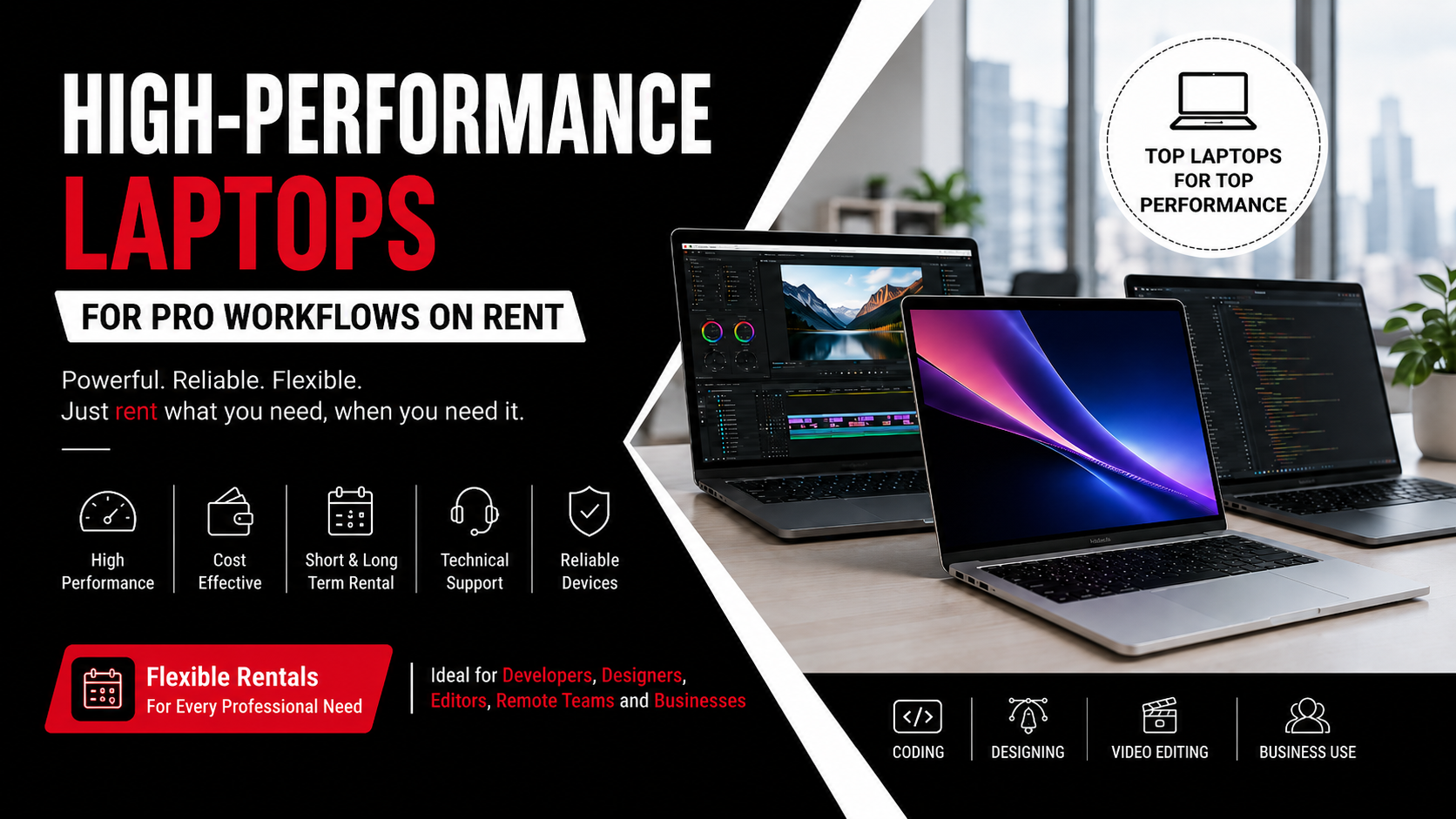
In many cases, renting provides flexibility, reduces upfront costs, and includes support. Therefore, it becomes a practical option for businesses looking to optimize IT spending.
Where can businesses find reliable IT rental solutions?
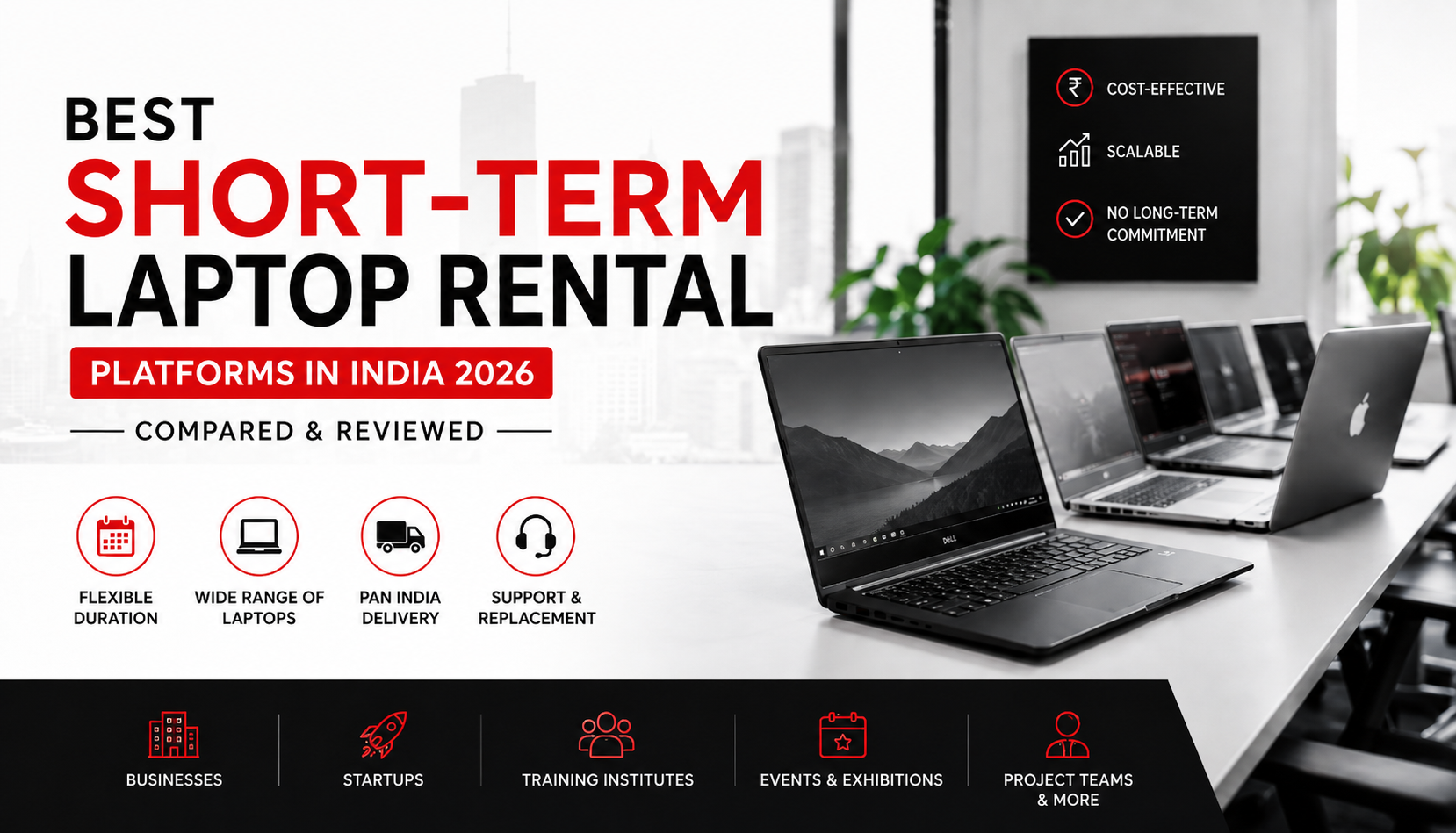
Businesses looking for flexible and scalable IT solutions can explore platforms like IndiaRENTALZ, which offer a wide range of laptops, MacBooks, and desktops with Pan India delivery, support, and flexible rental plans.
Conclusion: Smarter Decisions Define Financial Success in 2026
As the new financial year unfolds, businesses are being pushed to rethink how they allocate resources. IT, being a significant cost center, requires careful planning and smarter decision-making.
Instead of focusing only on reducing expenses, organizations need to focus on optimizing them.
Ultimately, IT cost optimization for businesses is about aligning technology with real needs, enabling flexibility, and ensuring that every investment contributes to growth.
And as companies continue to reduce IT costs in 2026, those who adopt smarter strategies early will gain a clear competitive advantage.

One thought on “IT Cost Optimization for Businesses in the New Financial Year 2026”
Comments are closed.