Every tax season brings the same pressure—more clients, tighter deadlines, and suddenly, not enough systems to keep operations smooth. This is exactly where laptop rental for CA firms becomes a practical solution.
Instead of scrambling to arrange devices at the last moment, firms are now shifting toward flexible IT setups that support temporary workload spikes without long-term commitments.
Seasonal Workload Challenges in Accounting Firms
To begin with, CA firms operate in cycles. While some months remain steady, tax season creates an intense surge in workload.
As a result, firms often:
- Hire temporary staff for audits and filings
- Extend working hours to meet deadlines
- Require additional systems for parallel processing
However, this sudden expansion creates a gap between available resources and actual demand. Therefore, having a scalable solution becomes essential.
Why Laptop Rental for CA Firms Makes Business Sense
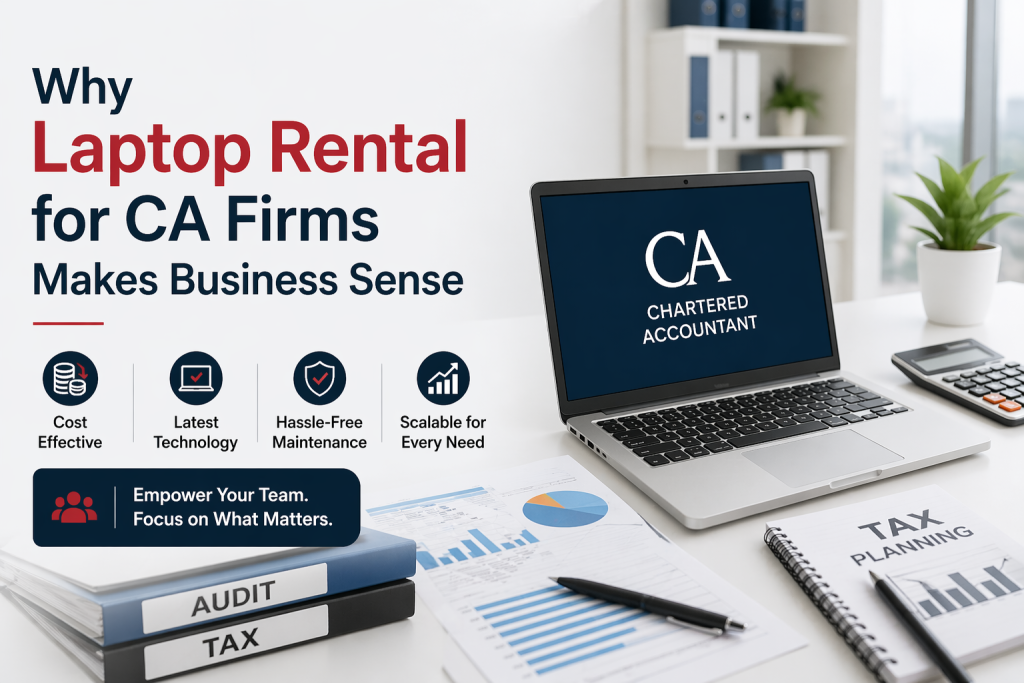
Rather than investing heavily in new devices, many firms now prefer laptop rental for CA firms as a strategic choice.
This approach allows businesses to align IT resources with workload instead of locking capital into assets that may remain unused later.
Moreover, rental ensures that firms can respond quickly without waiting for procurement cycles.
Limitations of Buying Laptops for Short-Term Needs
Although buying laptops may seem like a straightforward option, it often creates inefficiencies during seasonal demand.
For instance:
- High upfront investment impacts cash flow
- Devices remain idle after tax season
- Maintenance and upgrades add hidden costs
In contrast, rental eliminates these concerns and keeps operations flexible.
Laptop Rental for CA Firms During Peak Tax Season
During peak filing periods, speed and readiness matter the most. This is where laptop rental for CA firms proves valuable.
Firms can:
- Deploy multiple systems within a short timeframe
- Scale up or down based on workload
- Ensure every team member has access to required tools
Additionally, this flexibility helps firms maintain productivity without operational delays.
Key Benefits of Laptop Rental for CA Firms
When evaluating options, the advantages of rental become quite clear.
- No heavy capital investment
Firms avoid large upfront expenses - Flexible rental duration
Devices can be used only when required - Quick deployment
Systems are delivered ready for use - Maintenance support included
No need to manage technical issues internally - Scalability
Add or reduce devices as workload changes
Because of these benefits, rental aligns well with the dynamic nature of accounting work.
Choosing the Right Configuration for Accounting Work
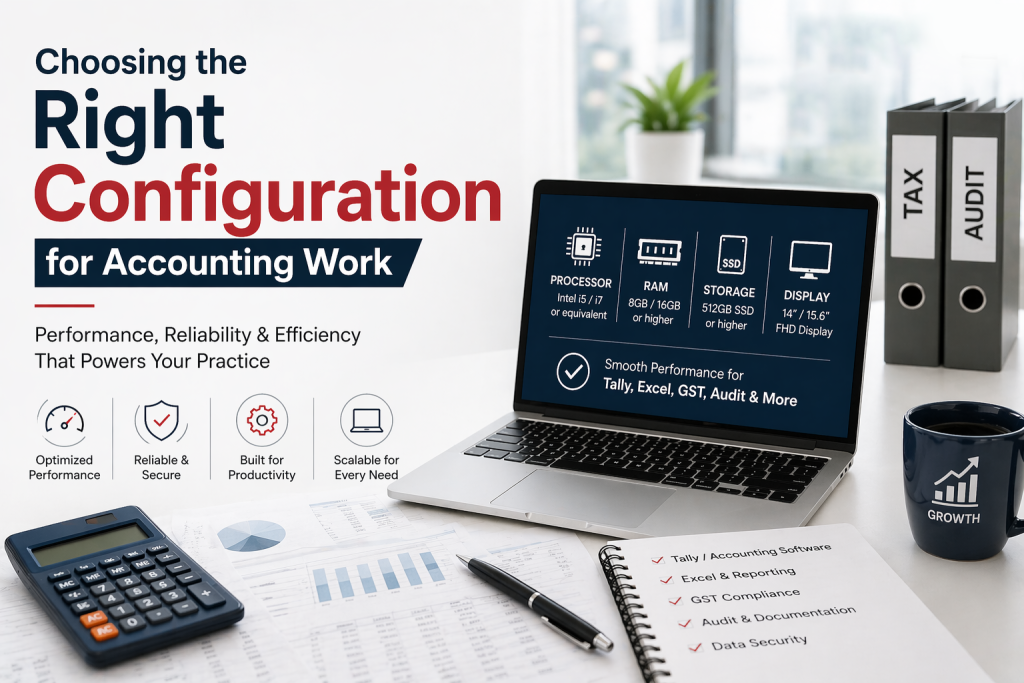
While flexibility is important, performance should not be overlooked.
For smooth operations during laptop rental for tax season, firms should ensure:
- SSD-based systems for faster performance
- Minimum 8GB RAM (16GB preferred for heavy Excel usage)
- Reliable processors for multitasking
- Compatibility with tools like Tally, GST software, and Excel
This ensures that teams can work efficiently without interruptions.
Use Cases Where Laptop Rental for CA Firms Fits Best
In practice, rental is not limited to one scenario. It supports multiple operational needs.
Common use cases include:
- Audit teams working on client sites
- GST filing teams handling bulk data
- Temporary staff during peak months
- Project-based accounting assignments
Therefore, rental becomes a versatile solution across different business situations.
Comparing Rental vs Ownership for CA Firms
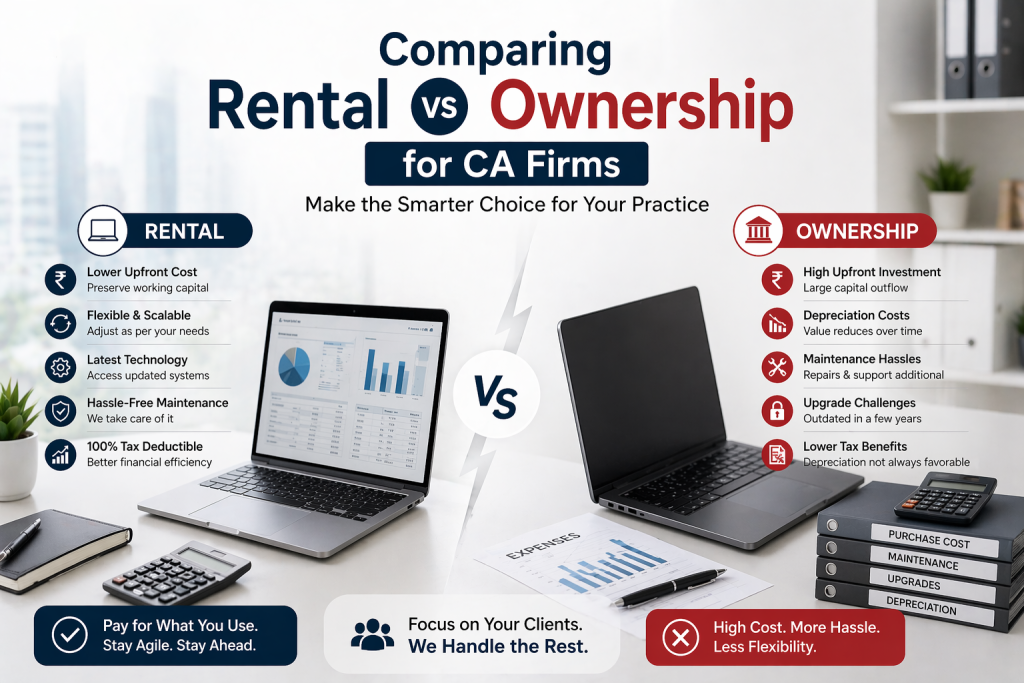
To make an informed decision, it is important to understand the difference in approach.
Ownership:
- Fixed cost regardless of usage
- Long-term maintenance responsibility
- Limited flexibility
Rental:
- Pay only for usage duration
- Maintenance handled externally
- Easy scalability
As a result, rental provides better alignment with seasonal demand.
How Laptop Rental for CA Firms Supports Business Efficiency
Beyond cost savings, rental improves overall operational efficiency.
For example:
- Teams can start work immediately without setup delays
- Standardized systems ensure consistency
- Downtime is minimized with quick replacements
Consequently, firms can focus more on client delivery rather than infrastructure management.
Planning IT Resources for the Next Tax Season
Instead of reacting at the last moment, firms should plan their IT requirements in advance.
A structured approach includes:
- Estimating team size during peak months
- Identifying required configurations
- Choosing a reliable rental partner
- Scheduling delivery before workload peaks
This proactive planning ensures smooth execution during critical periods.
Related Queries and Common Questions
Is laptop rental for CA firms suitable for short-term tax work?
Yes, it is specifically designed for such scenarios. Firms can rent devices for a few months and return them once the workload reduces, making it highly practical.
How does laptop rental for tax season help reduce costs?
Instead of investing in permanent assets, firms pay only for the duration of use. This reduces capital expenditure and avoids long-term maintenance costs.
What configurations are ideal for accounting and GST work?
Systems with SSD storage, at least 8GB RAM, and reliable processors work well for Tally, Excel, and GST tools. Higher configurations can be chosen for heavy workloads.
Can rental laptops be deployed for audit teams at client locations?
Yes, rental laptops are often used for on-site audits. They allow teams to work efficiently without depending on client infrastructure.
Where can you find a reliable laptop rental for CA firms?
If you are looking for a dependable solution, IndiaRENTALZ offers structured deployment, flexible rental options, and support tailored for business needs—making it a practical choice for accounting firms during peak seasons.
Final Thoughts on Laptop Rental for CA Firms
In a business environment where demand fluctuates, flexibility becomes more valuable than ownership.
By choosing laptop rental for CA firms, organizations can handle seasonal workload spikes efficiently, maintain productivity, and manage costs without unnecessary investments.
Ultimately, the focus should remain on delivering accurate and timely results to clients—while the infrastructure adapts seamlessly to support that goal.