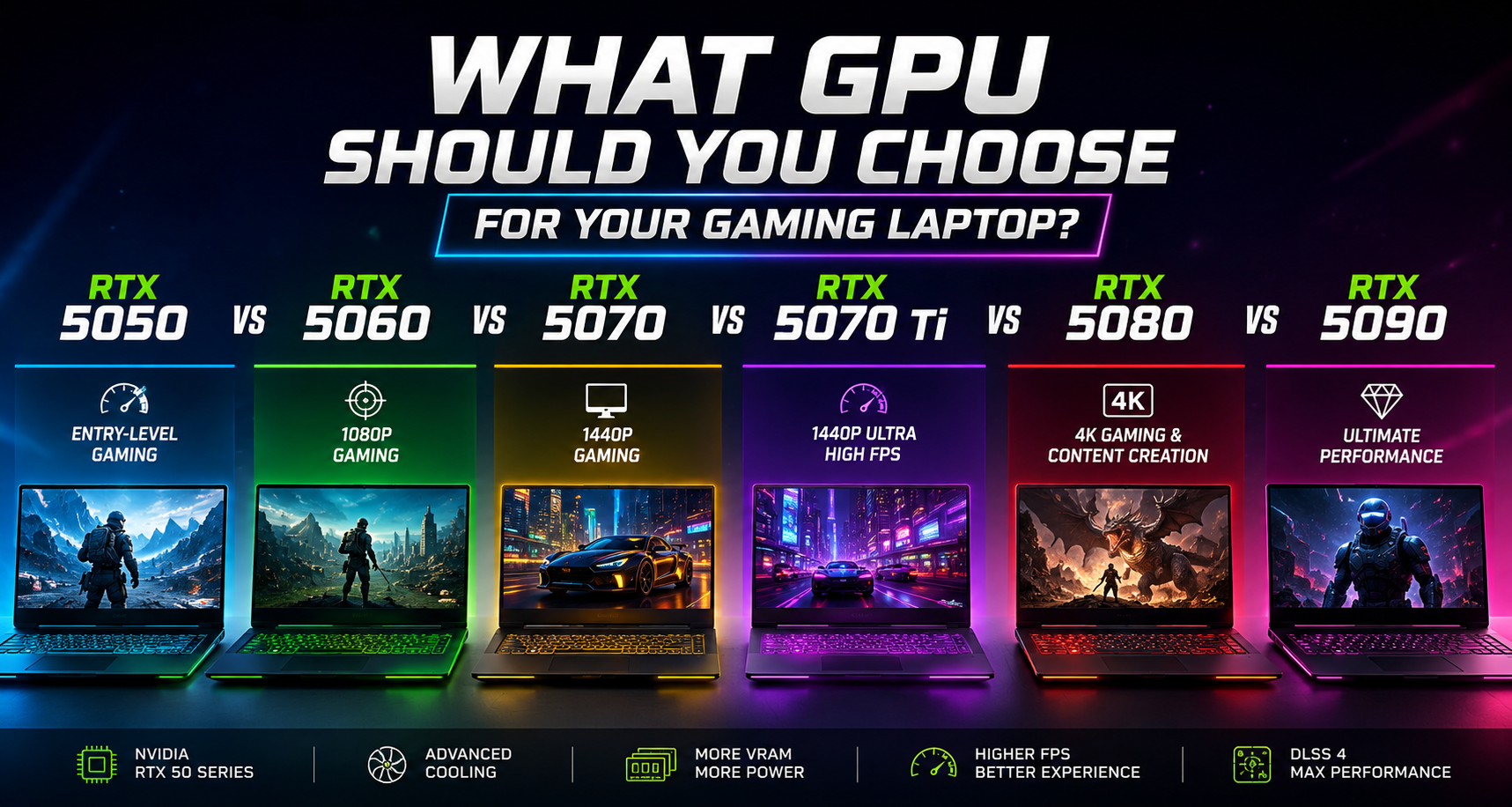
Gaming and creative workloads have evolved rapidly over the last few years. Modern AAA games now demand realistic lighting, faster frame rates, and smoother rendering, while professional creative software relies heavily on GPU acceleration for editing, animation, and 3D workflows. As a result, RTX GPUs for designers and gamers have become one of the most important hardware upgrades for performance-focused users.
Unlike older-generation graphics cards, RTX GPUs combine AI-powered processing, ray tracing technology, and enhanced rendering capabilities. Consequently, they help gamers achieve immersive gameplay while enabling designers to complete demanding projects faster and more efficiently.
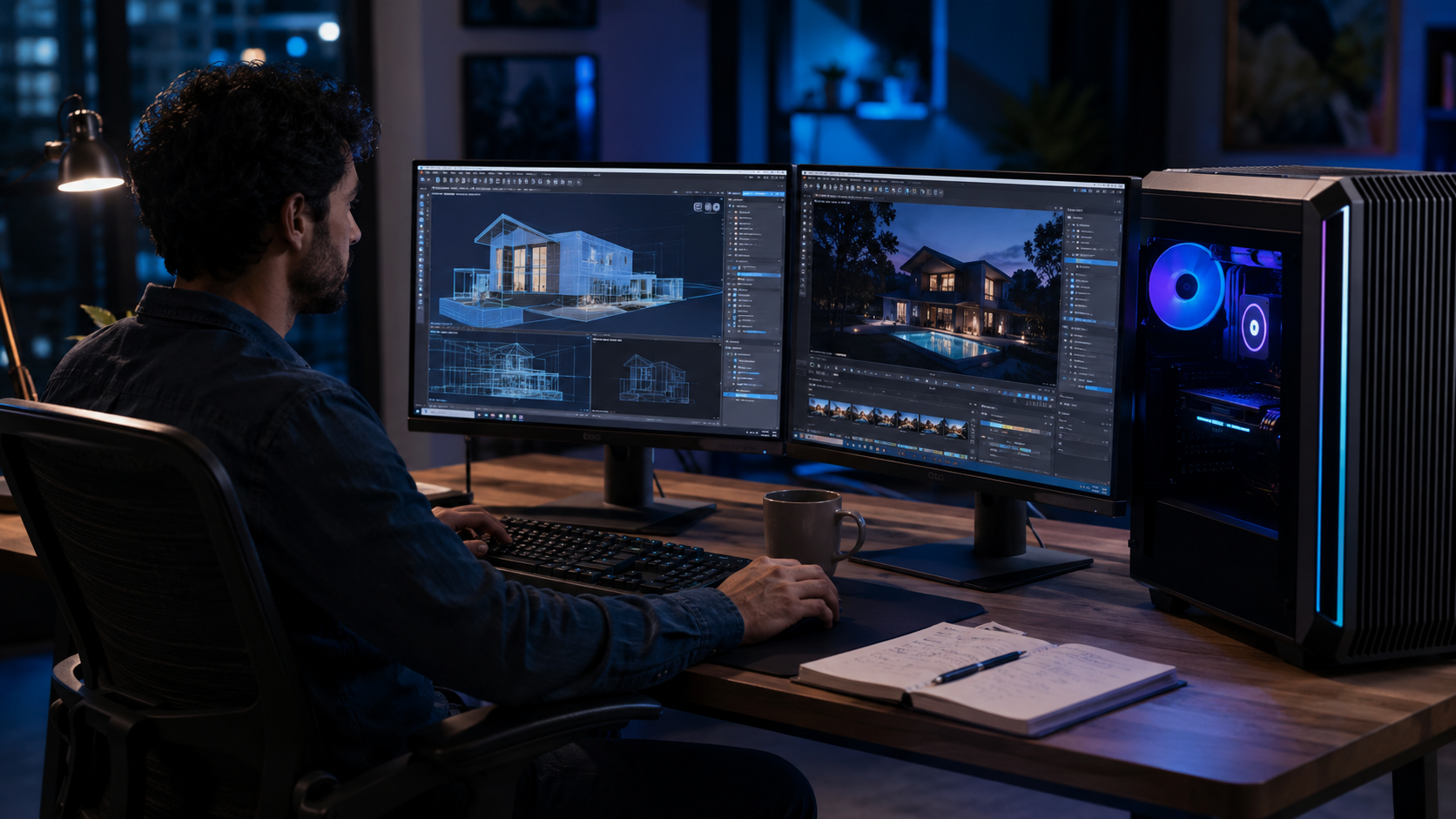
Whether you are editing 4K videos, creating 3D assets, streaming gameplay, or building architectural models, RTX-powered systems deliver noticeable improvements in both speed and visual quality.
RTX GPUs for Designers and Gamers Deliver Advanced Graphics Performance
Modern RTX GPUs are built using NVIDIA’s advanced GPU architecture, which focuses on both graphical realism and AI-enhanced processing. While traditional GPUs mainly handled rendering tasks, RTX cards introduce dedicated Tensor Cores and RT Cores that significantly improve performance across gaming and creative applications.
Because of this, users experience:
- Faster rendering times
- Better lighting and shadow accuracy
- AI-assisted workflows
- Improved multitasking
- Higher frame rates in games
- Better support for professional software
Moreover, RTX GPUs support advanced technologies like DLSS (Deep Learning Super Sampling), which uses AI to improve gaming performance without sacrificing image quality.
As software becomes more demanding, these capabilities are no longer optional for many professionals and gamers.
Real-Time Ray Tracing Improves Visual Realism
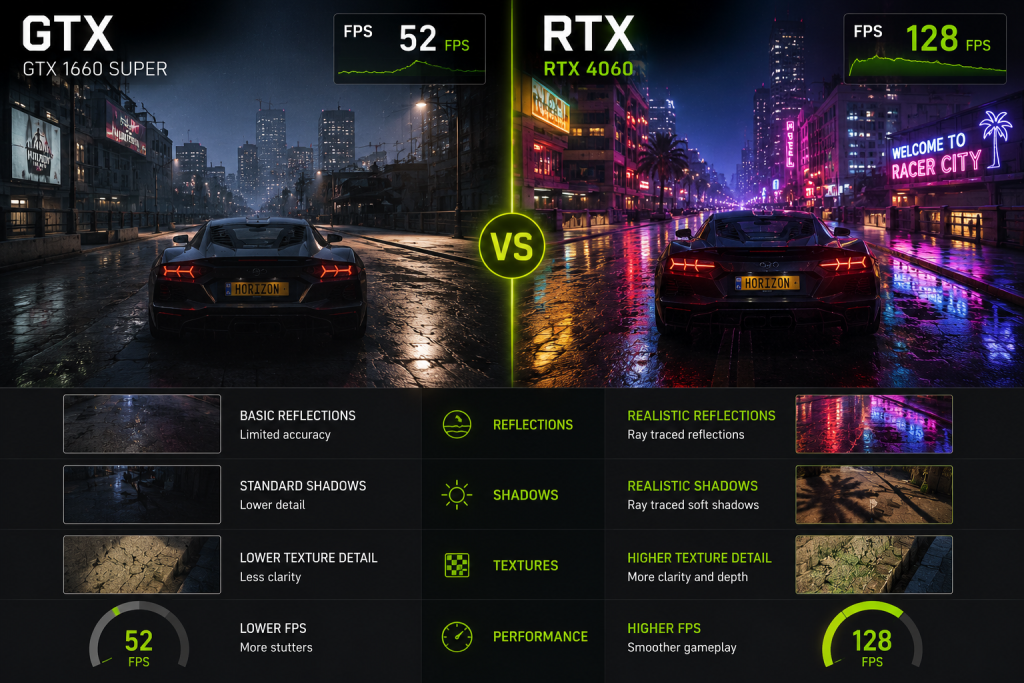
One of the biggest advancements introduced by RTX technology is real-time ray tracing. Traditionally, realistic reflections and shadows required extensive rendering time. However, RTX GPUs process these lighting effects in real time.
As a result, games appear significantly more lifelike. Reflections respond naturally to movement, shadows become more detailed, and environments feel more immersive overall.
For gamers, this creates cinematic gameplay experiences. Meanwhile, for designers and 3D artists, ray tracing allows accurate previews during production instead of waiting for final renders.
Applications that benefit heavily include:
- Blender
- Unreal Engine
- Autodesk Maya
- Cinema 4D
- Adobe Substance 3D
Therefore, RTX GPUs for designers and gamers provide a practical performance advantage rather than simply visual enhancement.
AI Acceleration Helps Designers Work Faster
Creative software increasingly depends on AI-based tools. Fortunately, RTX GPUs are specifically optimized for AI acceleration through Tensor Cores.
Because of this, designers can speed up multiple tasks such as:
- Video rendering
- AI upscaling
- Background removal
- Noise reduction
- Motion tracking
- Object detection
- Real-time effects processing
For example, Adobe Premiere Pro uses GPU acceleration to improve playback smoothness and export speeds. Similarly, DaVinci Resolve relies heavily on GPU performance for color grading and effects rendering.
As projects become more complex, RTX GPUs for designers and gamers help reduce waiting time and improve productivity throughout the workflow.
RTX GPUs for Designers and Gamers Enhance 3D Workflows
3D artists and architects often work with extremely heavy scenes, textures, and rendering pipelines. Consequently, system performance becomes a critical factor.
RTX GPUs help by enabling:
- Real-time viewport rendering
- Faster texture processing
- Better scene handling
- Quicker final renders
- Improved simulation performance
Instead of relying entirely on CPU rendering, many modern tools now distribute workloads across the GPU. Therefore, RTX-equipped systems dramatically reduce rendering bottlenecks.
This becomes especially important for professionals working with:
- Architectural visualization
- Product rendering
- Game development
- Motion graphics
- Animation pipelines
Additionally, real-time previews allow creators to make faster adjustments without interrupting the workflow.
Gaming Performance Benefits Beyond Higher FPS
Although frame rates remain important, gaming performance today involves much more than FPS alone. RTX GPUs improve overall gaming experiences through multiple technologies working together.
Key gaming benefits include:
- Smoother gameplay
- Reduced latency
- Better texture quality
- AI-enhanced frame generation
- Enhanced streaming capabilities
- Stable performance in demanding titles
DLSS technology is particularly important because it increases frame rates using AI-generated image reconstruction. Consequently, gamers can enjoy higher resolutions without major performance loss.
Competitive gamers also benefit from lower latency and smoother frame delivery, especially in fast-paced multiplayer games.
Because modern games continue to increase graphical demands, RTX systems offer stronger long-term value for performance-focused users.
RTX vs GTX Performance Differences Continue to Grow
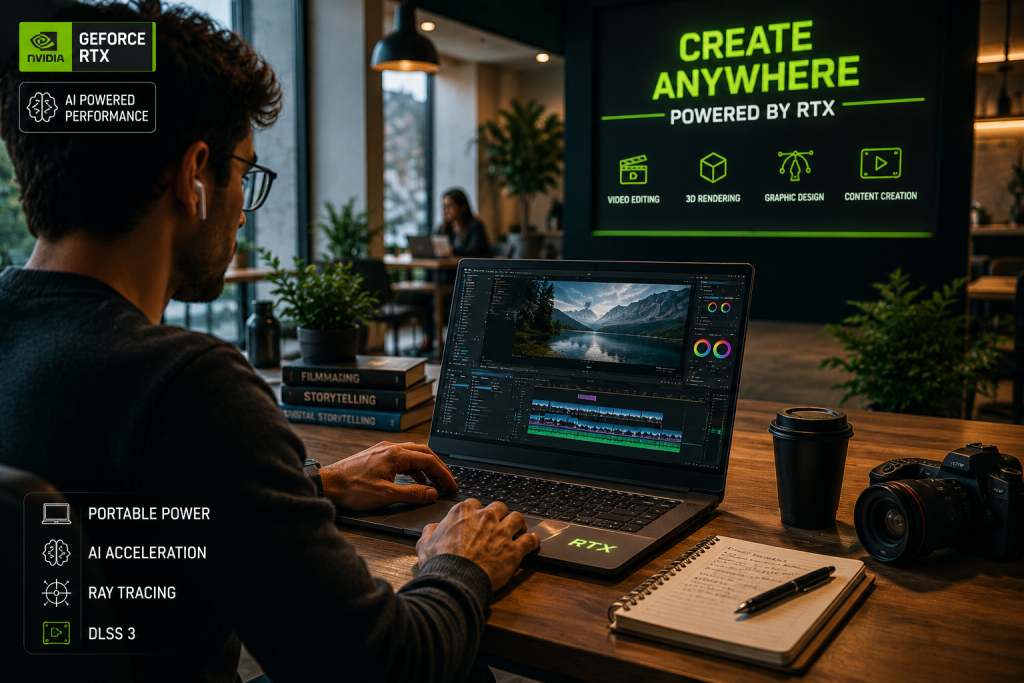
The discussion around RTX vs GTX remains relevant for users planning hardware upgrades. While GTX graphics cards still support many standard gaming tasks, RTX GPUs provide considerably more advanced capabilities.
The major differences include:
RTX Advantages
- Ray tracing support
- DLSS AI upscaling
- Better AI processing
- Improved rendering efficiency
- Faster creative workload handling
- Better future software compatibility
GTX Limitations
- No dedicated ray tracing hardware
- Limited AI acceleration
- Lower performance in modern rendering tasks
- Reduced optimization for newer applications
As software developers increasingly optimize applications for AI-assisted processing, the gap between RTX vs GTX continues widening.
Therefore, users focused on gaming, editing, or professional design workflows often gain more long-term value from RTX-based systems.
RTX GPUs for Designers and Gamers Support Multitasking Better
Modern users rarely perform a single task at a time. Gamers frequently stream while gaming, and designers often run multiple heavy applications simultaneously.
Because RTX GPUs handle GPU-intensive workloads more efficiently, they improve multitasking performance significantly.
For example, users can:
- Edit videos while rendering previews
- Stream gameplay during competitive matches
- Run multiple creative applications together
- Handle large assets without severe lag
Additionally, RTX laptops and workstations often include better thermal optimization and power management for sustained workloads.
This makes them highly suitable for hybrid professionals who combine creative work and entertainment on the same system.
RTX Laptops Are Becoming Essential for Remote Creative Work
Remote work and freelance creative industries have increased the demand for portable high-performance systems. As a result, RTX-powered laptops have become extremely popular among creators and gamers.
Unlike older mobile GPUs, modern RTX laptop GPUs deliver desktop-level performance in many workloads.
These systems are especially useful for:
- Remote editors
- Content creators
- Traveling professionals
- Freelance designers
- Esports players
- Architecture students
Moreover, RTX laptops now support advanced cooling systems, high refresh-rate displays, and improved battery optimization, making them practical for daily professional use.
Consequently, RTX GPUs for designers and gamers are no longer limited to premium desktop setups.
Investing in RTX Hardware Offers Long-Term Value
Technology requirements continue evolving rapidly. Games now demand advanced rendering technologies, while creative software increasingly depends on GPU acceleration.
Because of this, investing in RTX hardware provides long-term advantages including:
- Better future compatibility
- Longer hardware lifespan
- Improved software optimization
- Higher productivity
- Better resale value
Although RTX systems may initially cost more than older-generation hardware, the performance gains often justify the investment for professionals and serious gamers.
Additionally, businesses and startups increasingly prefer RTX-equipped devices for teams working with creative applications, editing software, and development tools.
Related Queries and Common Questions
Why are RTX GPUs for designers and gamers considered future-ready?
RTX GPUs support AI-driven technologies, advanced rendering features, and modern software optimization. Since game engines and creative applications increasingly rely on GPU acceleration, RTX systems remain compatible with future performance requirements more effectively than older GPUs.
Is RTX better than GTX for video editing and rendering?
Yes, RTX GPUs perform significantly better for video editing and rendering workloads. They include dedicated AI and ray tracing hardware, which improves export speeds, playback performance, and rendering efficiency in professional software.
Do RTX GPUs improve gaming performance at higher resolutions?
RTX GPUs handle higher resolutions more efficiently because they support DLSS technology and advanced rendering optimization. Consequently, users can maintain smoother gameplay even at 1440p or 4K resolutions.
Which professionals benefit the most from RTX GPUs?
RTX GPUs are especially useful for:
- Video editors
- 3D artists
- Architects
- Animators
- Motion designers
- Streamers
- Game developers
These professionals regularly work with GPU-intensive software and rendering tasks.
Is upgrading from GTX to RTX worth it?
For users handling modern games, editing workflows, or 3D applications, upgrading from GTX to RTX often provides major performance improvements. The RTX vs GTX difference becomes especially noticeable in AI-assisted workloads and ray-traced environments.
Where can businesses rent RTX laptops and workstations?
Businesses, startups, creators, and remote teams looking for high-performance RTX systems can explore flexible rental options through IndiaRentalz
. RTX-powered laptops and workstations are particularly useful for short-term projects, creative teams, and scalable remote work setups.
Final Thoughts on RTX Performance for Modern Users
The demand for high-performance computing continues increasing across both gaming and professional creative industries. Consequently, RTX GPUs for designers and gamers have become an important part of modern workflows rather than a niche upgrade.
From AI-assisted editing to real-time ray tracing and advanced gaming performance, RTX technology delivers meaningful improvements across multiple use cases. Furthermore, the growing gap in RTX vs GTX performance highlights how modern applications increasingly rely on advanced GPU capabilities.
Whether the goal is smoother gameplay, faster rendering, improved multitasking, or long-term performance reliability, RTX-equipped systems provide a balanced solution for both creators and gamers navigating increasingly demanding digital environments.