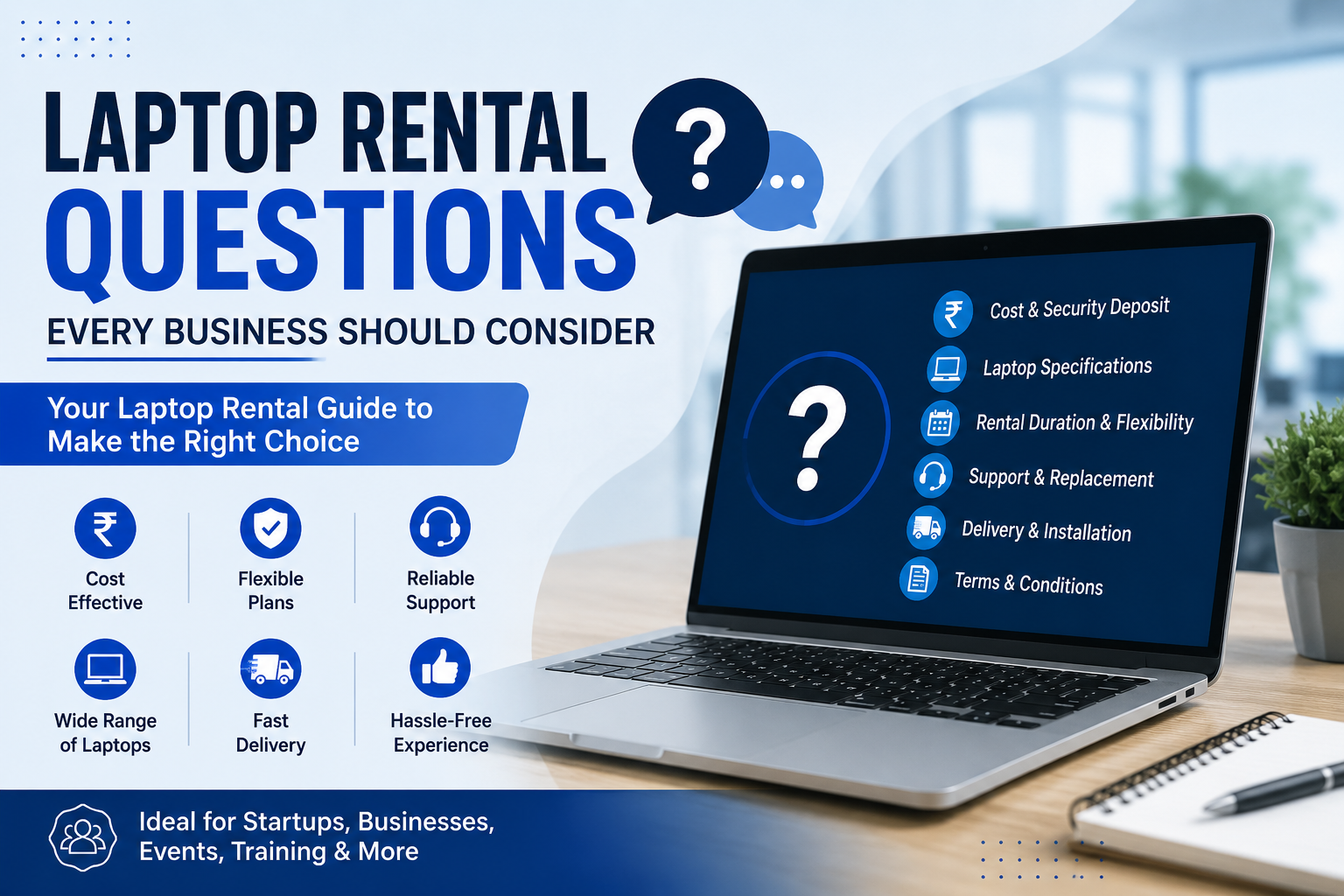
Businesses today need technology that can scale with changing requirements. Whether you are onboarding new employees, conducting training programs, managing remote teams, or supporting short-term projects, renting laptops can be a practical and cost-effective solution. However, before signing a rental agreement, most decision-makers have several laptop rental questions related to costs, device quality, support, and flexibility.
Understanding these concerns beforehand helps organizations make informed decisions and avoid unexpected challenges later. This guide covers the most important aspects businesses should evaluate before choosing a laptop rental provider.
Understanding the Purpose Behind Laptop Rentals
Before comparing providers or pricing plans, it is important to identify why your organization needs rental devices. Different use cases often require different specifications, support levels, and contract terms.
For example, startups may require flexible monthly rentals, while training institutes may need a large number of laptops for a short duration. Similarly, remote teams often prioritize delivery logistics and technical support.
Therefore, defining the purpose of the rental requirement helps narrow down suitable options and simplifies the decision-making process.
Essential Laptop Rental Questions Related to Device Quality
One of the first concerns businesses have is the condition of the laptops they will receive. Not every rental device is brand new, but reputable providers ensure that all equipment meets professional standards.
When evaluating providers, businesses should confirm whether devices undergo:
- Hardware testing
- Battery health checks
- Keyboard and touchpad inspection
- Camera and microphone testing
- Operating system updates
- Performance verification
As a result, organizations receive devices that are ready for immediate use and capable of supporting business operations without delays.
Choosing the Right Configuration with a Laptop Rental Guide
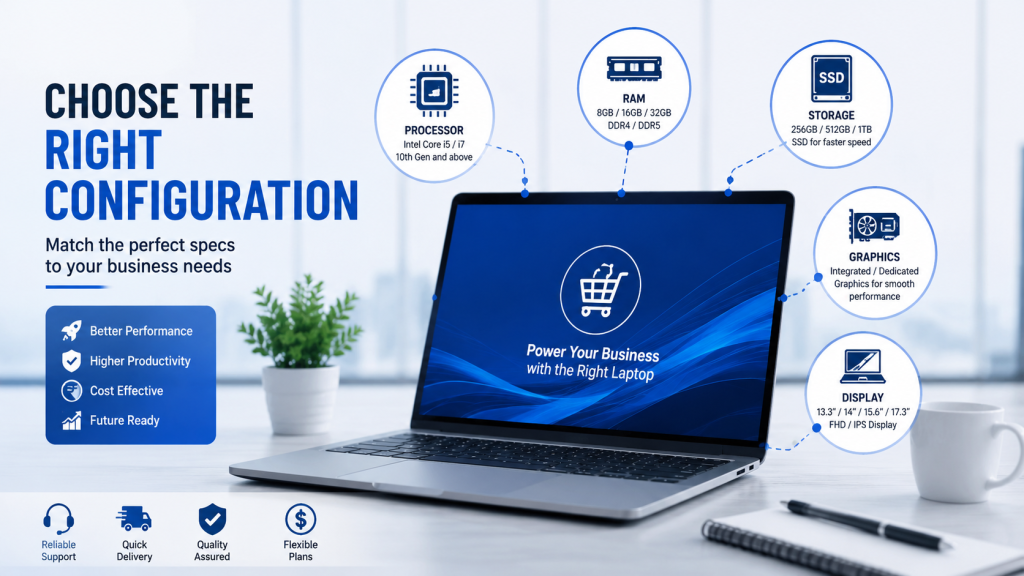
A reliable laptop rental guide should help businesses match specifications with actual workloads rather than selecting devices based solely on budget.
Generally, requirements vary depending on usage:
- Basic office work typically requires an Intel Core i5 processor, SSD storage, and sufficient RAM.
- Software developers often benefit from higher memory configurations and faster processors.
- Designers and video editors usually require dedicated graphics capabilities.
- Data analysts and engineers may need advanced performance configurations.
Consequently, discussing software requirements and daily workloads with the provider can prevent overpaying for unnecessary features while ensuring adequate performance.
Evaluating Rental Costs Beyond the Monthly Fee
Pricing is often the primary focus during the evaluation stage. However, businesses should look beyond the advertised monthly rental amount.
Several additional factors can influence the overall cost, including:
- Security deposits
- Transportation charges
- Installation fees
- Software licensing costs
- Insurance coverage
- Extension pricing
Therefore, understanding the complete pricing structure is one of the most important laptop rental questions to address before finalizing an agreement.
Support Services and Replacement Commitments
Technology issues can impact productivity if they are not resolved quickly. For this reason, support quality should be evaluated as carefully as pricing.
Businesses should verify:
- Available support channels
- Response timelines
- Replacement commitments
- Escalation procedures
- Coverage areas
Moreover, organizations with distributed teams should ensure that support is available across all operating locations.
Although lower-cost providers may appear attractive initially, stronger support services often provide better long-term value.
Flexibility for Growing Organizations
Business requirements rarely remain static. Teams expand, projects evolve, and technology needs change over time.
As a result, organizations should explore laptop rental questions related to scalability and flexibility.
Important considerations include:
- Adding devices during the rental period
- Upgrading configurations
- Extending rental durations
- Reducing quantities after project completion
- Managing seasonal workforce fluctuations
This flexibility can be particularly valuable for startups and businesses experiencing rapid growth.
Documentation and Verification Requirements
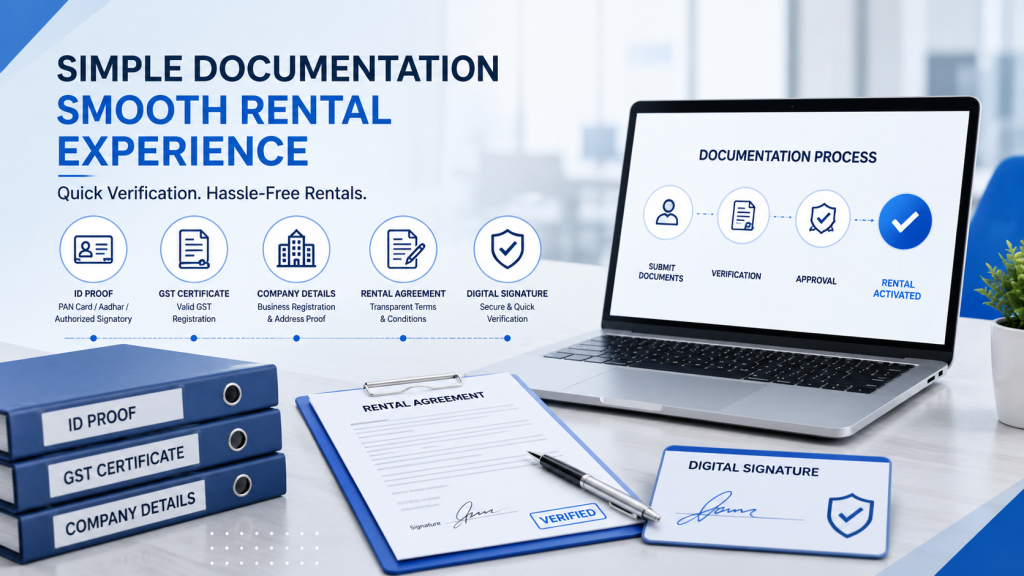
Many organizations overlook documentation requirements until the final stages of the rental process. However, preparing documentation early can accelerate approvals and delivery timelines.
Common requirements may include:
- Company registration details
- GST certificate
- PAN card
- Authorized signatory information
- Address verification documents
- Rental agreements
Consequently, businesses that prepare documentation in advance often experience a smoother onboarding process.
Delivery Planning and Deployment Readiness
Timely delivery is often critical, especially for onboarding drives, corporate events, and training programs.
Therefore, businesses should evaluate:
- Delivery timelines
- Serviceable locations
- Bulk deployment capabilities
- Software installation support
- Asset tagging requirements
Additionally, organizations operating across multiple cities should confirm whether deliveries can be coordinated simultaneously.
A provider’s ability to manage deployment efficiently can significantly influence project success.
Comparing Short-Term and Long-Term Rental Benefits
Rental duration affects both pricing and flexibility. Therefore, organizations should assess their requirements carefully before selecting a plan.
Short-term rentals work particularly well for:
- Corporate events
- Temporary projects
- Training programs
- Conferences and exhibitions
Meanwhile, long-term rentals are often suitable for:
- Growing startups
- Hybrid workforces
- Remote teams
- Budget-conscious organizations
While long-term agreements generally offer lower monthly costs, short-term rentals provide greater flexibility for temporary requirements.
Reviewing Contract Terms Before Commitment
Contract terms play a major role in the overall rental experience. Consequently, businesses should review all policies carefully before proceeding.
Pay particular attention to:
- Rental duration commitments
- Extension policies
- Device replacement terms
- Damage liability clauses
- Return procedures
- Payment schedules
By understanding these conditions early, organizations can avoid misunderstandings and maintain smoother vendor relationships.
Building a Better Rental Decision Process
The best rental decisions come from evaluating multiple factors rather than focusing exclusively on cost.
A structured evaluation process should include:
- Device quality assessment
- Support verification
- Pricing transparency
- Contract flexibility
- Delivery capabilities
- Documentation requirements
Therefore, businesses can select a solution that aligns with both operational goals and budget expectations.
Related Queries
What Are the Most Important Laptop Rental Questions to Ask?
The most important laptop rental questions involve device quality, support availability, replacement timelines, pricing structure, security deposits, documentation requirements, and contract flexibility. These factors directly influence the success of the rental experience.
How Can a Laptop Rental Guide Help First-Time Renters?
A comprehensive laptop rental guide helps businesses understand specifications, compare rental plans, evaluate support services, and identify potential costs. As a result, decision-makers can choose solutions that align with their operational requirements.
Are Rental Laptops Suitable for Corporate Teams?
Yes. Many organizations use rental laptops for employee onboarding, remote work programs, temporary staffing, training initiatives, and project-based requirements. Renting provides flexibility while reducing large upfront investments.
Can Businesses Upgrade Rental Devices Later?
Many rental providers offer upgrade options based on availability and contract terms. However, businesses should confirm upgrade policies before signing an agreement to avoid limitations later.
How Long Can Companies Rent Laptops?
Rental periods can range from a few days to several years. Short-term rentals are ideal for events and training sessions, while long-term rentals are commonly used by startups, enterprises, and growing teams.
Where Can Businesses Rent Laptops Reliably?
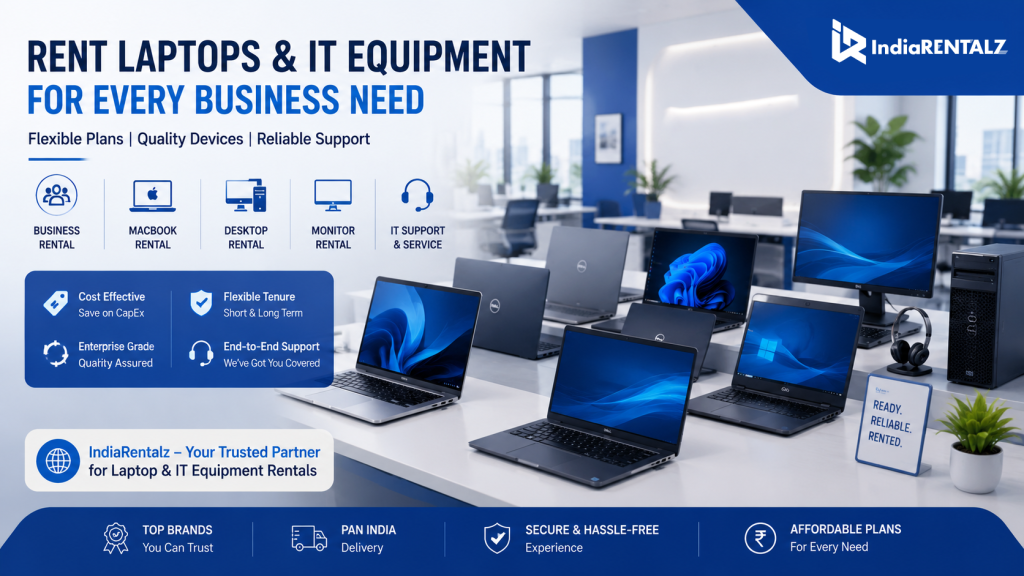
Businesses looking for dependable rental solutions can explore IndiaRentalz for laptops, MacBooks, desktops, monitors, and IT equipment. The company supports startups, enterprises, educational institutions, training programs, and remote workforce deployments with flexible rental plans and technical support.
Conclusion
Renting laptops can simplify technology management, reduce capital expenditure, and provide the flexibility businesses need in a rapidly changing environment. However, asking the right laptop rental questions before making a decision is essential.
By evaluating device quality, support commitments, pricing structures, delivery capabilities, and contract flexibility, organizations can make informed choices that support both short-term projects and long-term business goals. Ultimately, a well-planned rental strategy ensures that technology remains an enabler of growth rather than an operational challenge.