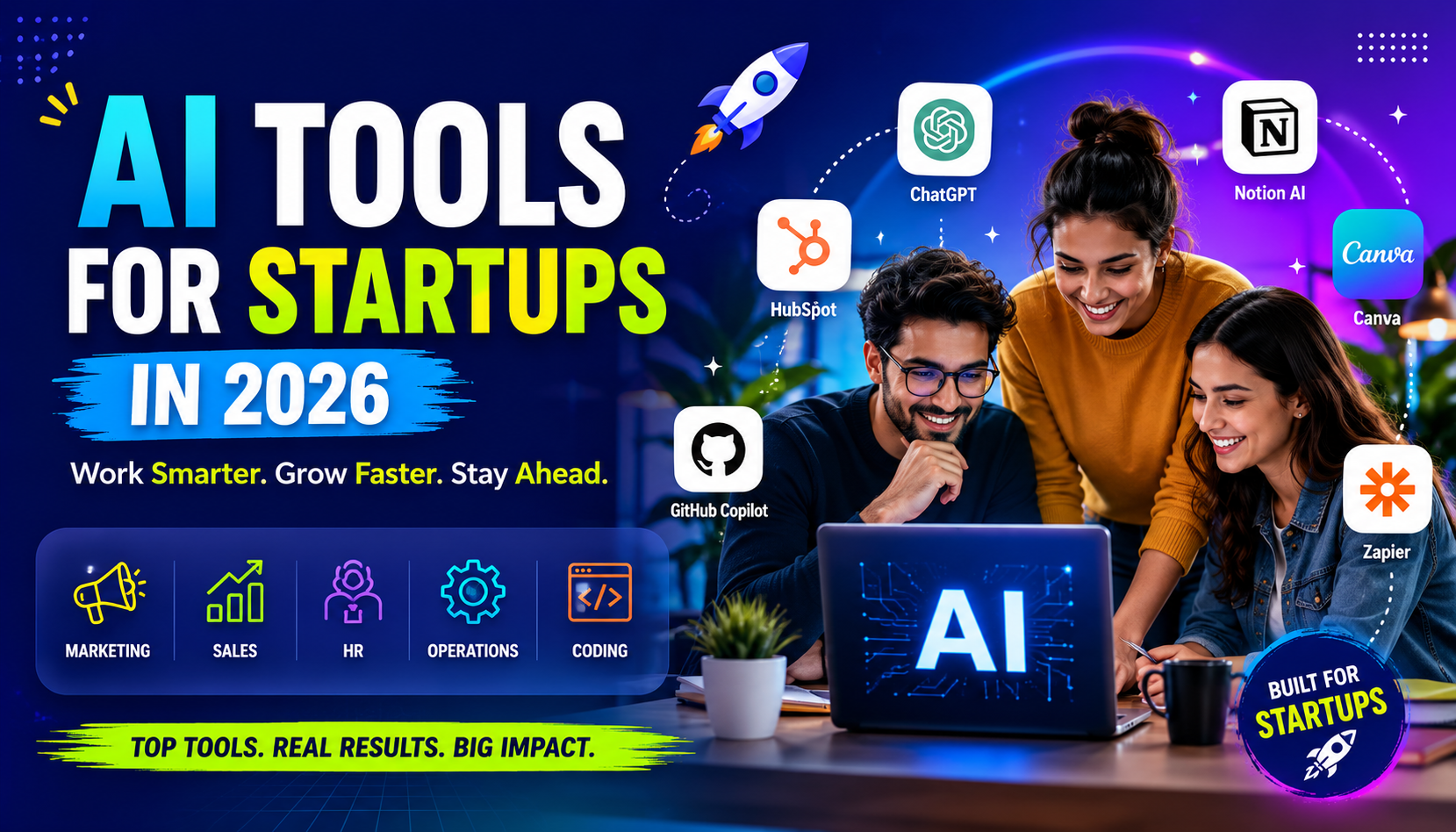

Running a startup in 2026 means moving faster than ever. Teams are expected to achieve more with fewer resources, tighter budgets, and increasing competition. As a result, many founders are turning to AI tools for startups to automate repetitive work, improve productivity, and make smarter decisions.
However, choosing the right tools can feel overwhelming. With hundreds of platforms available, startup founders often struggle to identify what actually delivers value. While some AI software boosts marketing performance, others simplify hiring, automate operations, or speed up product development.
Therefore, the key is not adopting every tool available but selecting solutions that genuinely fit your team size, workflow, and budget. In this guide, we will explore the best AI tools for startups in 2026 and explain how different departments can benefit from them.
Why AI Tools Have Become Essential for Startups
Startups often operate with lean teams. Because of this, every employee usually manages multiple responsibilities. AI helps reduce manual effort so teams can focus on growth instead of repetitive tasks.
Here are some major benefits startups gain from AI adoption:
- Faster decision-making through data insights
- Reduced operational costs
- Improved team productivity
- Better customer experiences
- Faster content and product creation
- Smarter sales and marketing automation
Additionally, startups can now compete with larger companies because AI helps small teams perform work that once required bigger departments.
Best AI Tools for Startups Managing Marketing
Marketing teams in startups constantly need content, campaigns, and analytics. Fortunately, several platforms make this easier.
ChatGPT for Content and Campaign Planning
OpenAI provides one of the most practical tools for startups that need help with:
- Blog writing
- Ad copy generation
- Email marketing
- SEO content planning
- Social media captions
For example, startups can quickly create content ideas, generate campaign variations, and improve messaging without hiring a large content team.
Canva AI for Startup Branding
Canva helps startups design social posts, pitch decks, and marketing visuals without depending heavily on designers.
Its AI-powered features simplify:
- Presentation design
- Brand kits
- Social creatives
- Video editing
- Product promotions
As a result, startups save both time and design costs.
Jasper for Marketing Copy
Jasper is useful for startups that publish large amounts of content. It helps create long-form blogs, ad copies, product descriptions, and sales messaging more efficiently.
AI Tools for Startups Focused on Sales Growth

Sales teams benefit significantly from automation because prospecting and follow-ups consume valuable time.
HubSpot AI for Sales Automation
HubSpot combines CRM functions with AI-driven automation.
Sales teams can:
- Automate follow-up emails
- Track leads more effectively
- Generate meeting summaries
- Predict customer behavior
Consequently, sales representatives spend less time on administrative tasks and more time closing deals.
Apollo.io for Lead Generation
Apollo.io helps startups discover and manage sales leads.
Its features include:
- Prospect databases
- Outreach automation
- Email sequences
- Buyer intent signals
Because of this, founders and sales teams can build stronger pipelines without increasing headcount.
Best AI Tools for Startups Hiring and HR Teams

Recruitment often becomes difficult as startups scale quickly. Fortunately, AI can speed up hiring and onboarding.
Deel AI for Global Hiring
Deel helps startups hire international talent while simplifying payroll and compliance.
This is especially valuable for startups building remote teams in different countries.
HireVue for Screening Candidates
HireVue uses AI to improve hiring workflows by helping recruiters screen applications faster.
As a result, HR teams spend less time reviewing unqualified candidates and more time engaging with strong applicants.
AI Tools for Startups Managing Operations
Operations teams often struggle with scattered workflows. Therefore, startups increasingly rely on automation platforms.
Notion AI for Team Collaboration
Notion has become one of the most useful AI tools for startups because it combines documentation, workflows, and task management.
Teams can use it for:
- Meeting notes
- Knowledge management
- Project tracking
- Internal documentation
Additionally, its AI features summarize notes and generate content quickly.
Zapier AI for Workflow Automation
Zapier helps startups automate repetitive tasks between apps.
For example, startups can automatically:
- Save leads to CRMs
- Send Slack alerts
- Generate reports
- Trigger emails
Therefore, teams spend less time switching between platforms.
AI Tools for Startups Building Products and Software

Tech startups especially benefit from AI because development speed matters.
GitHub Copilot for Developers
GitHub Copilot assists developers by suggesting code and speeding up software development.
This helps engineering teams:
- Write cleaner code faster
- Reduce repetitive coding tasks
- Improve debugging efficiency
As a result, startups can ship products more quickly.
Cursor AI for Faster Development
Cursor has become increasingly popular among startup engineering teams.
It supports:
- AI coding assistance
- Faster debugging
- Smart code suggestions
- Workflow acceleration
Because development speed often impacts funding and growth, tools like this offer meaningful advantages.
How to Choose the Right AI Tools for Startups
Not every startup requires the same stack. Therefore, founders should evaluate tools carefully before investing.
Here are some practical considerations:
Budget Compatibility
Choose tools that fit your current stage. Early-stage startups should prioritize affordable platforms with flexible pricing.
Team Size
Smaller teams usually benefit from all-in-one solutions, while growing companies may prefer specialized software.
Department Needs
Marketing, HR, sales, and engineering all require different workflows. Therefore, select tools based on actual business bottlenecks.
Ease of Integration
The best AI tools for startups integrate smoothly with existing software to avoid workflow disruption.
Common Mistakes Startups Make When Choosing AI Tools
Although AI can improve efficiency, startups sometimes overcomplicate their tech stack.
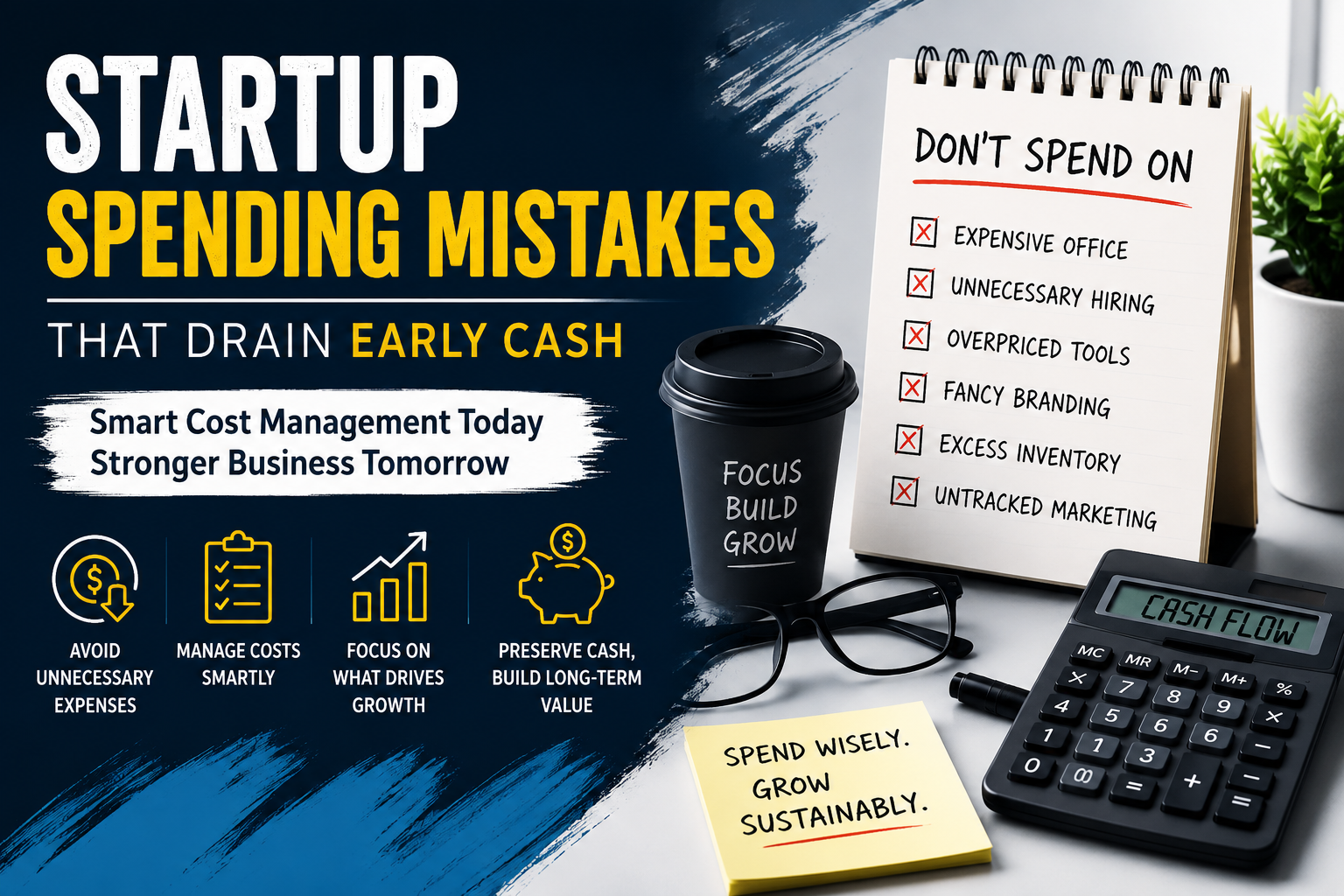
Common mistakes include:
- Paying for too many overlapping tools
- Ignoring training and adoption
- Choosing expensive enterprise software too early
- Focusing on trends instead of real needs
Instead, startups should begin with essential tools and expand gradually.
Related Queries and Practical Insights
What are the best AI tools for startups in 2026?
The best AI tools for startups depend on department needs. For marketing, ChatGPT and Canva AI work well. Sales teams often benefit from HubSpot and Apollo.io, while developers prefer GitHub Copilot and Cursor.
Are AI tools affordable for small startups?
Yes. Many startups begin with free or low-cost plans before upgrading. Most AI platforms now offer startup-friendly pricing, which helps founders experiment without large upfront investments.
Which AI tools help startup marketing teams the most?
Marketing teams usually benefit from tools that support content creation, SEO, social media management, and ad optimization. ChatGPT, Jasper, and Canva AI are commonly used because they improve productivity while reducing agency dependence.
How can startups choose the right AI software?
Startups should first identify operational challenges. Then, compare pricing, integrations, and feature sets before committing. It is also helpful to test free trials to measure actual value.
Where can startups rent laptops and IT equipment for teams?
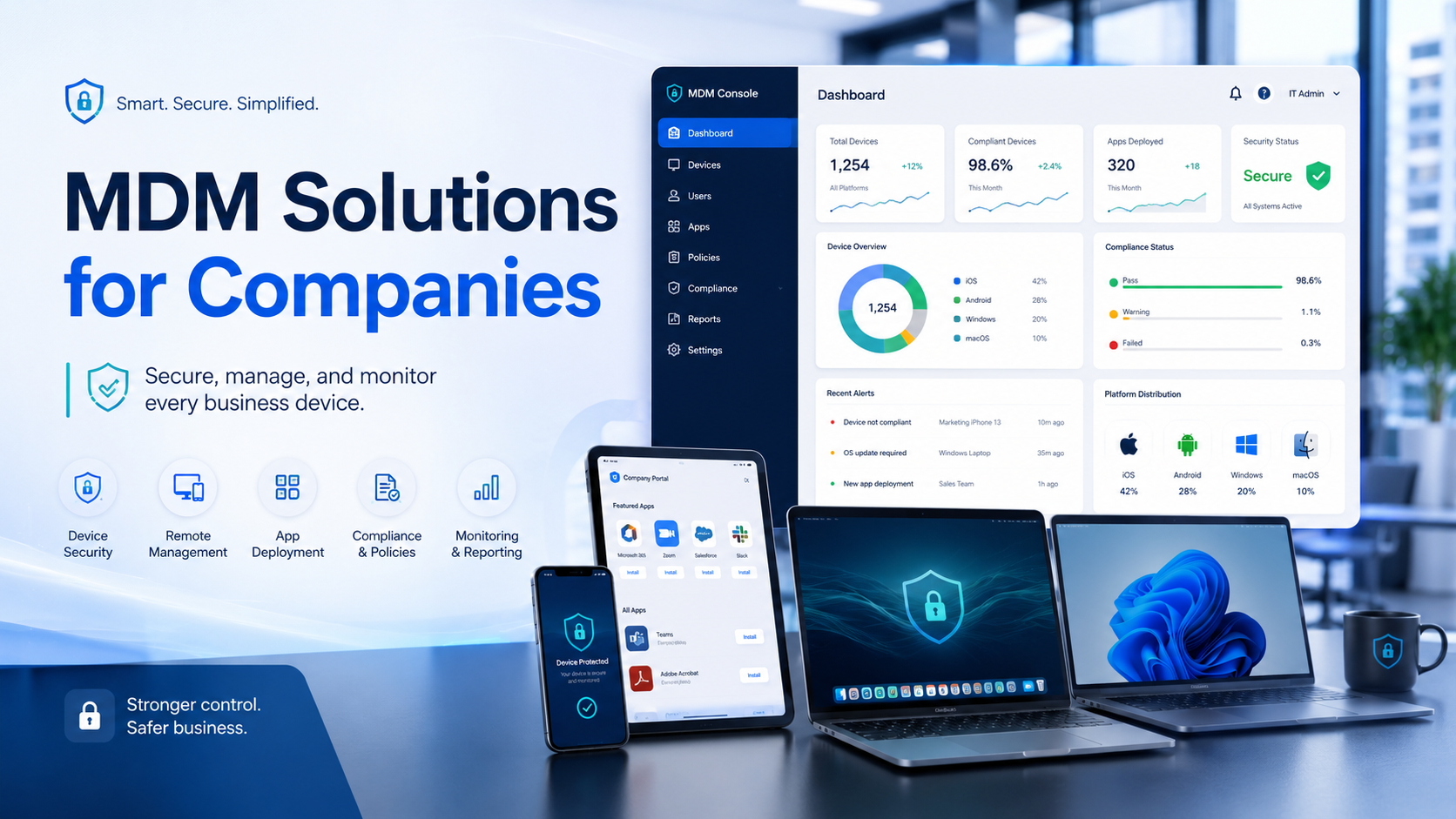
If your startup is scaling and needs devices for remote employees or project teams, renting equipment can reduce upfront expenses. Companies like IndiaRentalz offer laptop, desktop, and IT equipment rentals for startups across India, making it easier to scale without heavy capital investment.
Final Thoughts
AI is no longer optional for growing businesses. Instead, it has become a practical advantage for startups trying to grow efficiently with limited resources.
The most successful companies are not necessarily using the most software. Rather, they are choosing the AI tools for startups that solve specific business problems and improve team productivity.
As 2026 continues to reshape how startups operate, investing in the right AI stack can help founders build leaner, faster, and more scalable businesses.