When someone rents a laptop, they expect more than just a device in a box. They expect a system that switches on smoothly, performs reliably, connects without trouble, and supports their work from the first day itself. That is why rental laptop testing before delivery plays an important role in creating a dependable rental experience.
At IndiaRENTALZ, laptops are not dispatched immediately after they return from a previous rental cycle or arrive in inventory. Instead, they move through a defined maintenance, preparation, and inspection process. This helps ensure that every device sent to an individual customer, business team, or enterprise user is clean, functional, and ready for practical use.
For customers comparing rental providers, this process matters because the real value of renting is not just lower upfront cost. It is also about receiving a laptop that reduces uncertainty, avoids early downtime, and fits the promised configuration.
Why Rental Laptop Testing Before Delivery Matters
A rental laptop may be used for office work, online meetings, accounting, design tasks, development work, customer support, or training sessions. Therefore, even a small issue such as a weak charger, unstable keyboard key, loose port, or outdated driver can interrupt productivity.
A proper pre-dispatch process helps reduce such problems before the customer ever receives the device. It also gives rental companies a structured way to maintain quality across many laptop models and use cases.
For customers, this means:
- Better confidence in the device condition
- Lower chance of avoidable technical issues after delivery
- Smoother onboarding for employees or project teams
- Greater clarity that the promised laptop specifications have been verified
In short, rental laptop testing before delivery is not an optional add-on. It is part of responsible rental operations.
First-Level Inspection of Device Condition
The quality check begins with a physical review of the laptop. Before any software or performance test starts, the exterior condition of the device is inspected carefully.
The team typically reviews:
- Laptop body and hinges
- Screen panel and bezels
- Keyboard layout and key condition
- Touchpad response area
- Webcam placement and outer lens condition
- USB, HDMI, charging, and audio ports
- Charger body, cable condition, and adapter pin
This initial stage helps identify visible damage, unusual wear, or parts that require attention before the laptop moves ahead. It is also an important step in understanding how rental laptops are maintained throughout repeated usage cycles.
A laptop does not need to look factory-new to perform well, especially in a rental model. However, it should be neat, properly maintained, and free from defects that affect usability.
Cleaning and Preparation Before Functional Checks
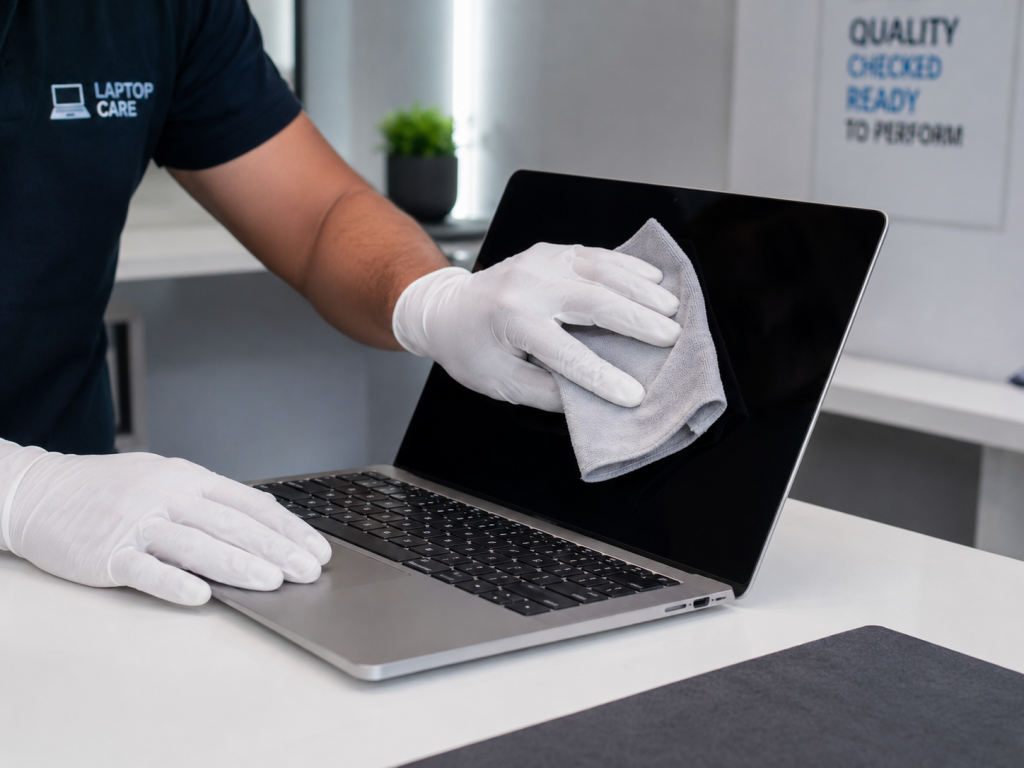
After physical inspection, the device is cleaned and prepared for testing. This stage matters because a laptop is both a work tool and a personal-use device. Customers expect it to be presentable and hygienic when it arrives.
Cleaning generally focuses on:
- Keyboard surface and spaces between keys
- Palm rest area
- Laptop lid and body
- Display surface
- Touchpad
- Ports and external edges
- Charger and cables
This process improves the overall receiving experience. Moreover, it supports better maintenance discipline within the rental lifecycle. A clean device also makes it easier to spot physical concerns during final verification.
For enterprises renting in bulk, consistency in presentation matters even more. Employees receiving devices across different locations should feel that their laptops have gone through the same reliable preparation standard.
Hardware Validation Through Rental Laptop Testing Before Delivery
Once the laptop is visually ready, the core hardware functions are checked. This is one of the most important parts of rental laptop testing before delivery, because the device may look fine externally but still require deeper verification.
The testing process generally focuses on practical everyday performance elements such as:
- Laptop boot-up response
- Processor functioning under normal usage
- RAM recognition and system responsiveness
- SSD or storage visibility and access
- Battery charging behavior
- Adapter power delivery
- Fan activity and heating observations
The purpose is not to overstate technical benchmarking for every standard device. Instead, the focus is on confirming that the laptop performs smoothly for the kind of workload it is intended to support.
For example, a laptop rented for routine office work must comfortably handle browsers, documents, email, and video meetings. On the other hand, a high-performance system intended for graphics, software development, or heavier workflows requires configuration checks that match its use case.
Display, Keyboard, Touchpad, and Camera Checks
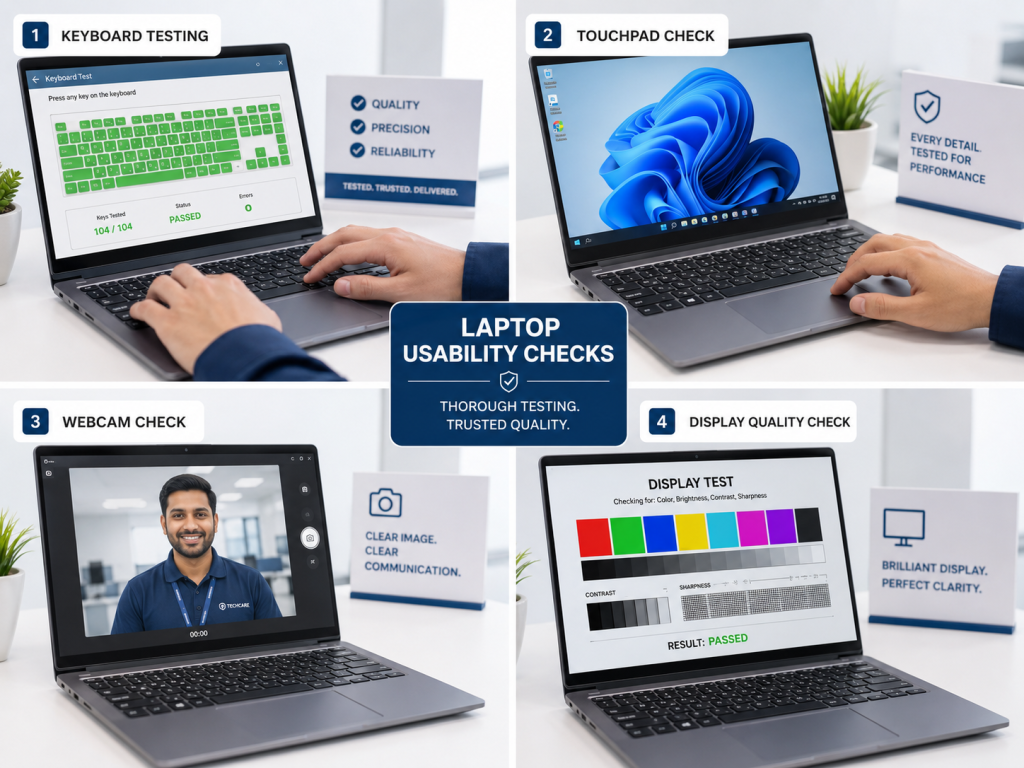
Some of the most noticeable problems for customers come from everyday interaction points. Therefore, functional testing covers the elements users engage with repeatedly throughout the day.
The team checks:
- Display brightness and screen visibility
- Dead spots, major lines, or distracting screen issues
- Keyboard keys and typing flow
- Touchpad response and click accuracy
- Webcam functioning
- Built-in microphone and speaker output
These checks are especially relevant for work-from-home users, employees joining virtual meetings, and students or freelancers who rely on regular online communication.
Even when the processor and storage work properly, poor audio, an unresponsive keyboard key, or webcam issues can lead to frustration. Consequently, detailed interface checks make the rental experience more complete and dependable.
Connectivity and Port Readiness for Real-World Use
A laptop rarely works in isolation. Customers connect accessories, external displays, storage devices, internet sources, and meeting peripherals. Therefore, port and connectivity validation forms another important layer in rental laptop testing before delivery.
The process may include reviewing:
- Wi-Fi connection stability
- Bluetooth functioning where applicable
- USB port response
- HDMI or display output capability
- LAN port, if included in the model
- Audio jack response
- Charging port reliability
For business customers, this stage becomes highly important. A laptop may be allocated to an employee on the day of joining, and there may be limited time available to troubleshoot basic connectivity issues. Verifying these functions beforehand helps make deployment smoother.
Operating System and Software Readiness
A laptop that passes hardware checks also needs to be system-ready. Therefore, software-level preparation supports the practical delivery experience.
This may include:
- Confirming that the operating system boots properly
- Reviewing device drivers needed for standard functioning
- Checking essential system settings
- Ensuring that the laptop is prepared according to the agreed rental scope
- Keeping the device ready for the customer’s own application installation where applicable
The exact preparation may vary based on the order type. Some customers need a basic ready-to-use Windows laptop, while businesses may request a specific configuration, deployment style, or user setup. However, in all cases, the aim remains clear: the device should reach the customer in an operationally usable state.
This is another reason why customers often ask how rental laptops are maintained before dispatch. The answer is not limited to cleaning or basic switching on. It includes making sure the laptop can be used meaningfully after delivery.
Data Safety and Fresh Handover Practices
Data handling is a key part of responsible laptop rentals. A device returning from one rental cycle should not carry customer information into the next cycle. Therefore, preparation must include appropriate data clearing and fresh setup practices before redeployment.
This step helps protect customer privacy and builds confidence among:
- Individual users
- Freelancers
- Corporate employees
- HR and admin teams
- IT heads managing device allocation
A rental laptop should never feel like someone else’s unfinished workstation. Instead, it should feel freshly prepared for the next customer’s requirement. That distinction is important for both trust and professionalism.
Final Rental Laptop Testing Before Delivery and Dispatch Approval
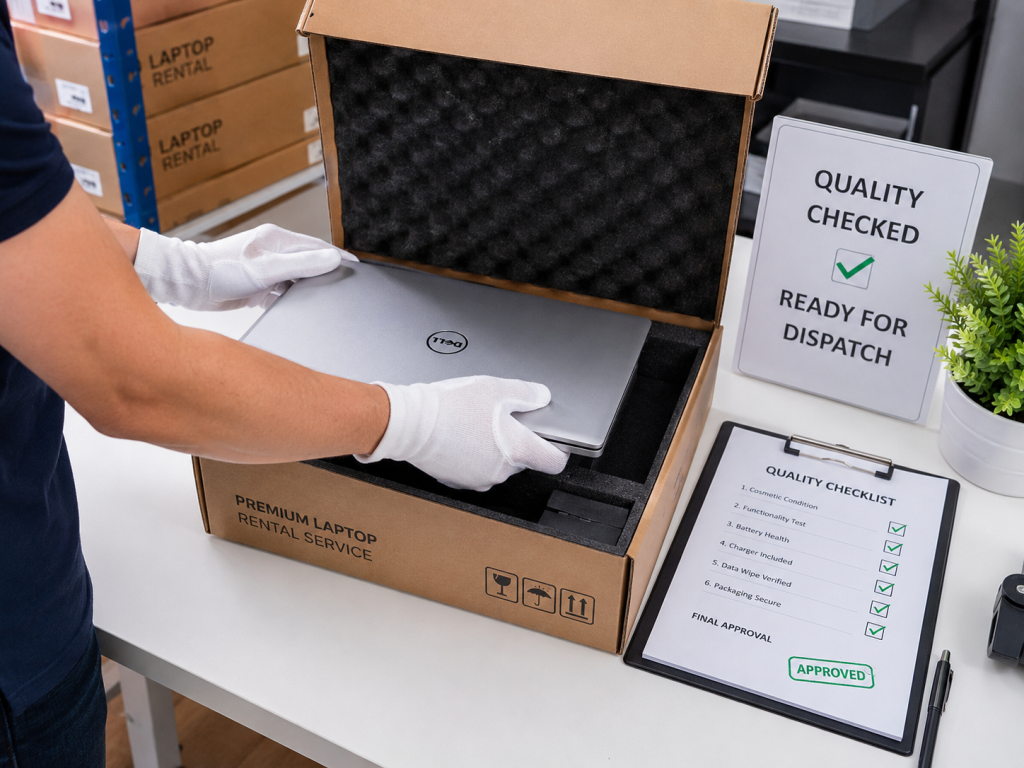
After physical inspection, cleaning, hardware validation, port checks, and system readiness, the laptop goes through final approval before packing. This final stage in rental laptop testing before delivery ensures that no key point has been missed.
The team may reconfirm:
- Correct model or configuration mapping
- Charger pairing
- Laptop startup
- Basic operating condition
- Packaging readiness
- Dispatch marking against the intended order
This final pass acts as a practical control point between warehouse preparation and customer delivery. It also supports better internal accountability because the dispatched device has gone through an organized flow rather than an informal check.
How This Process Benefits Different Rental Customers
Different customer groups gain different forms of value from the same testing process.
For individual renters, the biggest benefit is peace of mind. They do not want to lose time after delivery figuring out whether the laptop is functioning properly.
For startups and growing businesses, tested rental devices reduce onboarding friction. A new hire, temporary employee, or project resource can begin work with fewer delays.
For HR, admin, and operations teams, device readiness reduces coordination pressure. They do not need to manage avoidable complaints immediately after device receipt.
For IT heads and procurement teams, the process offers confidence that rental devices are being deployed through a managed system rather than an ad hoc method.
For customers comparing rental providers, this becomes an important distinction. Price matters, but a reliable testing process often determines the actual experience after the order is placed.
Quality Process Versus Quick Dispatch Without Enough Checks
Fast dispatch is valuable, particularly when a customer has an urgent requirement. However, speed without enough verification can create a poor experience later. A device sent quickly but received with charging trouble, performance lag, or accessory mismatch may ultimately cost more time.
A structured preparation model balances both needs:
- Devices are processed for practical readiness
- Issues are detected before dispatch wherever possible
- Customers receive systems with stronger confidence
- Support burden reduces because avoidable problems are minimized
This is why rental laptop testing before delivery should be seen as part of service quality, not as a delay in dispatch.
Related Queries Customers Commonly Search
What does rental laptop testing before delivery usually include?
It generally includes physical inspection, cleaning, startup checks, battery and charger verification, keyboard and touchpad testing, display review, connectivity checks, port validation, and operating system readiness. Depending on the rental requirement, additional configuration checks may also be performed.
How rental laptops are maintained between two customers
Rental laptops are typically cleaned, visually inspected, checked for functional issues, prepared at the system level, and reviewed before they are made ready for the next customer. A disciplined rental company also ensures data is cleared and device condition is assessed before redeployment.
Can a tested rental laptop still face issues after delivery?
Any electronic device can occasionally develop an issue during or after transit or while in use. However, a strong pre-delivery inspection process reduces the possibility of avoidable problems. In such cases, responsive support and replacement handling become equally important.
Why does laptop testing matter for business rentals?
For businesses, each laptop often supports an employee, a task, or a project deadline. If the device is not ready, the impact goes beyond inconvenience. It can delay onboarding, disrupt work, and create extra pressure for admin or IT teams. Therefore, tested laptops are especially valuable in enterprise rentals.
Where can you rent laptops from a company that follows a checking process?
Customers looking for managed laptop rentals can explore IndiaRENTALZ, which focuses on preparing devices through a structured maintenance and pre-dispatch testing process before delivery. This makes it suitable for individuals, businesses, startups, HR teams, and organizations seeking reliable laptop rental support.
A Better Rental Experience Begins Before Delivery
The customer experience with a rental laptop starts long before the device is opened at the destination. It begins during inspection, cleaning, testing, system preparation, and dispatch approval.
A well-maintained rental laptop helps customers work with more confidence, especially when they are renting for professional needs, business continuity, employee onboarding, or temporary project execution. That is why the focus should not only be on device availability, but also on the quality process behind each delivery.
At IndiaRENTALZ, rental laptop testing before delivery supports a simple objective: helping customers receive laptops that are better prepared for use from day one.