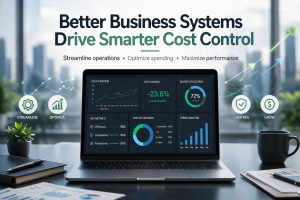
As a new financial year begins, most businesses instinctively look at one thing first—budget. However, what often gets overlooked is whether the foundation of better business systems is strong enough to support that spending. In many cases, companies increase budgets without addressing inefficiencies already present in their operations.
However, what often goes unnoticed is that increasing budgets rarely solves underlying inefficiencies. In fact, many growing companies continue to spend more while achieving the same or even lower levels of output.
Therefore, instead of asking “How much more do we need to spend?”, a more relevant question emerges:
“Are our systems strong enough to support our growth?”
Rising Costs Are Forcing Businesses to Rethink Spending
Across industries, costs are steadily rising. Whether it is hiring, infrastructure, software, or hardware, every business is experiencing pressure to optimize.
At the same time, expectations have increased:
- Faster onboarding
- Seamless operations
- Zero downtime
- Higher productivity
As a result, simply allocating more funds is no longer sustainable. Businesses need to improve business efficiency without continuously increasing expenses.
This is exactly where structured, scalable systems become essential.
Why Budget Alone Cannot Fix Operational Gaps
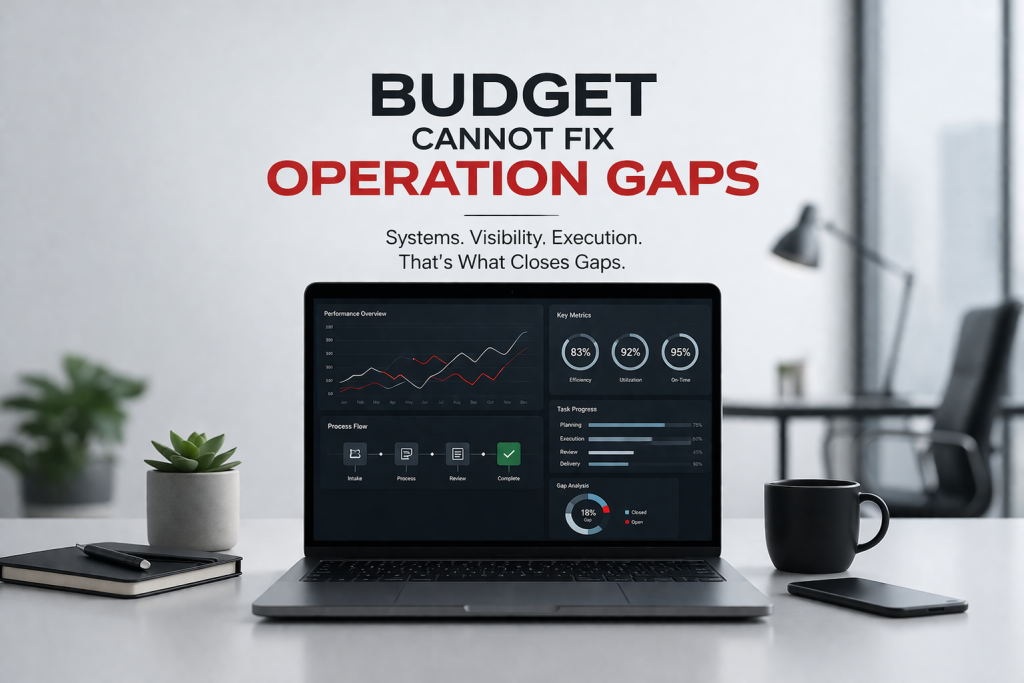
It is easy to assume that more money will solve inefficiencies. However, the reality is quite different.
Consider these common scenarios:
- A team waits days for device allocation
- New employees face delays due to procurement cycles
- IT teams spend more time managing issues than enabling growth
- Hardware investments remain underutilized
In each case, the problem is not budget—it is the absence of better business systems.
Even with higher spending, inefficiencies continue if systems are not optimized.
Better Business Systems Create Clarity and Control
When businesses implement better business systems, they gain visibility into operations, costs, and performance.
This clarity allows decision-makers to:
- Identify unnecessary expenses
- Streamline workflows
- Reduce delays
- Allocate resources more effectively
Moreover, instead of reacting to problems, teams can proactively manage operations.
Consequently, businesses move from a reactive mode to a structured, system-driven approach.
Improving Business Efficiency Starts With Systems, Not Spending
To improve business efficiency, companies must first address how work flows across teams.
For example:
- Are processes standardized?
- Is there dependency on manual approvals?
- Are tools and resources easily accessible?
When systems are designed thoughtfully, efficiency improves naturally.
On the other hand, when systems are weak, even high budgets fail to deliver results.
Thus, focusing on better business systems becomes a strategic necessity rather than an operational choice.
Better Business Systems Reduce Hidden Costs
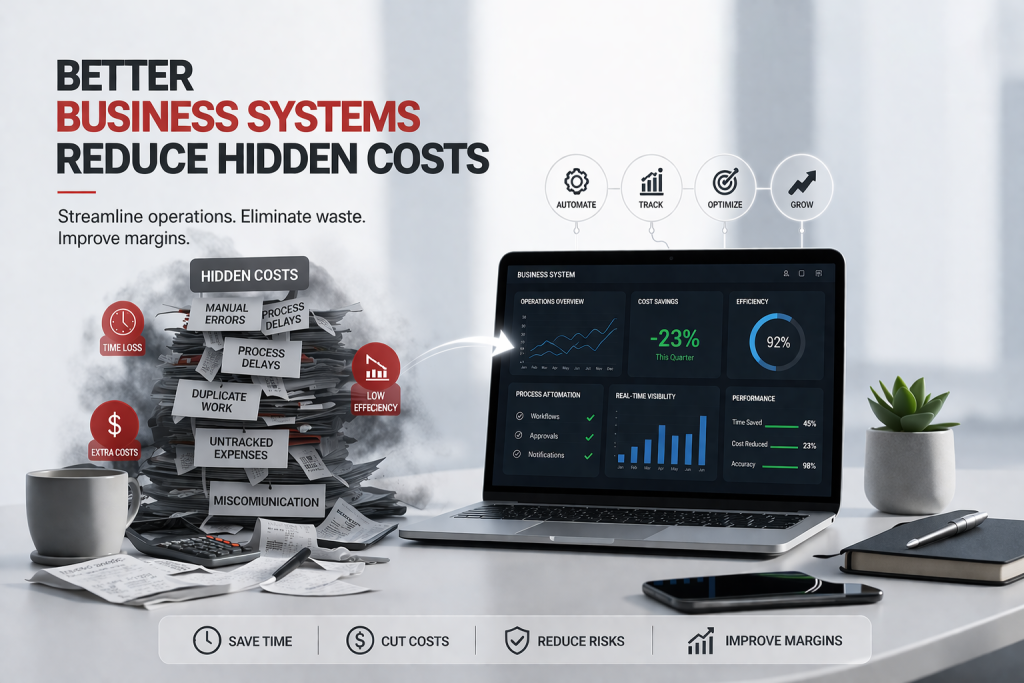
While direct expenses are visible, hidden costs often go unnoticed.
These include:
- Downtime due to device failure
- Delays in onboarding
- Productivity loss from outdated systems
- Maintenance overheads
- Inventory mismanagement
Although these may seem minor individually, they collectively impact profitability.
By implementing better business systems, businesses can significantly reduce these hidden costs and create a more predictable cost structure.
Smarter IT Decisions Lead to Real Financial Savings
One of the most impactful areas where systems can drive change is IT infrastructure.
Traditionally, businesses relied heavily on ownership models:
- High upfront investment
- Maintenance responsibility
- Depreciation losses
However, modern businesses are shifting towards smarter alternatives.
For instance:
- Flexible IT deployment
- On-demand infrastructure
- Scalable device access
These approaches not only reduce capital expenditure but also align costs with actual usage.
As a result, better business systems in IT directly contribute to financial efficiency.
Better Business Systems Enable Scalable Growth
Growth often brings complexity.
New hires, new projects, and new locations can quickly overwhelm teams if systems are not in place.
Without structured systems:
- Scaling becomes chaotic
- Costs increase unpredictably
- Teams struggle to maintain consistency
In contrast, better business systems ensure that growth is supported by:
- Standardized processes
- Scalable infrastructure
- Clear workflows
Therefore, businesses can expand without compromising efficiency.
From CAPEX to Smarter Operational Models
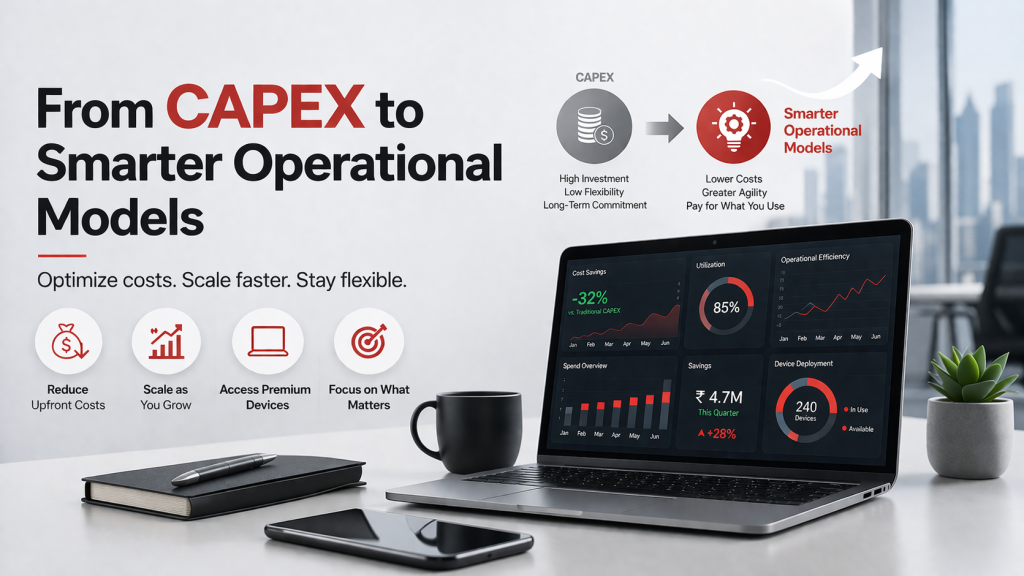
Another important shift businesses are making is moving away from heavy capital expenditure (CAPEX) towards more flexible operational models.
Instead of investing heavily upfront, companies now prefer:
- Pay-as-you-use models
- Subscription-based infrastructure
- Flexible asset management
This transition aligns perfectly with better business systems, as it allows:
- Financial flexibility
- Reduced risk
- Faster adaptability
Additionally, it supports long-term planning without locking resources unnecessarily.
Building Better Business Systems for Long-Term Stability
Creating strong systems does not require a complete overhaul.
Instead, businesses can start with small, focused improvements:
- Streamlining procurement processes
- Standardizing onboarding workflows
- Optimizing IT infrastructure
- Reducing manual dependencies
Over time, these improvements compound into a strong operational framework.
Ultimately, better business systems become the foundation for stability, efficiency, and growth.
Better Business Systems Shift the Focus From Spending to Strategy
When systems are weak, businesses focus on spending.
However, when systems are strong, the focus shifts to strategy.
Leaders can then:
- Plan growth more effectively
- Optimize resource allocation
- Make data-driven decisions
- Reduce dependency on reactive fixes
This transformation is what separates scalable businesses from those constantly struggling with inefficiencies.
Common Questions Around Cost Optimization and Systems
How can better business systems help reduce costs?
Better business systems reduce inefficiencies, eliminate redundant processes, and minimize downtime. As a result, businesses spend less on fixing problems and more on driving growth.
What is the fastest way to improve business efficiency without increasing budget?
The fastest way is to evaluate existing workflows and remove bottlenecks. Additionally, aligning tools, teams, and processes can significantly improve business efficiency without requiring additional spending.
Why are businesses shifting towards flexible IT solutions?
Businesses are moving towards flexible IT solutions because they reduce upfront investment, offer scalability, and align costs with actual usage. This makes operations more efficient and predictable.
How do better business systems support scaling teams?
Better business systems provide structured workflows, standardized processes, and scalable infrastructure. Therefore, teams can grow without creating operational chaos.
Where can businesses access scalable IT solutions without heavy investment?
Businesses looking for flexible and scalable IT infrastructure can explore solutions from IndiaRENTALZ. With a wide range of laptops, desktops, and high-performance systems available on rent, companies can align their IT needs with their growth plans without heavy upfront costs.
Final Thought: Systems Define Efficiency, Not Budget
As the new financial year unfolds, businesses have a choice.
They can either increase budgets to manage inefficiencies, or they can strengthen their systems to eliminate them.
While spending may offer temporary relief, only better business systems deliver long-term efficiency and sustainable growth.
In the end, success is not defined by how much you spend, but by how effectively your systems work.