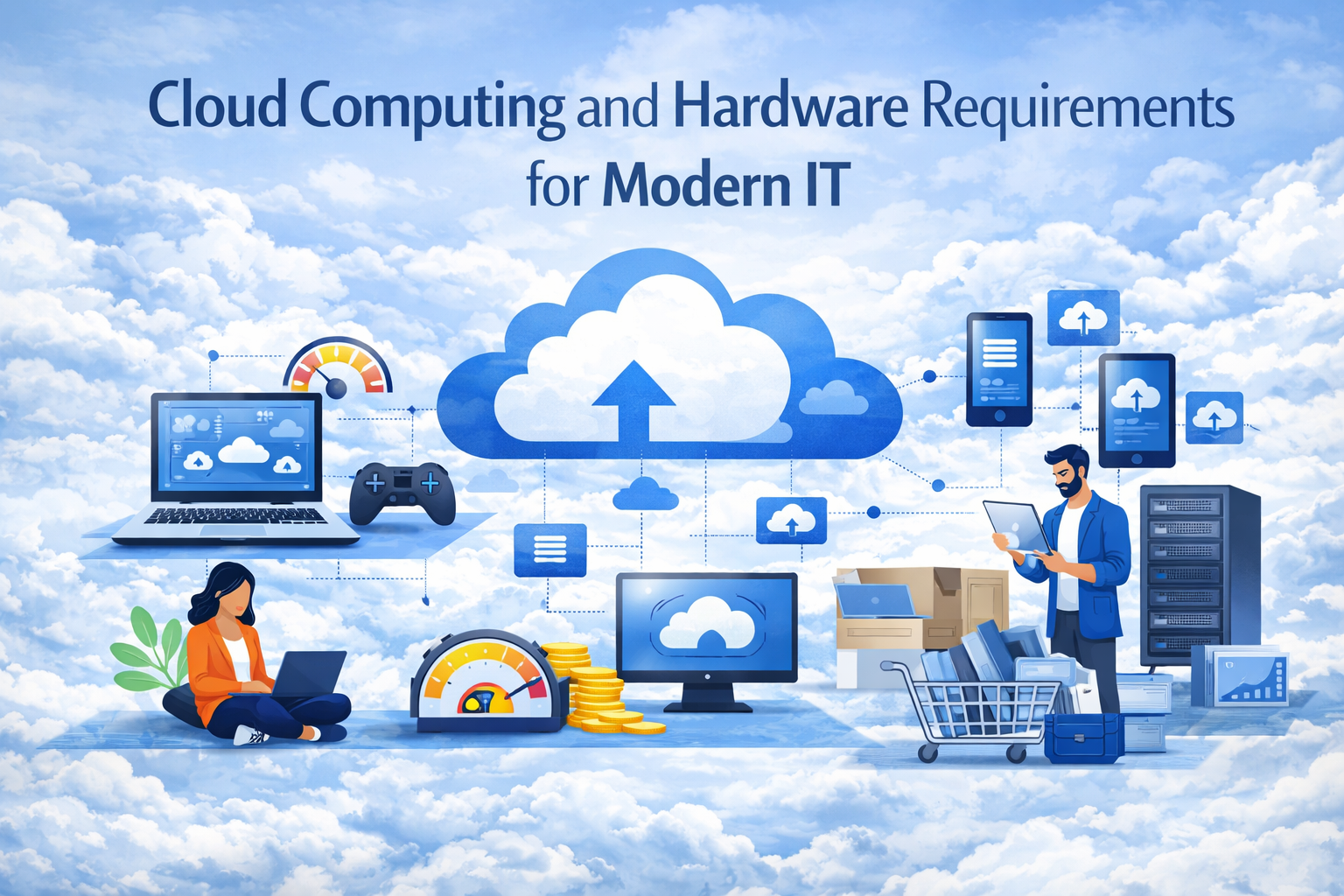
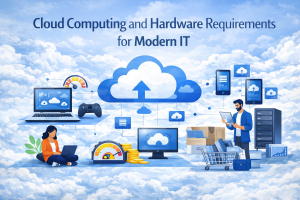
Over the past few years, businesses have quietly started rethinking how they approach IT infrastructure. What once required heavy upfront investment in servers, desktops, and storage systems is now being replaced by scalable, on-demand solutions. This shift is largely driven by cloud computing and hardware requirements, which are redefining how companies plan, purchase, and use technology. Instead of building large internal systems, businesses are now accessing computing power, storage, and applications directly from the cloud.
As a result, IT infrastructure is no longer static. It has become flexible, dynamic, and closely aligned with real-time business needs.
Traditional IT Infrastructure vs Cloud-Driven Models
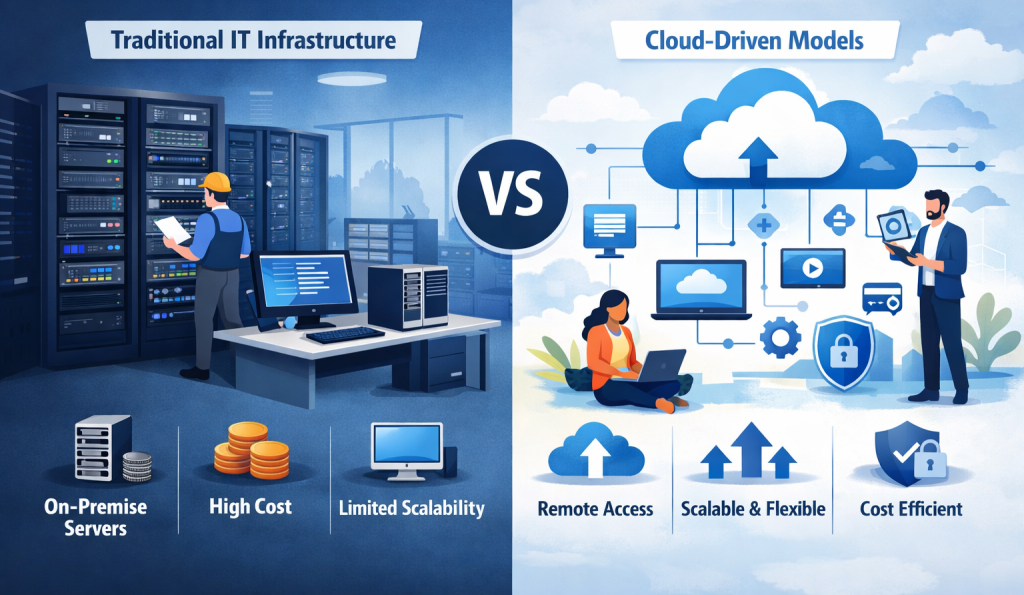
Earlier, companies relied heavily on physical infrastructure. Offices were filled with bulky desktops, dedicated servers, and networking hardware that required constant maintenance.
Traditional setup included:
- On-premise servers and storage systems
- High upfront capital expenditure (CapEx)
- Fixed device allocation for employees
- Limited scalability
However, with cloud adoption, the approach has changed significantly.
Cloud-driven model focuses on:
- Access over ownership
- Subscription-based tools and services
- Remote accessibility
- Faster scalability
This shift highlights how cloud computing and hardware requirements are moving from fixed infrastructure to adaptable systems that grow with the business.
How Cloud Computing and Hardware Requirements Are Evolving
As organizations adopt cloud platforms, their dependency on heavy backend infrastructure reduces. Instead, the focus shifts toward end-user devices and connectivity.
This evolution in cloud computing and hardware requirements has led to:
- Reduced need for in-house servers
- Increased reliance on internet bandwidth and network stability
- Greater importance of device portability
- Demand for secure, cloud-compatible systems
Businesses are no longer investing in hardware that stays underutilized. Instead, they are optimizing resources based on actual usage.
Impact on Hardware Needs Across Businesses
The move to cloud has significantly changed what businesses expect from their hardware.
Key changes include:
- Lightweight systems replacing bulky desktops
Employees now prefer laptops and portable devices over fixed workstations. - Performance-focused devices instead of storage-heavy systems
Since data is stored in the cloud, devices need better processing power rather than large storage capacity. - Standardization across teams
Cloud platforms allow uniform software access, reducing dependency on high-end machines for every employee. - Shorter hardware lifecycle
Devices are upgraded more frequently to keep up with evolving tools and applications.
These IT infrastructure changes are especially visible in startups, SMEs, and hybrid work environments.
New Device Requirements in a Cloud-First Environment
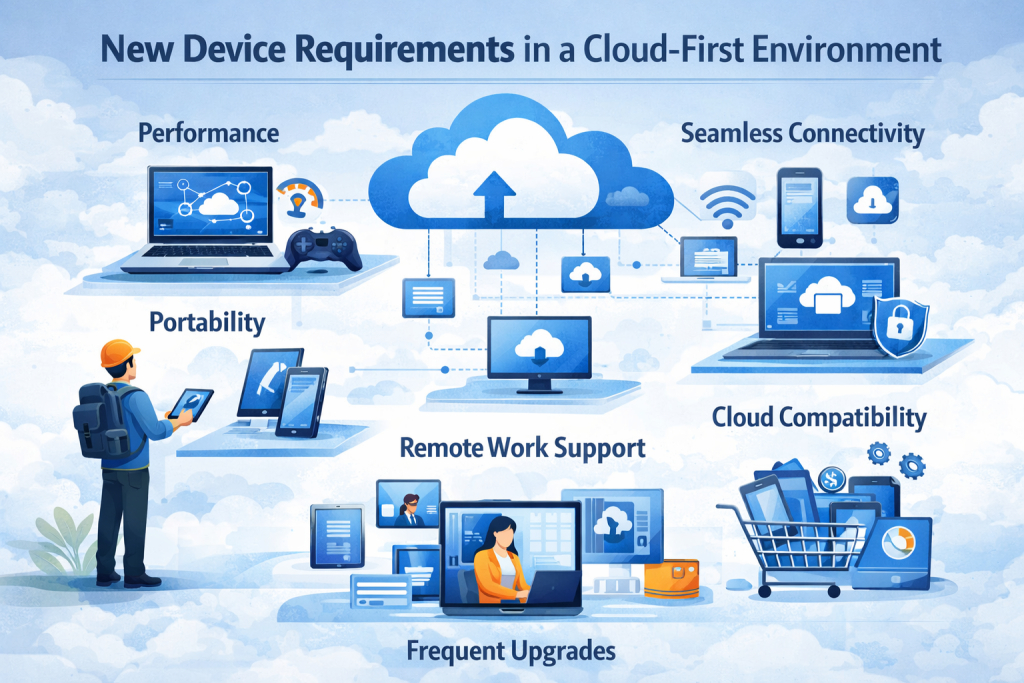
As cloud usage increases, the type of devices businesses need is also changing.
Modern hardware requirements now include:
- Reliable laptops with strong processors
To handle cloud-based applications and multitasking - Devices optimized for collaboration tools
Such as video conferencing, real-time editing, and communication platforms - Enhanced security features
Including encryption, biometric access, and remote device management - Long battery life and portability
Supporting remote and hybrid work setups - Compatibility with cloud ecosystems
Ensuring seamless integration with platforms like Google Workspace, Microsoft 365, and others
This clearly shows how cloud computing and hardware requirements are becoming more user-centric rather than infrastructure-heavy.
Challenges Businesses Face During This Transition
While the shift to cloud brings flexibility, it also introduces new challenges that many organizations struggle to manage.
Common challenges include:
- Balancing performance and cost
Choosing the right devices without overspending - Managing dynamic workforce needs
Hiring, onboarding, and scaling teams quickly - Handling device upgrades and replacements
Keeping hardware updated without disrupting operations - Ensuring security across distributed teams
Protecting data when employees work remotely - Avoiding underutilization of purchased assets
Especially when project durations vary
These challenges often arise because traditional procurement models do not align with modern cloud computing and hardware requirements.
Adapting IT Infrastructure Changes with Flexible Solutions
Given the dynamic nature of today’s IT needs, businesses are gradually moving toward more flexible approaches.
Instead of owning large volumes of hardware, companies are exploring options that allow them to scale up or down as needed.
This is where solutions like device rentals naturally fit into the evolving ecosystem.
Why flexibility matters:
- Supports project-based requirements
- Reduces upfront investment
- Allows quick upgrades
- Matches changing team sizes
For example, businesses looking for laptop rental solutions can easily align their hardware needs with project timelines without long-term commitments.
You can explore options like enterprise-grade systems on platforms such as IndiaRENTALZ, which offer scalable hardware support aligned with modern cloud environments.
How Cloud Computing and Hardware Requirements Drive Rental Adoption
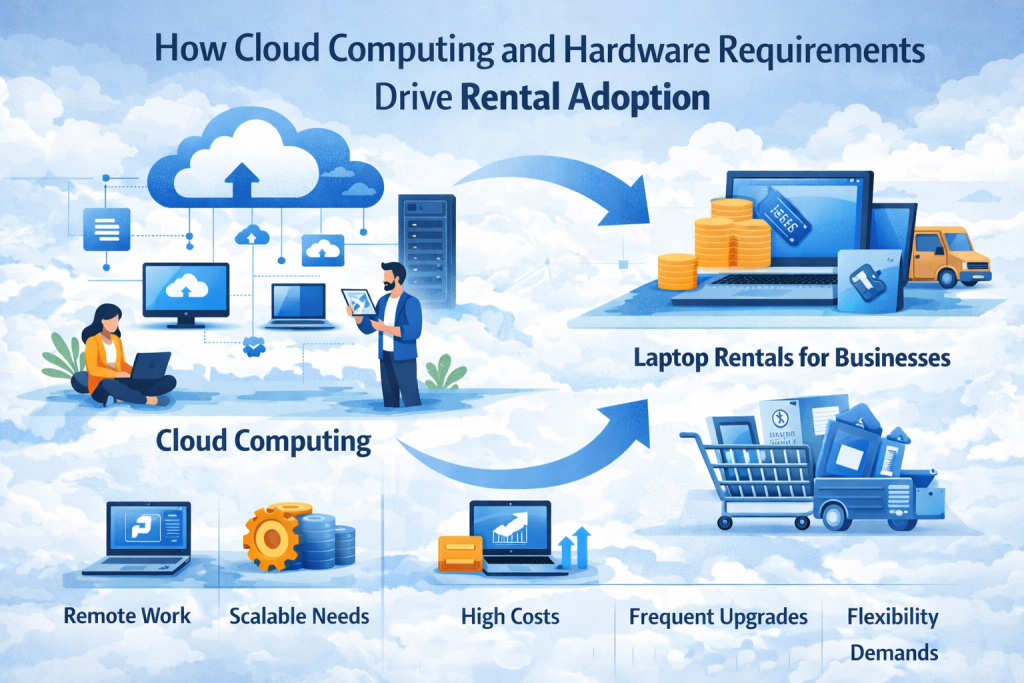
The connection between cloud adoption and rental demand is becoming stronger.
As cloud computing and hardware requirements continue to evolve, businesses prefer:
- Paying for usage instead of ownership
- Avoiding depreciation costs
- Keeping hardware updated without reinvestment
- Maintaining operational flexibility
This shift is particularly relevant for:
- Startups scaling rapidly
- Enterprises managing distributed teams
- Event companies requiring temporary setups
- Remote workforce models
Rental solutions, therefore, are not just cost-saving tools—they are strategic enablers.
Future Trends in Cloud and Hardware Integration
Looking ahead, the relationship between cloud and hardware will become even more interconnected.
Emerging trends include:
- Thin clients and virtual desktops
Minimal hardware with cloud-based computing power - AI-driven workload distribution
Devices adapting performance based on usage - Edge computing integration
Combining local processing with cloud systems - Subscription-based hardware ecosystems
Hardware as a service (HaaS) models becoming mainstream - Stronger focus on cybersecurity hardware features
Built-in protections at the device level
These trends further reinforce how cloud computing and hardware requirements will continue to shape IT strategies.
Related Queries and Common Questions
How does cloud computing and hardware requirements impact small businesses?
Cloud adoption reduces the need for heavy infrastructure, allowing small businesses to operate with minimal hardware. This makes it easier to scale operations without large investments, while still maintaining efficiency and performance.
What are the most important devices for a cloud-based workplace?
In a cloud-first setup, businesses primarily need reliable laptops or workstations with strong processors, stable connectivity, and security features. Storage becomes less critical as data is managed in the cloud.
Are IT infrastructure changes reducing hardware costs?
Yes, but the savings come from smarter allocation rather than complete elimination of costs. Businesses spend less on servers and storage, but invest more in flexible, high-performance devices that support cloud workflows.
Why are companies moving from buying to renting hardware?
Companies are shifting because ownership often leads to underutilization, maintenance costs, and outdated systems. Renting allows businesses to align hardware usage with actual needs, especially in dynamic environments.
Where can businesses find reliable laptop rental solutions?
Businesses looking for scalable and reliable rental options can explore platforms like IndiaRENTALZ, which provide enterprise-ready laptops, flexible rental durations, and support services aligned with modern cloud-based operations.
Conclusion: A Smarter Approach to IT Infrastructure
The shift toward cloud is not just a technological upgrade—it is a fundamental change in how businesses think about IT.
As cloud computing and hardware requirements continue to evolve, organizations must move away from rigid infrastructure models and adopt more flexible, scalable approaches.
By focusing on performance, adaptability, and cost efficiency, businesses can better align their IT strategy with modern demands.
Ultimately, the goal is simple:
Use technology as an enabler, not a limitation.