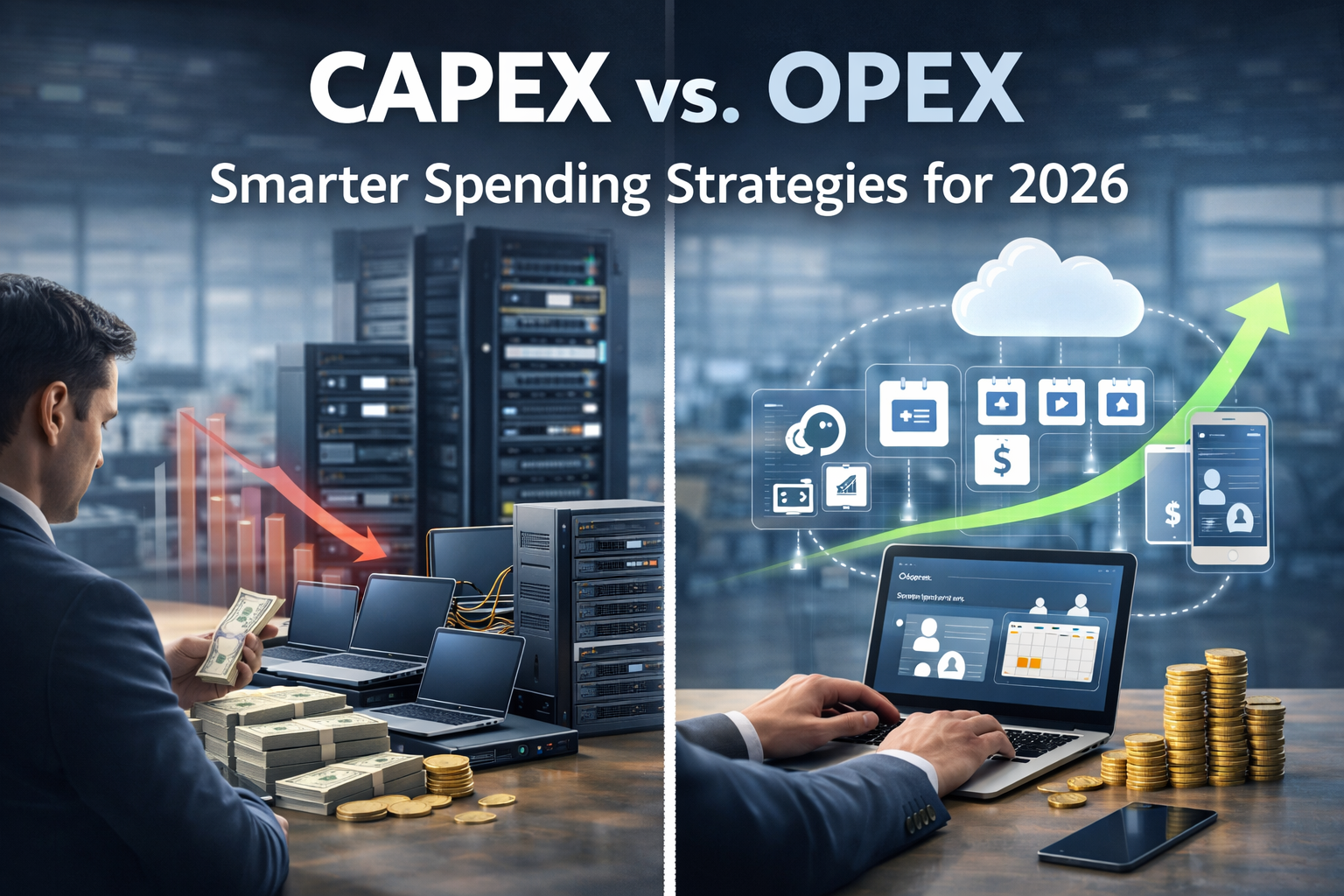
Businesses today are no longer making decisions the way they did a decade ago. Instead of focusing only on ownership, they are prioritizing flexibility, scalability, and efficiency. This is where understanding capex vs opex becomes essential.
Traditionally, companies invested heavily in assets like laptops, servers, and infrastructure. However, with changing market dynamics, many are now shifting toward models that reduce upfront investment and improve cash flow.
As a result, the conversation around capex vs opex is no longer limited to finance teams—it has become a strategic decision across operations, IT, and leadership.
Understanding capex vs opex in Simple Business Terms
To begin with, it is important to clearly understand the difference between capex and opex.
- CAPEX (Capital Expenditure) refers to large, upfront investments in assets such as equipment, machinery, or IT infrastructure.
- OPEX (Operational Expenditure) refers to ongoing expenses required for running the business, such as subscriptions, rentals, or services.
For example:
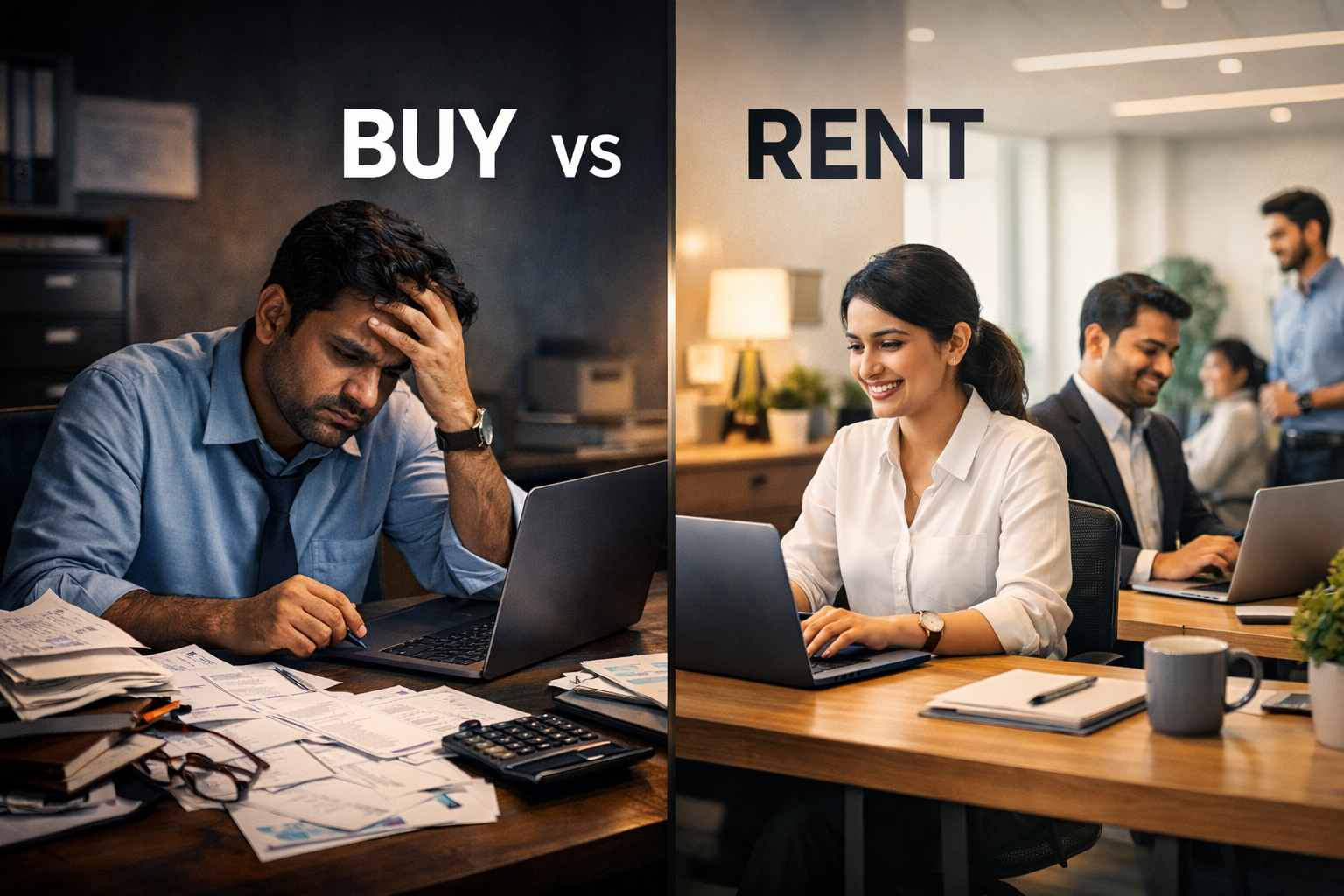
- Buying 50 laptops → CAPEX
- Renting 50 laptops → OPEX
While both serve the same purpose, the financial and operational impact differs significantly. Therefore, businesses are carefully evaluating capex vs opex before making any major investment decisions.
How capex vs opex Impacts Financial Planning

Financial planning has evolved considerably in recent years. Earlier, companies preferred owning assets to build long-term value. However, this approach often locked capital and reduced liquidity.
On the other hand, an OPEX-driven model allows businesses to:
- Preserve working capital
- Allocate funds to growth activities
- Reduce financial risk
- Maintain predictable monthly expenses
Because of these advantages, the shift in capex vs opex is now directly linked to better financial control and smarter budgeting.
The difference between capex and opex in IT Investments
IT infrastructure is one of the biggest areas where this shift is clearly visible.
When businesses choose CAPEX:
- They invest heavily upfront
- They handle maintenance and upgrades
- They bear depreciation costs
In contrast, with OPEX:
- They pay only for usage
- Maintenance is often included
- Upgrades become easier
This practical difference between capex and opex is driving IT teams to rethink traditional procurement models. Consequently, many organizations are moving toward subscription-based and rental-based IT solutions.
Why capex vs opex Decisions Are Changing in 2026
Several factors are accelerating this shift.
1. Faster Business Scaling
Companies today need to scale quickly. Hiring 10–50 employees within weeks is common. Under CAPEX, this requires heavy upfront investment. However, OPEX allows businesses to scale without delays.
2. Technology Obsolescence
Technology becomes outdated quickly. Therefore, investing heavily in assets may not always be practical. With OPEX, businesses can upgrade without worrying about resale or depreciation.
3. Cash Flow Optimization
Instead of blocking funds in assets, businesses prefer maintaining liquidity. This is one of the strongest drivers influencing decisions.
4. Hybrid and Remote Work Models
With distributed teams, flexibility becomes essential. OPEX models support this need more effectively.
Capex vs opex and the Rise of Asset-Light Businesses
Modern businesses are moving toward asset-light strategies. This means they focus more on operations and growth rather than ownership.
In this context, capex vs opex plays a critical role.
An asset-light approach helps businesses:
- Reduce operational burden
- Improve agility
- Focus on core activities
- Adapt quickly to market changes
As a result, startups and growing companies are increasingly choosing OPEX models to stay competitive.
Comparing capex vs opex for Long-Term Business Value
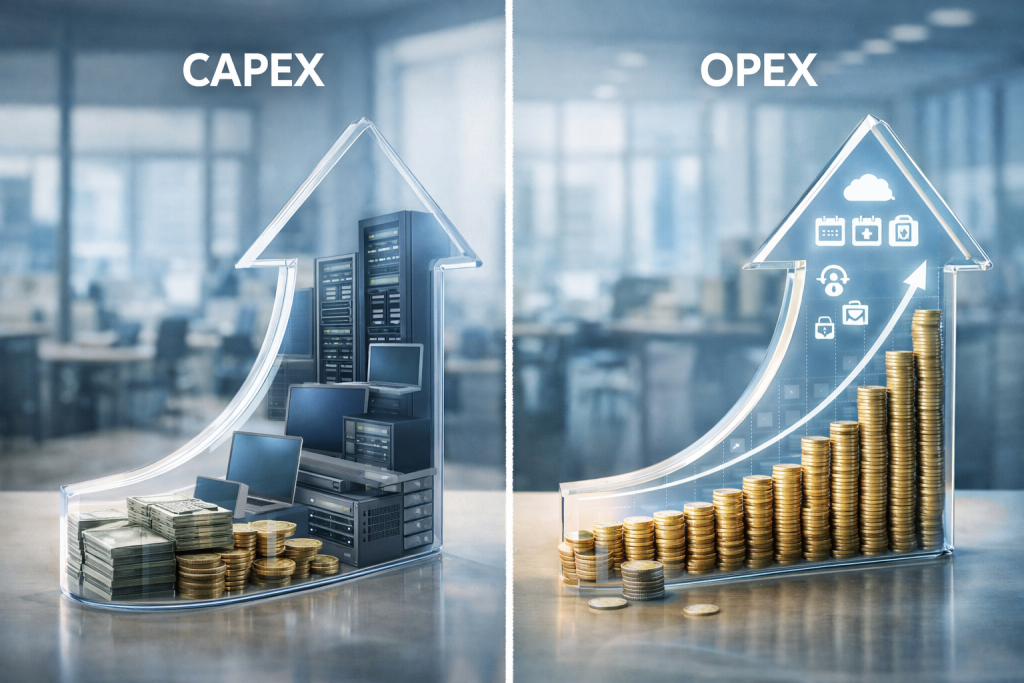
A direct comparison highlights the practical differences:
CAPEX Approach
- High upfront cost
- Asset ownership
- Depreciation over time
- Limited flexibility
OPEX Approach
- Low initial investment
- Pay-as-you-use model
- No ownership burden
- High flexibility
Although CAPEX may seem beneficial for long-term ownership, OPEX offers operational advantages that align better with modern business needs. Therefore, evaluating capex vs opex is essential for making informed decisions.
capex vs opex in Real Business Scenarios
To understand this shift better, consider a few practical situations.
Startup Setting Up a New Office
Instead of investing heavily in IT equipment, startups often prefer rental models. This allows them to deploy quickly and conserve capital.
Enterprise Expanding Teams
Large organizations frequently onboard employees across multiple locations. OPEX models enable faster deployment without logistical challenges.
Event-Based Requirements
For short-term projects or events, buying assets does not make sense. In such cases, OPEX becomes the logical choice.
These scenarios clearly show how capex vs opex decisions impact real business operations.
How capex vs opex Aligns with Cloud and Subscription Models

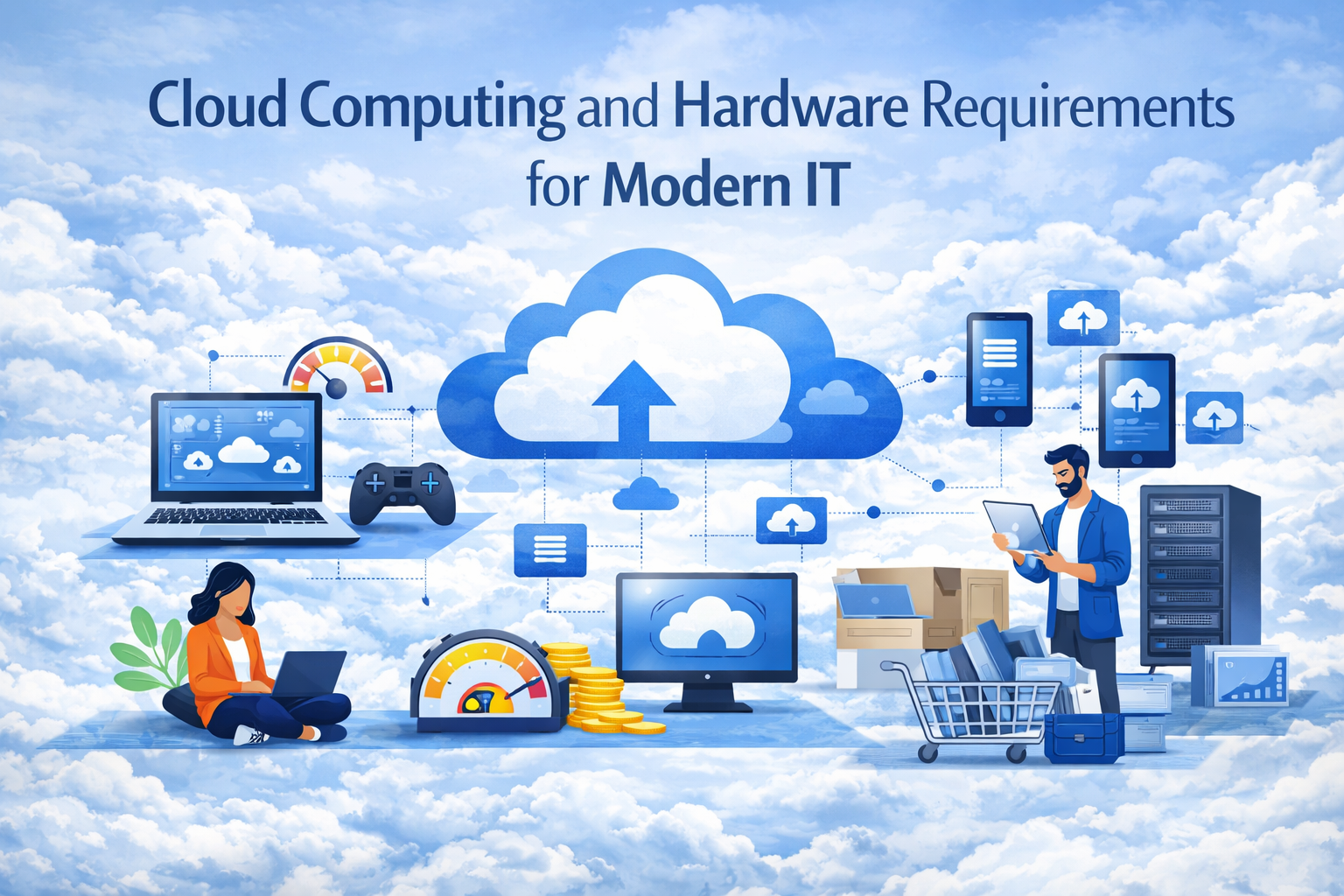
The rise of cloud computing has further accelerated this transition.
Today, businesses are already using:
- SaaS tools
- Cloud storage
- Subscription-based software
Since these models operate on OPEX, extending the same approach to hardware becomes a natural progression.
Therefore, the shift in capex vs opex is not just a financial trend—it is part of a larger transformation toward subscription-driven ecosystems.
Balancing capex vs opex for Strategic Decisions
While OPEX is gaining popularity, CAPEX is not completely obsolete.
CAPEX may still be suitable when:
- Long-term usage is predictable
- Regulatory requirements demand ownership
- Specific assets cannot be rented
However, businesses are now taking a hybrid approach. They carefully evaluate capex vs opex based on use cases rather than following a fixed strategy.
Related Queries and Common Questions
How does capex vs opex affect business cash flow?
CAPEX requires significant upfront investment, which can reduce liquidity. In contrast, OPEX spreads costs over time, allowing businesses to maintain healthier cash flow and allocate funds more efficiently.
What is the key difference between capex and opex in simple terms?
The main difference between capex and opex is ownership versus usage. CAPEX involves purchasing assets, while OPEX focuses on paying for services or usage without ownership.
Why are startups choosing opex over capex?
Startups prefer OPEX because it minimizes initial investment, supports faster scaling, and reduces financial risk. Additionally, it allows them to focus on growth rather than asset management.
Is renting IT equipment better than buying for businesses?
In many cases, renting is more practical. It offers flexibility, reduces maintenance burden, and avoids depreciation. However, the choice depends on usage duration and business requirements.
Where can businesses rent IT equipment easily in India?
Businesses looking for reliable rental solutions can explore platforms like IndiaRENTALZ, which provide laptops, MacBooks, and desktops on flexible plans with Pan India delivery and support.