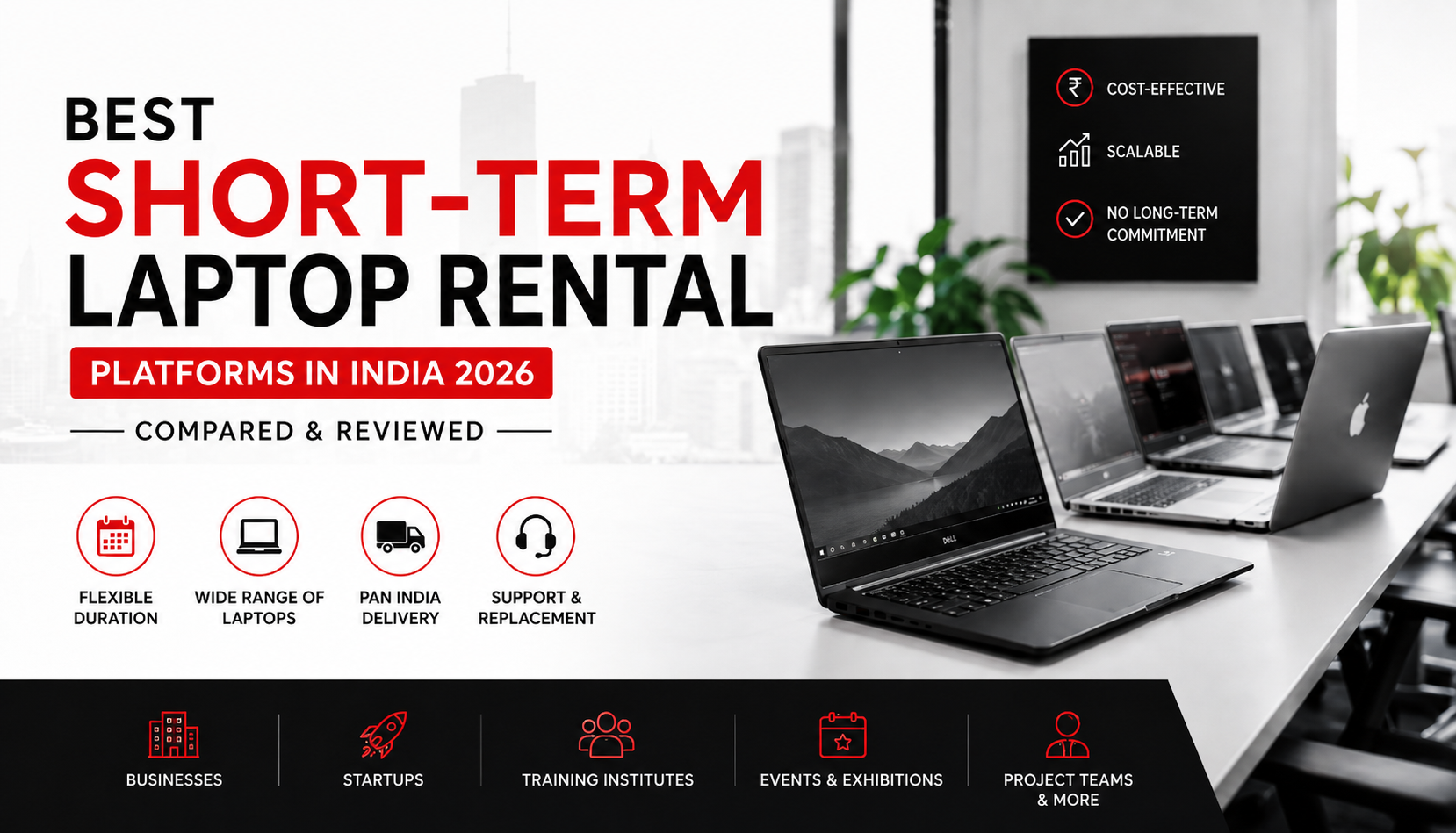
Businesses in India are becoming more flexible with the way they manage technology. Instead of buying laptops for every temporary project, event, training batch, or new employee, many companies now prefer short-term laptop rental because it helps them control costs, scale faster, and avoid unused IT assets after the requirement is over.
This shift is especially useful for startups, MSMEs, HR teams, IT managers, procurement teams, event organizers, training institutes, and project-based teams. However, choosing the right rental platform is not only about finding the lowest price. It is also about device quality, delivery speed, support, documentation, replacement policies, and rental flexibility.
A good rental decision can save both money and operational time. Therefore, before selecting any provider, companies should compare platforms carefully and understand which service model fits their actual business requirement.
Why Indian Businesses Prefer Flexible Laptop Rentals
Technology needs are no longer fixed for the entire year. A company may need 10 laptops this month, 40 laptops for next month’s training program, and only 15 devices after the project ends. Because of this, buying every device upfront can create unnecessary capital expense.
Short-term laptop rental gives companies the ability to arrange laptops only for the required duration. As a result, businesses avoid long-term ownership costs such as maintenance, storage, depreciation, upgrades, and asset disposal.
This model works well for:
- Temporary employees
- Interns and trainees
- Corporate events
- Training labs
- Short-term projects
- Remote hiring
- Seasonal teams
- Business expansion pilots
- Software testing teams
Moreover, rental platforms often provide different configurations, so teams can choose basic laptops, business laptops, MacBooks, or high-performance systems depending on the task.
Short-Term Laptop Rental Platforms for Fast Deployment
The biggest advantage of short-term laptop rental platforms is fast deployment. When a business has an urgent requirement, it may not have time to compare purchase quotations, wait for procurement approvals, and manage device setup internally.
Rental platforms solve this by offering ready-to-use devices with flexible rental periods. In many cases, companies can get laptops delivered within a short timeline, depending on the city, quantity, configuration, and stock availability.
For example, an HR team onboarding 25 employees for a three-month project may not want to invest in new laptops. Similarly, an event company may need 50 devices only for two days. In both cases, renting becomes more practical than buying.
However, speed should not be the only factor. The platform must also provide tested devices, proper billing, support, and replacement assistance if any system creates an issue during the rental period.
Key Factors for Comparing Rental Providers
Before choosing any laptop rental company, businesses should compare the service on practical criteria. A low monthly rental may look attractive, but hidden charges, poor support, or low-quality devices can create problems later.
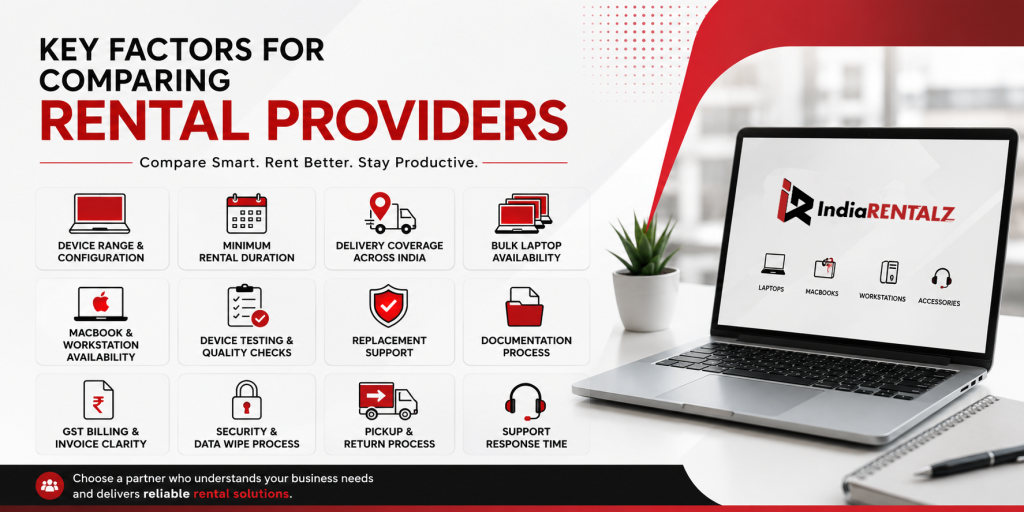
Important comparison points include:
- Device range and configuration availability
- Minimum rental duration
- Delivery coverage across Indian cities
- Bulk laptop availability
- MacBook and workstation availability
- Device testing and quality checks
- Replacement support
- Documentation process
- GST billing and invoice clarity
- Security and data wipe process
- Pickup and return process
- Support response time
Additionally, companies should check whether the platform understands corporate requirements. A provider serving business clients regularly will usually have better processes for documentation, invoicing, asset tracking, and support coordination.
Device Range and Configuration Options
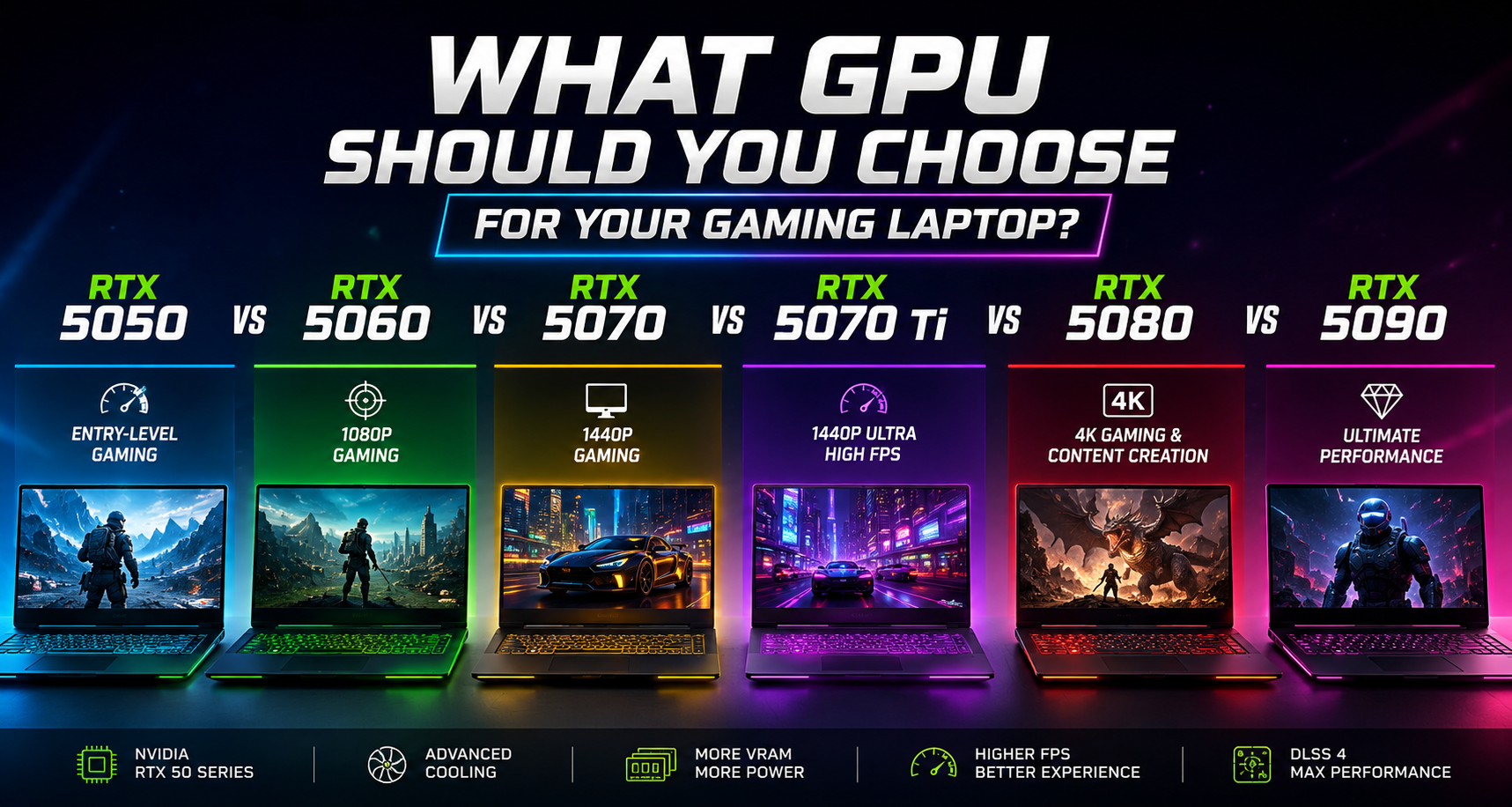
A strong rental platform should offer more than just basic laptops. Different teams need different types of devices. For example, a sales team may need standard business laptops, while a design team may require high-performance laptops with better RAM, SSD, graphics, and display quality.
Common rental options include:
- Intel Core i3 laptops for basic office work
- Intel Core i5 laptops for regular business use
- Intel Core i7 laptops for multitasking
- MacBook Air or MacBook Pro for developers and creative teams
- Workstations for editing, rendering, design, and engineering tasks
- Desktops or Tiny PCs for office setups
- Monitors, printers, and other IT accessories
Therefore, while comparing short-term laptop rental platforms, companies should check whether the provider can support both current and future requirements. This is helpful when a small requirement later becomes a bulk deployment.
Delivery Coverage Across Indian Cities
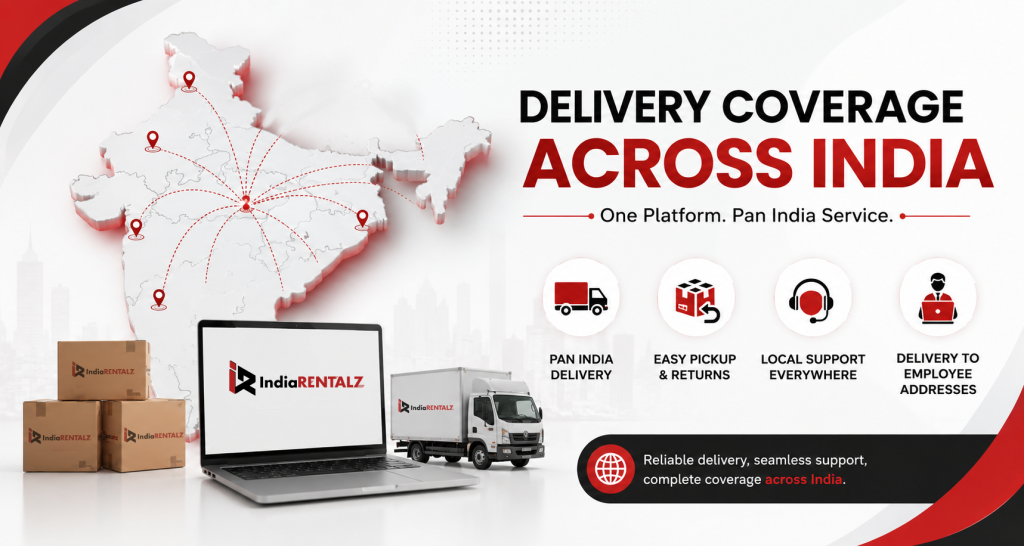
For businesses with teams in multiple locations, delivery coverage matters a lot. Many companies operate across cities like Chandigarh, Mohali, Delhi, Noida, Gurgaon, Mumbai, Bengaluru, Hyderabad, Pune, Chennai, and Kolkata. In such cases, a local-only provider may not be enough.
A reliable platform should be able to manage delivery, pickup, and support across key business locations. Moreover, if the company has remote employees, the rental provider should be able to deliver devices directly to employee addresses whenever possible.
This becomes especially important for HR and IT teams because they do not want to coordinate with different vendors in every city. A platform with PAN India service can reduce coordination pressure and improve overall efficiency.
Short-Term Laptop Rental for Events and Training
Events and training programs are among the most common use cases for short-term laptop rental. These requirements are usually temporary, time-sensitive, and quantity-driven.
For example, a company may need laptops for:
- Corporate workshops
- Coding bootcamps
- Online exams
- Product demonstrations
- Registration counters
- Training labs
- Hiring drives
- Business conferences
- Software testing sessions
In these cases, the devices must be ready before the event starts. Therefore, the rental provider should understand timelines, device testing, packaging, backup planning, and quick support.
Additionally, event and training teams should confirm whether the laptops will be pre-tested, whether chargers are included, and whether the systems can be configured as per requirement before delivery.
Pricing, Deposits, and Rental Flexibility
Pricing is important, but it should be evaluated with the complete rental structure. The monthly rental depends on configuration, quantity, location, rental duration, device condition, and support requirements.
A basic laptop will usually cost less than a MacBook or high-performance workstation. Similarly, longer rental durations may offer better monthly pricing than very short rentals.
While comparing providers, businesses should ask about:
- Monthly rental amount
- Minimum rental period
- Refundable deposit
- Delivery and pickup charges
- GST and invoicing
- Payment terms
- Extension charges
- Early closure terms
- Replacement policy
This helps avoid confusion later. Moreover, a transparent quotation is usually a good sign that the platform is professional and business-ready.
Support and Replacement Policies
Even tested devices can sometimes face issues during usage. Therefore, support quality is one of the most important factors in choosing a rental platform.
A good provider should offer clear support channels and a practical replacement process. For corporate teams, downtime can affect work, training, or event operations. Because of this, the response time matters almost as much as the device price.
Before finalizing any platform, companies should check:
- How support requests are handled
- Whether replacement is available
- What issues are covered
- What happens in case of physical damage
- How quickly the provider responds
- Whether remote or on-site support is available
- How returns and pickups are managed
This is especially important for bulk deployments, where even a few device issues can create operational delays.
Documentation and Business Compliance
Corporate rentals require proper documentation. The process may include company details, GST details, authorized signatory confirmation, purchase or work order format, and payment terms. Some providers may also ask for additional verification depending on the order size and risk profile.
For companies, this documentation process is useful because it keeps the transaction formal and trackable. It also helps with GST billing, accounting, internal approvals, and asset records.
Before choosing a platform, businesses should confirm whether the provider can issue proper tax invoices and rental agreements. This is particularly important for MSMEs, startups, and procurement teams that need clean compliance records.
Best Use Cases for Short-Term Laptop Rental
Short-term laptop rental is suitable when the requirement is temporary, urgent, or uncertain. It is not always the right choice for every business situation, but it works very well when flexibility is more valuable than ownership.
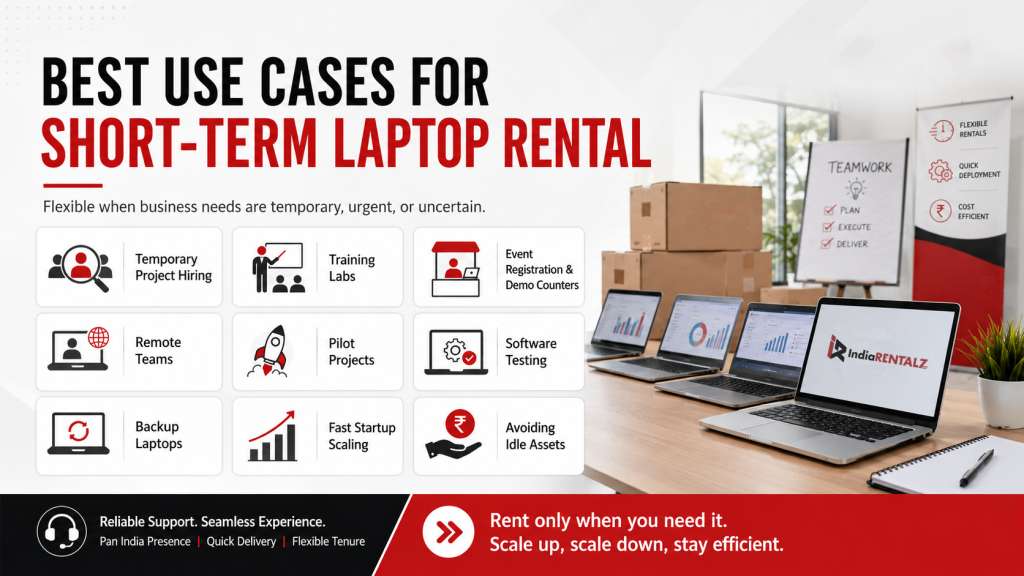
The best use cases include:
- Hiring temporary employees for a project
- Setting up training labs for a few weeks
- Managing event registration or demo counters
- Supporting remote teams
- Running pilot projects
- Testing new software
- Arranging backup laptops
- Scaling startup teams quickly
- Avoiding idle assets after project completion
In short, renting makes sense when the device is needed for a defined period and buying would create unnecessary long-term cost.
Choosing the Right Platform for Your Team
The right rental platform should match your use case, not just your budget. For example, an event organizer may prioritize delivery speed and backup devices, while an IT manager may focus on configuration, support, and asset tracking. Similarly, a startup may care more about flexible duration and lower upfront cost.
Before selecting a provider, companies should first define:
- Required quantity
- Laptop configuration
- Rental duration
- Delivery location
- Usage type
- Support expectations
- Budget range
- Documentation readiness
After that, comparing short-term laptop rental platforms becomes much easier. Instead of choosing only based on price, the business can select a provider that offers the right balance of availability, reliability, service, and cost.
Related Queries and Common Questions
What is the best short-term laptop rental option for companies in India?
The best option depends on the company’s quantity, location, device configuration, and rental duration. For business use, companies should choose a provider that offers GST billing, tested devices, replacement support, flexible duration, and delivery across major Indian cities. IndiaRentalz is one such platform where businesses can rent laptops, MacBooks, workstations, desktops, and other IT equipment for short-term and corporate requirements.
Can startups rent laptops for temporary projects?
Yes, startups can rent laptops for temporary projects, hiring phases, internships, training sessions, or short-term client work. This helps them avoid large upfront investment and keeps IT spending aligned with active business needs. Moreover, startups can scale the quantity up or down depending on team size.
Are laptop rental platforms suitable for bulk requirements?
Yes, many rental platforms support bulk laptop requirements for companies, events, training institutes, and project teams. However, for bulk orders, it is important to confirm stock availability, delivery timeline, configuration consistency, support process, and replacement terms before final approval.
What documents are needed for laptop rental in India?
Documentation may vary from one provider to another. Generally, companies may need to share company details, GST information, authorized signatory details, billing address, delivery address, and official confirmation such as a work order or purchase order. Some providers may also ask for additional verification depending on the rental value.
Is renting better than buying for short-term use?
For short-term use, renting is often better than buying because it avoids heavy upfront cost, maintenance responsibility, storage issues, and idle assets after the project ends. However, buying may be suitable when the device is needed permanently for long-term internal use.
Can MacBooks and high-performance laptops be rented?
Yes, many professional rental providers offer MacBooks, high-end laptops, and workstations for developers, designers, editors, architects, and technical teams. Since these devices are expensive to buy, renting them for a temporary requirement can be a practical choice.
How should businesses compare short-term laptop rental platforms?
Businesses should compare platforms based on device quality, configuration range, delivery locations, pricing transparency, rental flexibility, documentation, support, replacement process, and GST billing. Additionally, companies should check whether the provider has experience handling corporate and bulk rental requirements.
Final Thoughts
The demand for flexible IT infrastructure is increasing across India. As companies manage temporary teams, distributed workforces, events, training programs, and project-based hiring, short-term laptop rental has become a practical alternative to buying.
However, the best platform is not always the cheapest one. The right choice should offer a strong device range, reliable delivery, transparent pricing, proper documentation, and responsive support.
For businesses, startups, MSMEs, HR teams, IT managers, procurement departments, and event organizers, comparing platforms carefully can lead to better cost control and smoother operations. When the requirement is temporary, urgent, or project-based, renting laptops can help teams stay productive without locking capital into devices they may not need later.