
Remote work has shifted from a contingency plan to a permanent operating model. As businesses expand across cities and time zones, infrastructure decisions must adapt accordingly. Instead of locking capital into hardware that depreciates quickly, organizations are increasingly turning to Desktop Rental as a structured, scalable solution.
For IT managers, HR heads, startup founders, operations leaders, and CFOs evaluating Capex versus Opex, the decision is no longer just about devices. It is about flexibility, financial control, compliance, and long-term operational efficiency.
This article examines how desktop rental supports distributed teams and why it makes strategic sense for companies hiring contract developers, running consulting projects, or scaling technology teams.
Why Desktop Rental Is Reshaping Remote IT Planning
Traditional hardware procurement assumes stability in workforce size. However, remote hiring has made growth patterns unpredictable. Teams expand quickly for projects and then contract once deliverables are completed.
In such an environment, Desktop Rental provides elasticity. Instead of purchasing 30 systems for a nine-month contract, companies can deploy devices only for the required duration. Once the project concludes, equipment can be returned or reallocated.
As a result, organizations reduce idle inventory and avoid long-term storage costs.
Financial Clarity Through Desktop Rental
The Capex versus Opex debate often influences IT decisions. Purchasing desktops requires upfront investment, depreciation tracking, and asset disposal planning.
On the other hand, Desktop Rental converts hardware costs into operational expenses. This approach offers:
- Predictable monthly billing
- Better cash flow management
- Reduced balance sheet burden
- Simplified budgeting
For startups and growth-focused firms, preserving capital for expansion often matters more than owning assets.
Aligning Workforce Changes With Desktop Rental
Consulting firms and IT development companies frequently hire contract-based developers. Because project timelines vary, buying hardware for short-term roles creates inefficiencies.
Through Desktop Rental, organizations can:
- Match device count to active employees
- Upgrade or downgrade configurations
- Avoid surplus equipment post-project
Consequently, infrastructure spending aligns directly with revenue-generating work.
Operational Simplicity Enabled by Desktop Rental
Deploying purchased desktops to remote employees involves multiple layers of coordination. Procurement, shipping, warranty management, and replacements all demand administrative attention.
By contrast, Desktop Rental typically includes delivery, maintenance, and support services within the agreement. Therefore, internal IT teams can focus on cybersecurity, network performance, and strategic improvements instead of hardware troubleshooting.
Moreover, remote teams benefit from faster onboarding since devices arrive pre-configured.
Desktop Rental Versus Buying for Remote Workforces
While ownership offers long-term control, it also introduces hidden costs. Comparing both approaches highlights practical differences.
Buying desktops often leads to:
- Depreciation losses
- Idle stock during workforce reductions
- Disposal challenges
- Increased maintenance responsibilities
In contrast, Desktop Rental offers flexibility and reduced lifecycle risk. Although long-term ownership may seem economical in static environments, rental becomes advantageous when workforce requirements fluctuate.
Standardization and Security Through Desktop Rental
IT governance depends heavily on hardware consistency. When employees use mixed configurations or personal devices, performance and security standards vary widely.
With Desktop Rental, companies can standardize:
- Processor specifications
- RAM capacity
- Storage type
- Graphics capabilities
Standardization simplifies patch management and endpoint monitoring. Additionally, centrally provisioned systems strengthen data security compliance across remote teams.
Supporting Specialized Roles With Desktop Rental
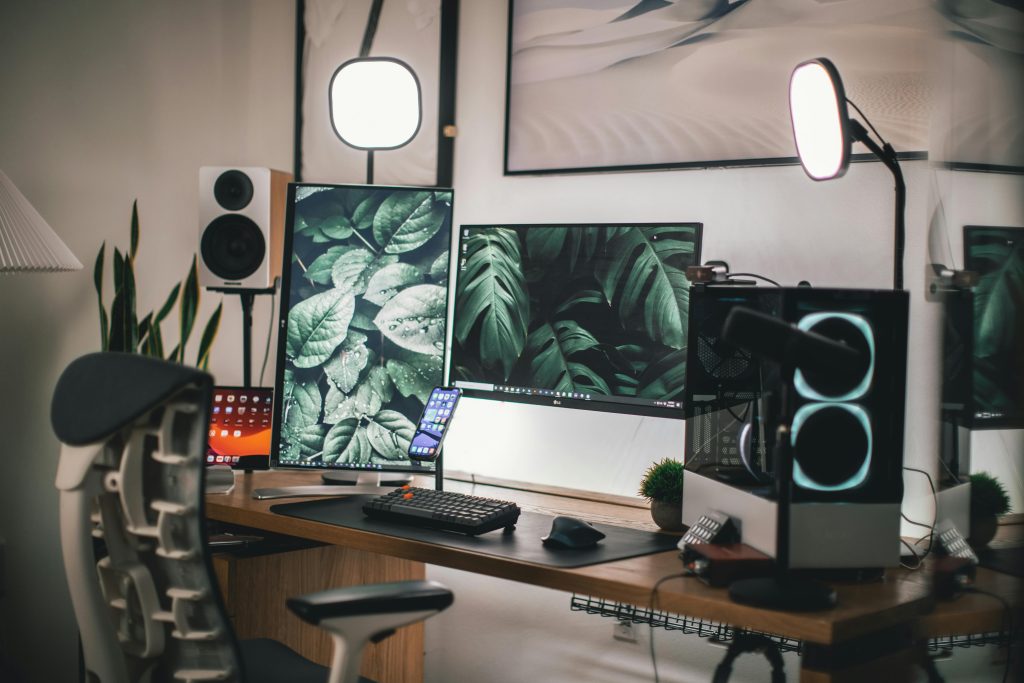
Not every remote employee requires the same computing power. Developers, data analysts, and designers often demand higher RAM, advanced processors, or graphic capabilities.
Instead of investing heavily in specialized hardware, organizations can leverage Desktop Rental to access performance-focused configurations temporarily. For example:
- AI teams may require high-memory systems
- Video editors may need graphic-enabled desktops
- QA teams may use test-specific builds
This flexibility allows companies to adapt quickly without long-term capital exposure.
Desktop on Rent for Remote Employees and BYOD Alternatives
Some organizations adopt a bring-your-own-device (BYOD) policy to reduce hardware expenses. However, this approach creates challenges in governance and performance control.
Using desktops on rent for remote employees ensures:
- Uniform performance standards
- Centralized security policies
- Clear documentation trails
- Easier compliance audits
Therefore, while BYOD may reduce immediate spending, structured rental programs support stronger operational discipline.
Reducing Idle Inventory
One of the overlooked costs of ownership is unused hardware. When projects conclude or employees exit, purchased desktops often remain in storage.
Through Desktop Rental, companies can return excess equipment, ensuring that resources remain productive rather than depreciating in warehouses. Over time, this prevents technology obsolescence and improves capital efficiency.
Budget Predictability and Forecasting
Financial planning becomes simpler when costs remain stable and transparent. Purchased hardware often involves variable maintenance and unexpected repair expenses.
In contrast, Desktop Rental typically follows a fixed monthly model. This consistency enables operations managers and CFOs to forecast accurately and allocate resources strategically.
As remote work continues to expand, predictable IT expenditure strengthens financial resilience.
Related Queries and Practical Considerations

Is Desktop Rental suitable for short-term remote projects?
Yes, it works especially well for short-term or contract-based assignments. Companies can deploy desktops for the duration of a project and return them afterward, preventing unnecessary capital investment.
How does Rental compare to buying in the long run?
Buying may appear cost-effective in stable environments with fixed headcount. However, when teams expand and contract frequently, rental reduces idle assets and administrative burden. Therefore, the right choice depends on workforce stability and growth patterns.
What configurations are available ?
Providers typically offer a range of systems, including:
- Standard office desktops
- Developer-grade systems with higher RAM
- Graphic-enabled desktops for design teams
- Custom builds based on project needs
This variety supports diverse remote roles efficiently.